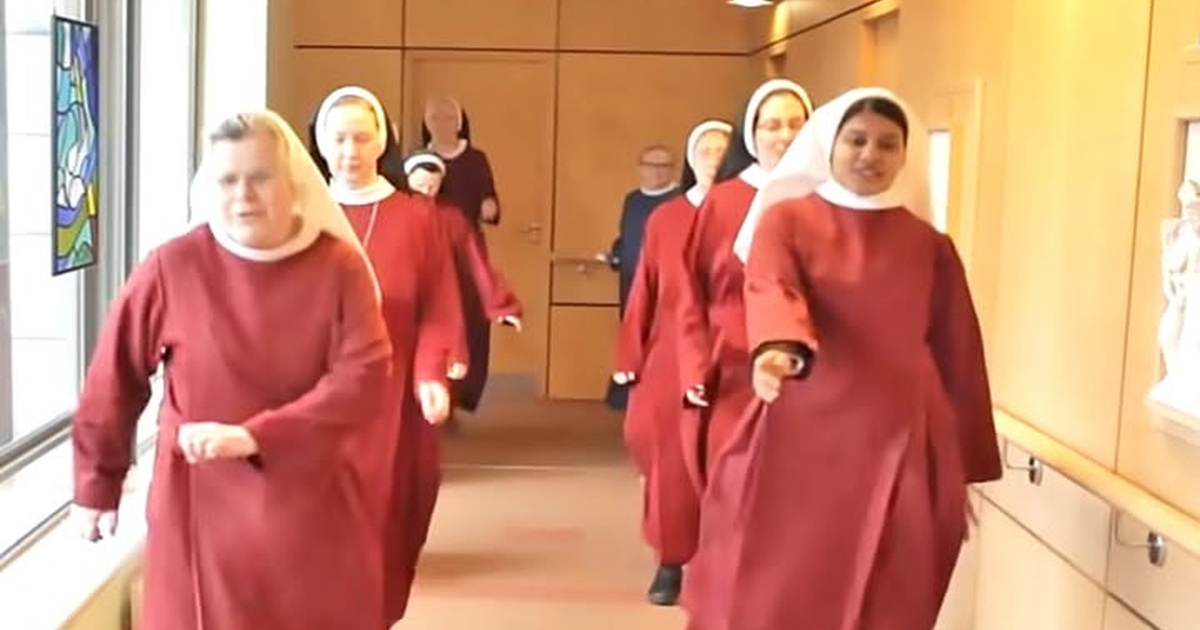
A shared dance video does not require every participant to occupy the same place. The Redemptoristines and Redemptorists’ Jerusalema presentation connects communities through a common song and routine while preserving a wider geographical frame.
Redemptorist Communications identifies Brazil, Dublin and Cork in its own description. Published in February 2021, the record is explicitly accompanied by a message of prayer for the world in challenging times. That gives the presentation a documented purpose beyond the fact that the participants dance.
The communities’ shared presentation
Watch on YouTube ↗
A recurring pattern makes separate contributions connect
A recognizable routine supplies something that different groups can undertake. The people and surrounding spaces may change, while related movement gives the viewer a continuing reference.
This is a practical form of connection. Participants do not need identical surroundings for their actions to belong within the same published sequence. A shared musical frame can make separate recordings legible as contributions to one larger idea.
The distinction matters because an edited community presentation is not automatically a record of one simultaneous gathering. The video can create a relationship among locations without pretending that physical distance has disappeared.
Place remains part of the identity
Different communities bring different spaces to the same routine. Keeping that variation visible gives the common pattern something to travel through. The interest lies in continuity alongside local identity, rather than the replacement of every setting with a uniform stage.
The named institutions are also participants, not merely a novelty category attached to a dance. Their publisher describes a public gesture with a particular message. Recognizing that purpose avoids inventing a private story about every person’s emotions or reasons for taking part.
A shared action can remain meaningful without requiring all participants to be interpreted in exactly the same way. The published intention gives context while the people involved retain their individual histories.
Music supplies a common timeline
A recorded piece gives the routine a continuing sequence. Recurring material allows participants to establish relationships with the same reference, even where their contributions were made in different spaces.
The coordination should be understood as work, not as proof that everything happened without preparation. A viewer can enjoy an apparently informal presentation while recognizing the choices needed to make several contributions part of a coherent whole.
The official song presentation
The next Openmic Productions video identifies Master KG featuring Nomcebo. It restores the recorded musical source as a credited collaboration rather than leaving the track anonymous behind its later dance uses.
Watch on YouTube ↗
A community adaptation and an official music video have different tasks. The first puts existing material to a new public use; the second presents the release within its own visual frame.
Another large shared musical project
CITYROCKS’s Enter Sandman video offers another organizational model, centered on musicians undertaking material together rather than religious communities sharing a dance.
Watch on YouTube ↗
The connection is collective participation, while the practical formats remain distinct. The Jerusalema presentation makes its own relationship clear: communities in several locations use a familiar routine and musical sequence to create one published gesture without losing the places and people contributing to it.