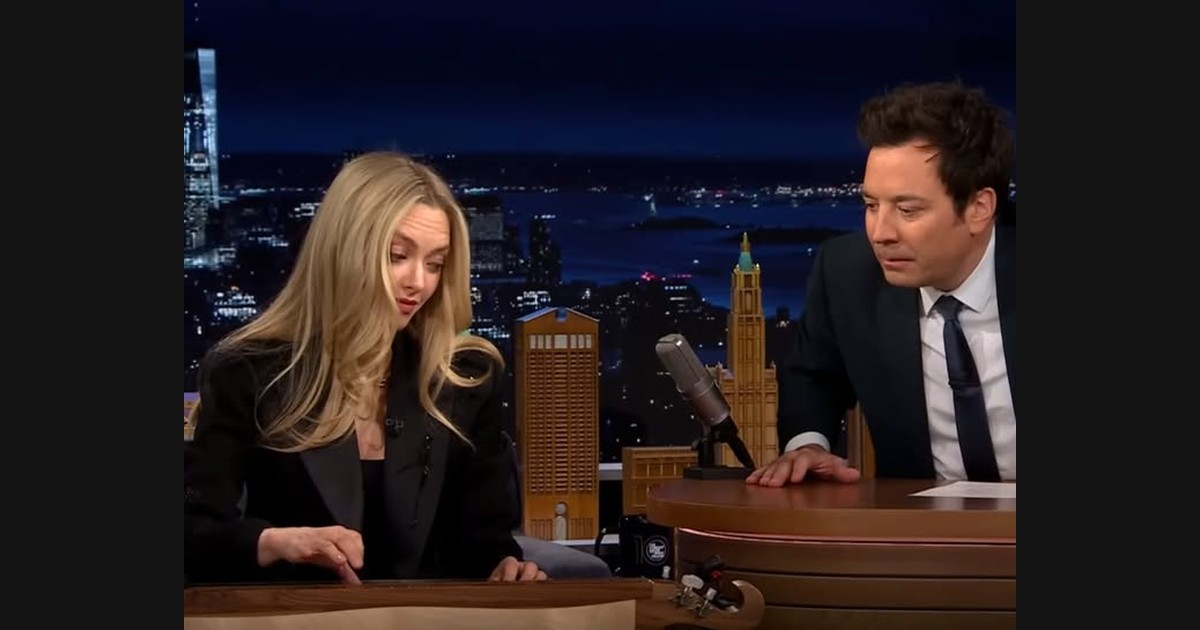
Amanda Seyfried’s California appearance on The Tonight Show has a specific instrumental reference: the dulcimer. The cover is not simply a familiar actor singing a familiar song. It brings the relationship between a voice and a particular kind of accompaniment into view.
The programme’s official clip identifies the work as Joni Mitchell’s song and presents Seyfried playing the instrument. Mitchell’s own Blue album archive also connects California with dulcimer material, giving that choice a place in the composition’s performance history.
Watch on YouTube ↗
The name covers two different instruments
The Smithsonian distinguishes the plucked mountain or Appalachian dulcimer from the hammered dulcimer. One uses strings that are plucked or strummed; the other is played with small hammers. Sharing a name does not make them the same musical tool.
The plucked instrument is commonly positioned across the lap or on a table. Its layout creates a different relationship between hands and strings from a guitar held against the body. That difference is useful context without requiring the viewer to identify an exact model or tuning from the television clip.
A performer singing while accompanying themselves has to sustain two related tasks. The instrumental pattern provides musical ground, while the vocal phrase can develop its own emphasis and length. The parts need coordination without being identical.
A recognizable accompaniment can carry a song’s identity
When a song is strongly associated with a particular instrument, that sound can become part of how listeners locate the work. It can establish continuity with an earlier recording before every melodic phrase is complete.
This does not mean the instrument alone explains the performance. A song still needs direction through its phrases. The accompaniment has to support the thought being sung, rather than becoming a display disconnected from the words.
For a focused pass, follow the repeating instrumental movement across the end of a vocal line. Then listen to the next entrance. The useful relationship is continuity: how the pattern keeps the musical world present while the singer moves from one thought to another.
Watch on YouTube ↗
A second upload gives the same selection another presentation
The companion California upload returns to Seyfried’s interpretation. It should not be counted as another television appearance merely because its title omits the programme and instrument.
Keeping the performance identity clear allows attention to remain on what is being played rather than on an invented sequence of separate events.
Watch on YouTube ↗
The credits remain separate throughout: Mitchell supplies the composition and its earlier recorded history, while Seyfried supplies a present interpretation. An instrumental reference can acknowledge that history without making the later performer its author.
The later conversation is about the earlier performance
Seth Meyers’s programme identifies its interview as a discussion of Seyfried’s Joni Mitchell dulcimer cover on The Tonight Show. It is a follow-up conversation, not a third full musical rendition.
That distinction completes the sequence: a performance, another presentation of it and an artist discussing its reception. The instrumental choice gives the original encounter its concrete subject. Understanding the plucked dulcimer makes the cover more informative than a generic account of a celebrity’s unexpected singing ability.


