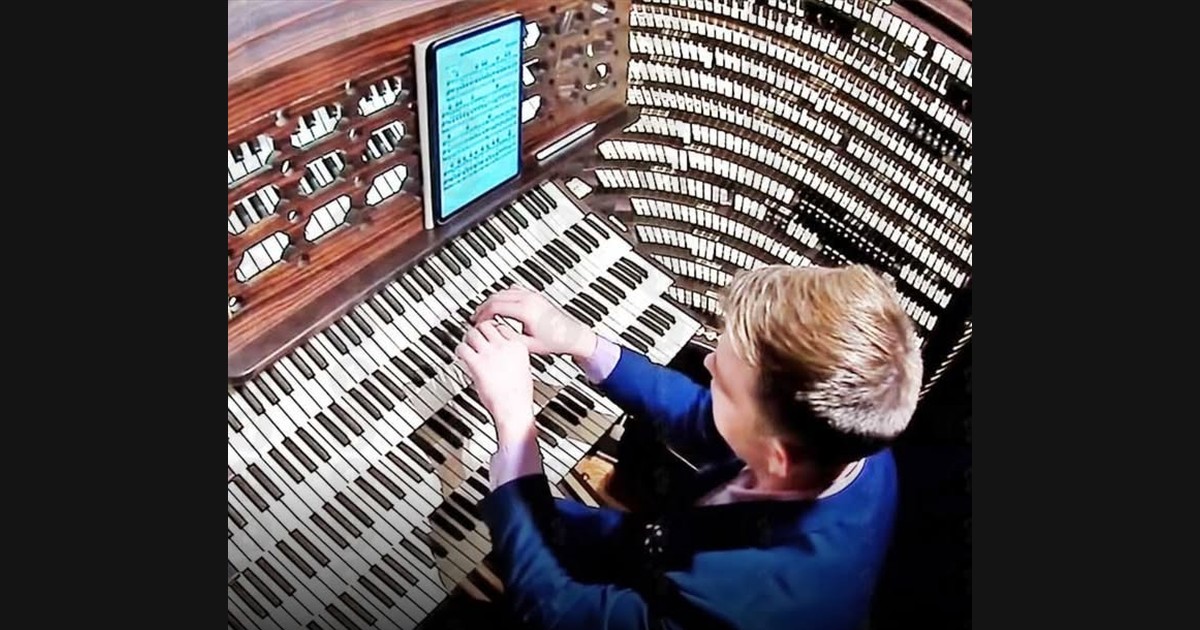
A historic instrument is preserved through more than a photograph of its size. It also needs people able to maintain it and musicians able to make its resources available in performance. Josh Stafford’s Bohemian Rhapsody connects those activities at Boardwalk Hall.
Boardwalk Organs identifies the music as Stafford’s own arrangement of Freddie Mercury’s composition on the Midmer-Losh organ. The Historic Organ Restoration Committee also hosts the performance within its public record. This is a working musical resource inside an ongoing preservation project, rather than merely an extraordinary object in a building.
Stafford’s arrangement
Watch on YouTube ↗
Playability and full restoration are different states
The committee’s own explanations distinguish an instrument being playable from all of its parts having been fully restored. That distinction prevents a public performance from being mistaken for proof that every component is operating or that a long preservation process is complete.
A complex instrument can offer substantial usable resources while further work remains. The performance makes those resources musical; the restoration project addresses their condition and continuing availability. Neither task replaces the other.
This is especially important with a famous size description. A total pipe count is a design fact, not a statement that every pipe sounds at once in a particular piece. Musical selection remains necessary regardless of the instrument’s scale.
An arrangement gives resources a present purpose
A familiar rock composition supplies a way for listeners to encounter the organ through something they may already recognize. That connection can make an unfamiliar instrument more approachable without reducing it to an imitation of a band.
Stafford’s arranging credit also matters. The composition and the instrument do not automatically produce a finished organ rendition between them. A musician has to decide how material can be distributed and connected within another performance form.
The resulting piece therefore belongs to several histories: Mercury’s writing, the organ’s construction and care, and the current performer’s arrangement. Accurate credit allows those relationships to coexist instead of explaining everything through the word largest.
Public use makes preservation audible
A performance demonstrates one reason an instrument remains worth maintaining: people can undertake music with it and share the result. Preservation has a present use as well as a historical responsibility.
That does not mean one concert explains every technical detail. The custodians’ documentation provides the appropriate source for design and restoration questions. The musical record offers another kind of access, centered on what a performer makes available to listeners.
Queen in a different event format
The next official catalogue selection combines Bohemian Rhapsody and Radio Ga Ga at Live Aid in 1985. It returns the repertoire to a band-performance frame with its own event history.
Watch on YouTube ↗
A later publication of another tribute
The final Rock Hall video is a 2021 remaster of the 2004 While My Guitar Gently Weeps induction performance. Its publication label is another reminder that an older event can remain available through continuing work on its record.
Watch on YouTube ↗
Stafford’s organ selection has a particular place within that wider idea. A historic resource continues to matter because it can be cared for, interpreted and heard. The arrangement gives preservation a musical present without claiming the restoration story has reached its end.