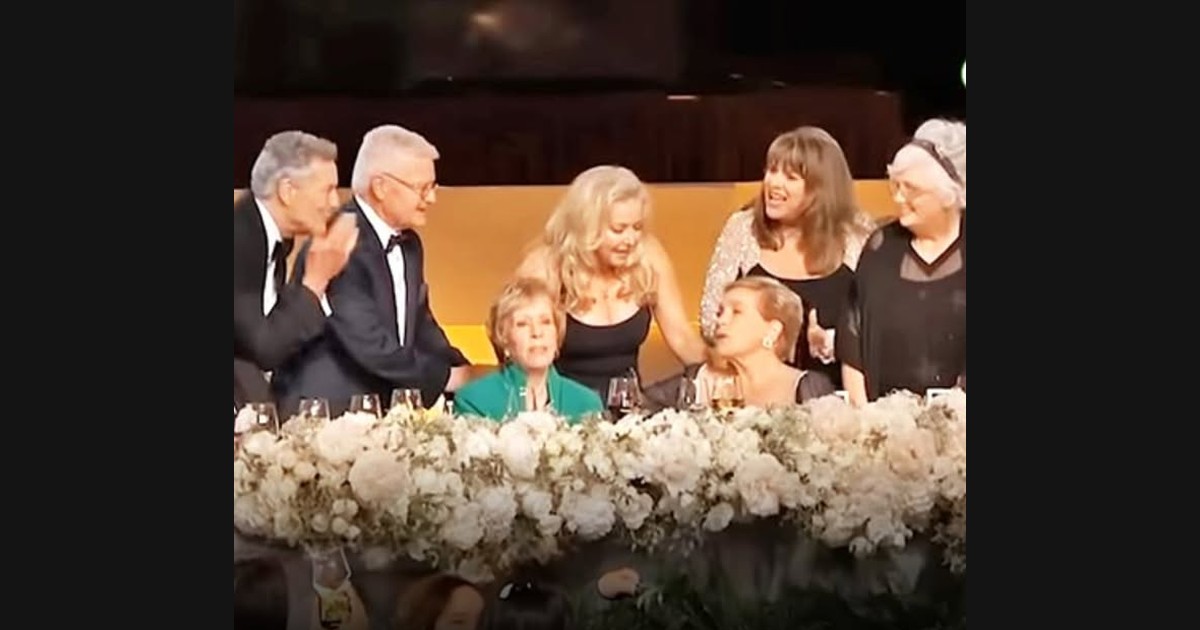
Do-Re-Mi works as more than a familiar tune. Richard Rodgers and Oscar Hammerstein II designed it as a teaching song in The Sound of Music, with Maria drawing the children into singing. The AFI tribute to Julie Andrews gives that design another public setting: material built around learning together has become repertoire that people can recognize together.
AFI presented Andrews with its 48th Life Achievement Award in June 2022. The cast reunion supplies the occasion, but a second route into the clip lies inside the song itself. Its accessible musical ideas help explain why a teaching scene can continue to work beyond the original story.
The tribute selection
Watch on YouTube ↗
Solfège uses syllables as names for musical scale steps. The labels give singers a way to identify relationships rather than remember every sound as an unrelated event. In the song, the idea becomes part of a dramatic interaction instead of remaining a detached classroom explanation.
That distinction matters. A scene needs movement between people as well as information. The teaching task allows musical participation to develop within the story: learning becomes an activity through which the characters relate to one another.
Three musical ideas to distinguish
| Idea | What it helps a listener notice |
|---|---|
| Pitch direction | Whether a melody rises, falls or stays near one area. |
| Pattern | A recognizable idea that returns or changes. |
| Phrase | A larger musical thought with a beginning and an arrival. |
These ideas can be followed without reproducing the song’s words. Choose a short passage and trace its general direction with a finger. Then notice whether another passage returns to a similar shape. This is a listening exercise, not a test of perfect pitch or a requirement to read notation.
For example, a rising shape can prepare an arrival, while a return toward an earlier pitch can make the phrase feel settled. A repeated pattern supplies familiarity; a changed ending can give that familiarity a new destination. Musical storytelling often depends on the relationship between those two things.
‘Edelweiss’ offers a different kind of accessibility
Watch on YouTube ↗
The Pink Martini selection with the von Trapps changes the song to Edelweiss. Both pieces belong to the musical’s repertoire, but they have different dramatic jobs. One teaches through participation; the other presents a compact melodic statement associated with the Captain and his homeland.
Compare the shape of a complete phrase rather than expecting the same kind of scene. Accessibility can come through a memorable melodic line as well as through an explicit teaching idea.
The song travels into an informal setting
Watch on YouTube ↗
The informal von Trapps selection provides another Edelweiss reference. It also keeps a useful distinction visible: the historical family’s descendants and the actors in the AFI reunion are different groups linked through the musical’s wider history.
Placed beside these versions, Do-Re-Mi becomes easier to appreciate as a piece of craft. Its familiar labels are only the starting material. Repetition, direction and participation turn that material into a scene, and the resulting song remains useful when a later gathering has an entirely different reason to sing it.