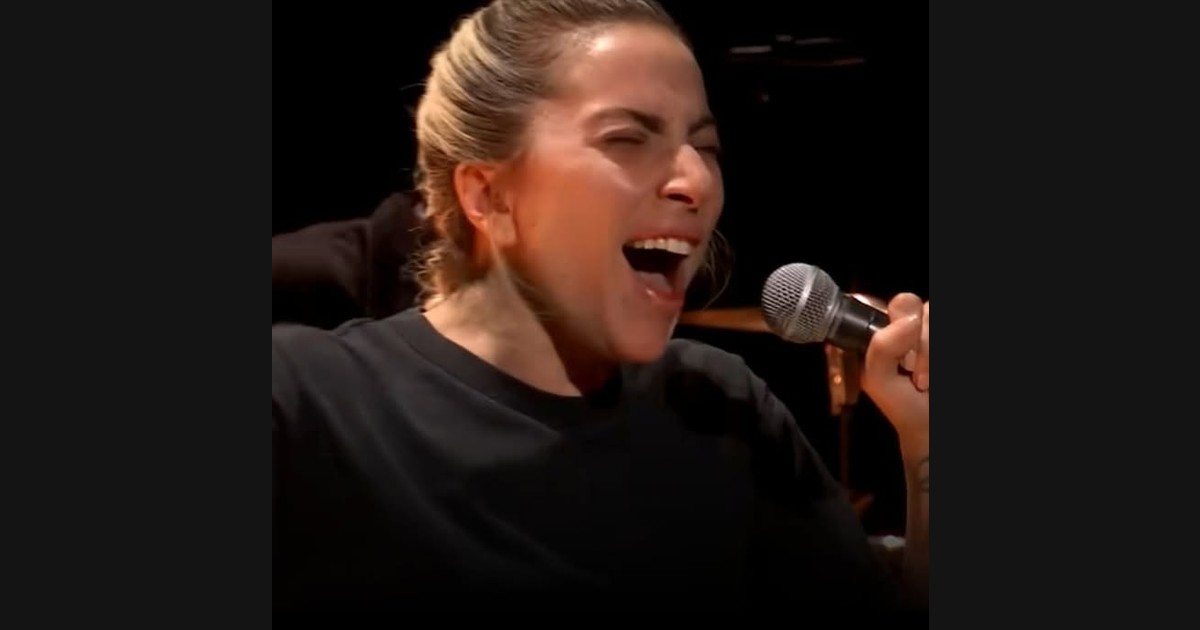
Lady Gaga’s “Hold My Hand” appearance at the 2023 Oscars offers a chance to distinguish two related achievements: writing a song for a film and presenting that song live. The Academy lists “Hold My Hand” from Top Gun: Maverick as an Original Song nominee, with music and lyric credited to Lady Gaga and BloodPop.
The live performance gives that nominated composition a place in the television program. It is not an audition in which the evening’s strongest vocal wins the category. The song and its credited writers are the relevant award identity, even when one familiar performer occupies the screen.
Watch on YouTube ↗
Read all three parts of the credit
The Academy’s listing connects a title, a film, and named writers. Each part supplies information that can disappear when a performance is shared alone. The title identifies the work; the film identifies its cinematic context; the writing credit recognizes the people responsible for that category’s contribution.
This is why a song should not automatically be described as written solely by the person singing it. A featured artist may also be a writer, as Gaga is here, while still sharing authorship. Performance prominence and writing credit are different forms of recognition.
Nomination and result remain separate
“Hold My Hand” was nominated in 2023; “Naatu Naatu” won the category. Neither fact changes the identity of the live performance. A memorable presentation does not need a rewritten award result to be worth revisiting.
The year also belongs to the ceremony, not necessarily to the film’s initial release or the day the composition was written. Awards programs, film releases, soundtrack releases, and later online uploads give a song several dates. Accurate captions keep those milestones distinct instead of attaching one year to every stage of its history.
A composition becomes a live arrangement
Once the song reaches the ceremony, another set of musical decisions becomes relevant. A performance has to establish its own proportions, accompaniment, pacing, and ending inside the allotted television segment. Those decisions concern the live arrangement rather than the category’s basic authorship credit.
Listen for how a complete phrase is supported and how the performance moves toward a return. A more restrained setting can direct attention toward those relationships, but visual simplicity alone does not prove that preparation, sound production, or arrangement work has disappeared.
Compare the role, not an imagined contest
The second video is Gaga’s official “Happy Mistake” appearance on Jimmy Kimmel Live!. It changes the composition and program context. There is no Original Song category to explain that segment; it is another performance within a television show.
Watch on YouTube ↗
The final selection, “Million Reasons” at the Royal Variety Performance, provides a third named occasion. The charity’s archive places Gaga in its 2016 program. Here again a live presentation has a public identity independent of the Oscars nomination.
Watch on YouTube ↗
Together, the clips show why credit and interpretation deserve separate attention. A viewer can appreciate the singer’s delivery, follow an arrangement, and still preserve the full writing credit and actual award result. The Oscars performance becomes clearer when it is understood as a live showcase for a nominated composition, with several kinds of musical work behind the person at the microphone.