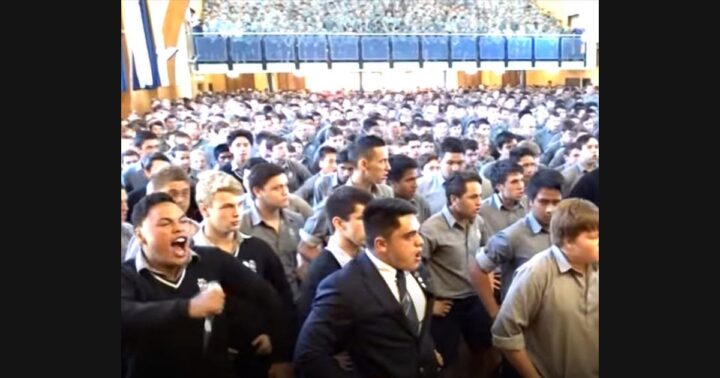
The occasion matters when a haka video circulates beyond the community that made it. Palmerston North Boys’ High School’s Farewell Haka for Mr. John Adams documents a school farewell. It should not be confused with the separate funeral haka included later on this page.
The school’s May 2016 newsletter records that Adams was leaving after eleven years as its guidance counsellor and addressed his final assembly. That is a concrete context for the first video. It lets a viewer understand the occasion without attaching an invented account of a death, an emergency or a particular individual’s private reaction.
The school farewell
Watch on YouTube ↗
Haka is a living Māori art form, not one interchangeable display used only for war or sport. Te Ara, the Encyclopedia of New Zealand, explains that different haka belong to different occasions, including welcome, praise, remembrance and the passing on of traditions. A school farewell can therefore be approached through its own purpose rather than forced into the most familiar international image of haka.
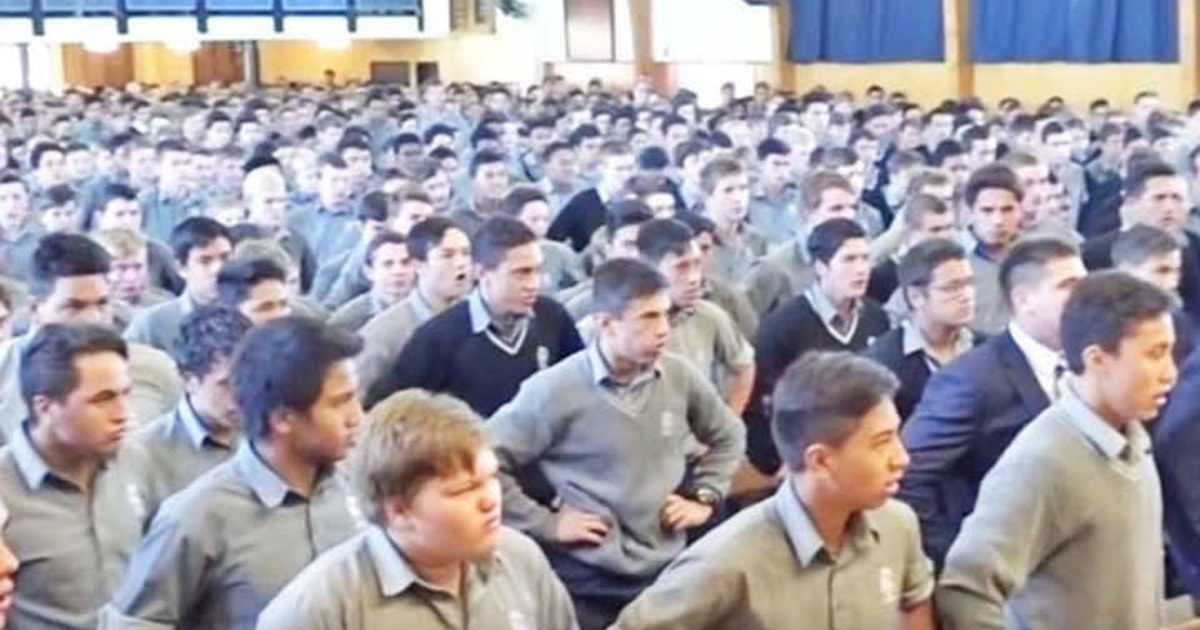
The collective presentation is important. Voice, movement and the organization of a group work together. A viewer unfamiliar with the language can notice coordinated beginnings, shared rhythm and relationships within the formation while recognizing that these visible features do not supply a complete translation.
Three layers of context
- The occasion: a farewell documented by the school.
- The participants: a school community presenting the performance.
- The form: a Māori performance tradition with meanings that exceed this one clip.
These layers should remain connected. Calling the video merely an impressive group display loses the occasion; inventing a word-for-word meaning loses the distinction between observation and translation. A useful account can be specific about what is documented while leaving unverified wording alone.
For example, a coordinated action can be described as part of the group’s presentation. It should not automatically be assigned one universal meaning wherever it appears. Context and the particular material matter.
The funeral selection belongs to another event
Watch on YouTube ↗
The second school upload explicitly identifies Mr. Dawson Tamatea’s funeral service. It is related through the school and the performance form, but it is not another angle on Adams’s farewell. The difference changes the occasion through which the collective action should be understood.
A comparison can focus on how each video presents its participants and setting. It should not rank the sincerity of the communities or use a visible expression as proof of everything a person felt. The documented circumstances already provide meaningful differences.
Let an educational source widen the view
Watch on YouTube ↗
Te Papa’s Art of the Haka selection offers an educational route beyond the school clips. It belongs to a museum’s account of a cultural form, rather than to the same sequence of school events. Watching it after the performances can add vocabulary and context without turning one viral video into the entire tradition.
The three selections are most valuable when their purposes stay clear. The first records a farewell, the second a funeral and the third an explanation. Together they offer a more grounded introduction than a dramatic caption alone, allowing the school community’s own context to remain central to how its performance is encountered.