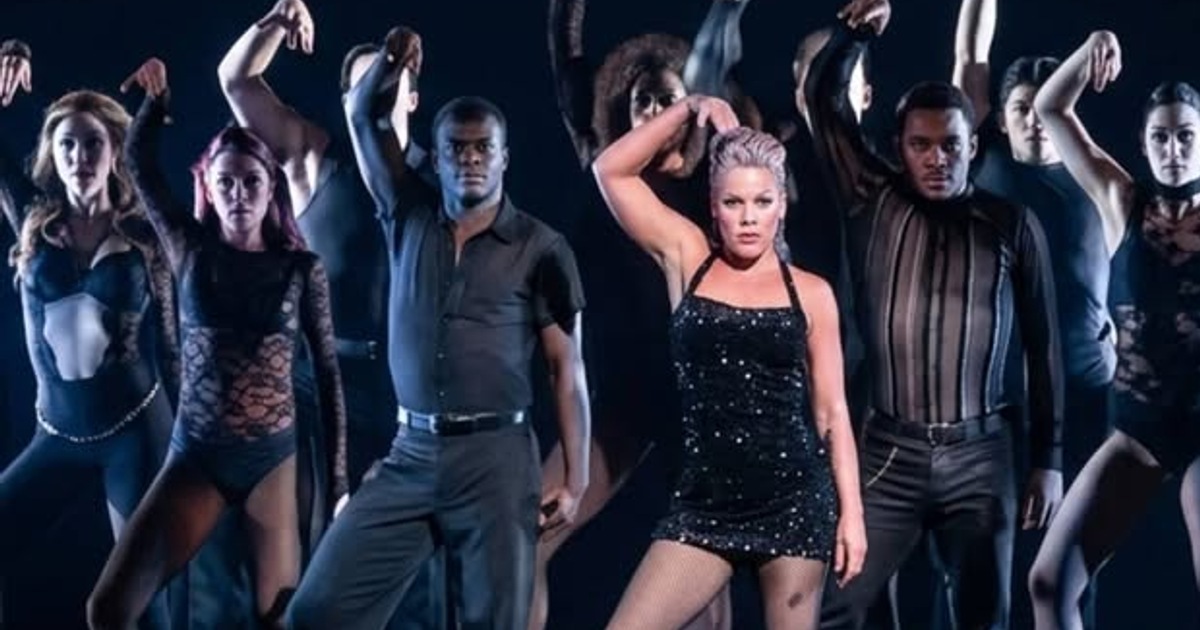
A pop singer entering a theater song brings a familiar identity into material that already has a dramatic job. P!nk’s All That Jazz selection can be understood through that meeting. The number belongs to Chicago, with music by John Kander and lyrics by Fred Ebb, and it asks for a relationship with a scene as well as a recognizable vocal performance.
The Tony Awards’ official announcement places P!nk in the 2026 celebration of the revival’s 30th anniversary. That context matters: this is an anniversary tribute featuring a guest artist, not evidence that she has taken over a role in a regular Broadway production.
The theater-song selection
Watch on YouTube ↗
All That Jazz is assigned to Velma and company near the beginning of Chicago. A number in that position has to establish a performance world. Its phrases do not exist only to display a voice; they help introduce an attitude, a pace and a way of addressing the audience.
A concert singer can work with those theatrical resources without reenacting an entire production. The useful question is how the song’s character remains clear within the shorter tribute frame. A gesture, a pause or a sharply placed entrance can carry dramatic information alongside the notes.
Character is not a private personality report
Musical theater allows a performer to present an attitude that belongs to a role or a scene. The confidence, wit or invitation a listener perceives in a number should not automatically be treated as a statement about the artist away from the performance.
For a concrete approach, follow the end of a line and the beginning of the next. A pause can function as part of an address to the audience rather than an empty gap. An entrance can sound like a continuation of a character’s thought. These relationships help explain theatrical presence without reducing it to costume or vocal volume.
Rhythmic placement also contributes to character. A phrase can feel direct, teasing or deliberately delayed depending on its relationship to the accompaniment. Those descriptions concern effects a listener can evaluate, rather than an assertion about exactly what the performer intended.
A different tribute points outward
Watch on YouTube ↗
The Rock Hall selection with P!nk, Brandi Carlile and Zac Brown Band performing Coat of Many Colors changes the frame. It honors Dolly Parton through one of her songs. Compare how a shared tribute distributes attention among the performers and toward the songwriter being celebrated.
That is a different task from entering the dramatic world of Chicago. Both formats use familiar repertoire, but their relationships with character and authorship are not identical.
A song with orchestral support offers another contrast
Watch on YouTube ↗
The related Nothing Compares 2 U selection places attention on another composition and a different instrumental setting. Compare the relationship between a featured voice and the musical material surrounding it, rather than assuming every performance by the same singer has one fixed style.
The three clips make the theatrical task clearer by contrast. A tribute can acknowledge a songwriter; an orchestral setting can reshape a ballad’s scale; a theater number can establish a character’s way of occupying a scene. P!nk’s All That Jazz belongs to that third conversation, where musical delivery and dramatic presentation work together.