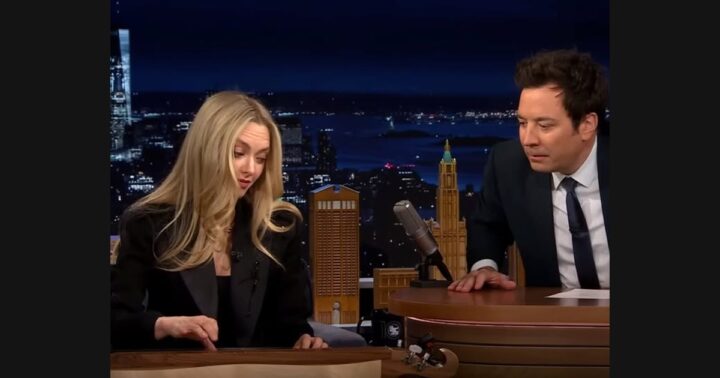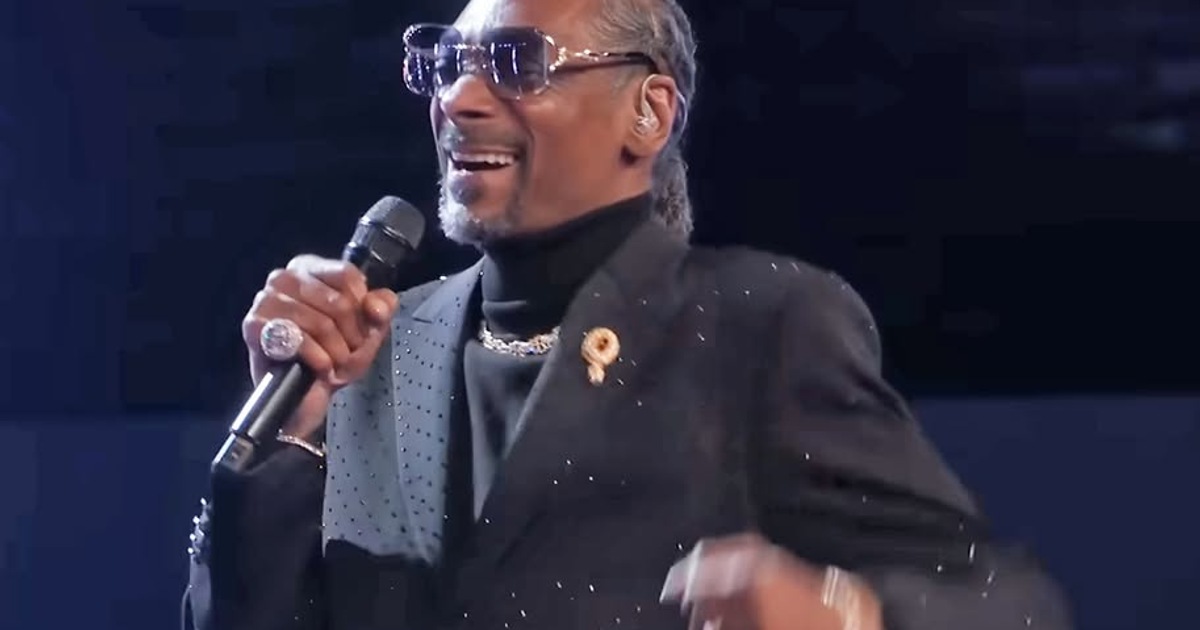
The official Voice clip brings Michael Bublé, Niall Horan, Reba McEntire, and Snoop Dogg together for Steve Miller Band’s “The Joker.” It is a coaches’ performance: the people normally associated with listening and choosing take responsibility for a shared song. That change of role gives the selection a purpose beyond assembling four familiar names.
NBC identifies this same coaching panel with its September 2025 season launch. The official video’s publication belongs to that promotional context. It is not necessary to turn the upload date into a filming date to understand why the four artists appear together.
Watch on YouTube ↗
The panel becomes an ensemble
A coaching panel invites comparison between musical personalities. A shared performance adds a different requirement: those personalities have to contribute to one continuous piece. The audience can recognize individual identities while following the coordination that connects them.
This is not another contestant audition with four separate verdicts waiting at the end. The coaches’ task is collaborative. Even if a viewer has a favorite voice, the musical question concerns how featured parts and shared material make a coherent whole rather than which coach should eliminate another.
A familiar cover provides common ground
Choosing an established song gives performers and viewers a reference that does not belong exclusively to one coach’s catalog. Recognition can happen quickly, leaving more time for the particular combination of artists to become the subject.
A shared composition also supplies boundaries. Each performer is working within an existing sequence of phrases and returns. Distinctive delivery has to fit that sequence. The arrangement can create room for contrast without asking every singer to reproduce the style of the original recording.
A useful viewing focus is the movement of responsibility. Follow the point at which a featured voice gives way to another contribution, and then notice what continues behind that change. A stable accompaniment or familiar section can connect different personalities more effectively than an attempt to make them sound identical.
Musical backgrounds are context, not instructions
The four artists have different public repertoires, but a genre label should not become a prediction of every phrase. A musician associated with country, pop, traditional standards, or hip-hop still makes choices within the particular arrangement at hand.
This leaves room for a more precise description than claiming that four genres collide. The performance provides a single musical task. Listeners can consider how the participants approach that task without reducing each person to one expected gesture or vocal effect.
One participant in a solo setting
The second video is Bublé’s official “Feeling Good” from Tour Stop 148. It offers a controlled change in the comparison: retain one participant, change the song and the performance role. Bublé is now the featured artist within his own concert presentation rather than one member of the coaches’ partnership.
Watch on YouTube ↗
Consider how a solo feature establishes continuity when it does not depend on handing the lead among several named guests. The accompaniment, the musical arc, and the relationship with the audience have more space to develop around one principal voice.
The two recordings therefore introduce two sides of an established performer: a recognizable individual and a collaborator. The coaches’ “The Joker” makes the second visible, using a shared song to turn a television panel into a temporary ensemble.