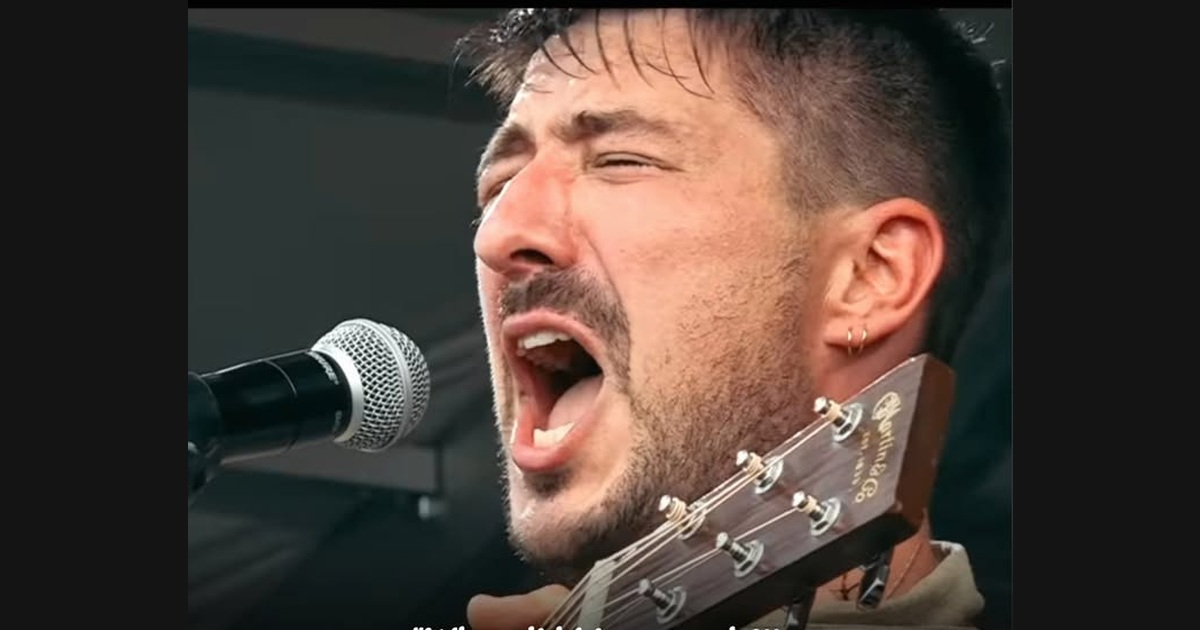
Two recordings can share a song, a band, and a festival name without having identical titles or credit lists. That is the useful starting point for this selection of Mumford & Sons performing “House of the Rising Sun” with guests.
The first upload’s title names Trombone Shorty and Jon Batiste and labels the occasion as New Orleans Jazz Fest in May 2023. The official Mumford & Sons upload that follows names Celisse and Trombone Shorty in its title. Those labels provide information, but neither title should be treated as a complete inventory of everybody involved.
Watch on YouTube ↗
A headline is a selection of credits
A concert uploader may emphasize the musician who attracted their attention. An official release may use a particular featured-artist credit. The difference does not automatically establish two different performances, and it does not justify removing a person from a concert simply because their name is absent from one headline.
Keep the first clip’s title attached to the first clip. If you need an exact event date or full personnel list for a detailed account, use a program or an official event record. Avoid filling gaps by copying every name from a related recording.
This becomes especially important with guest appearances. A musician can participate in one number, several numbers, or only part of a selection. A festival lineup tells you who was booked for the event, not necessarily which instruments sound on every recording.
Separate identity from musical function
Once the credits are clear, make a second set of notes about roles. Who carries the sung melody? Which part provides the pulse? Which instrument takes a featured passage? These are musical functions that should be identified from the recording rather than assigned from celebrity recognition.
For example, a guest known as an instrumental soloist might support another performer during part of a song. A prominently named singer might not be carrying the lead at every moment. Following the functions explains the collaboration more accurately than assuming that the biggest name always controls the arrangement.
Watch on YouTube ↗
Use the official release as its own document
The band’s official “House of the Rising Sun” title identifies a New Orleans Jazz Fest performance featuring Celisse and Trombone Shorty. Start from that supplied identification when discussing this second release. Do not describe its camera coverage or soundtrack as identical to the fan upload without making the actual comparison.
A useful side-by-side note might have four fields: uploader, stated occasion, named guests, and musical passage compared. That keeps source information separate from observations about what the performers do.
The song is not owned by one arrangement
The Library of Congress catalogs a 1937 recording of “The House of the Rising Sun” by Georgia Turner in Middlesboro, Kentucky. That earlier document places the traditional song well before these festival interpretations. It does not identify one definitive modern arrangement.
Watch on YouTube ↗
Erik Grönwall’s upload labels his interpretation an “Epic Dark Version.” Treat that phrase as a presentation choice, not a historical genre attached to the traditional song. Compare how the arrangement creates scale through instrumental support and vocal emphasis.
The most useful result is a precise map: a traditional composition, particular festival recordings, and separately documented guest credits. With that map in place, the shared music becomes easier to discuss without confusing a video title with the complete history of the stage.