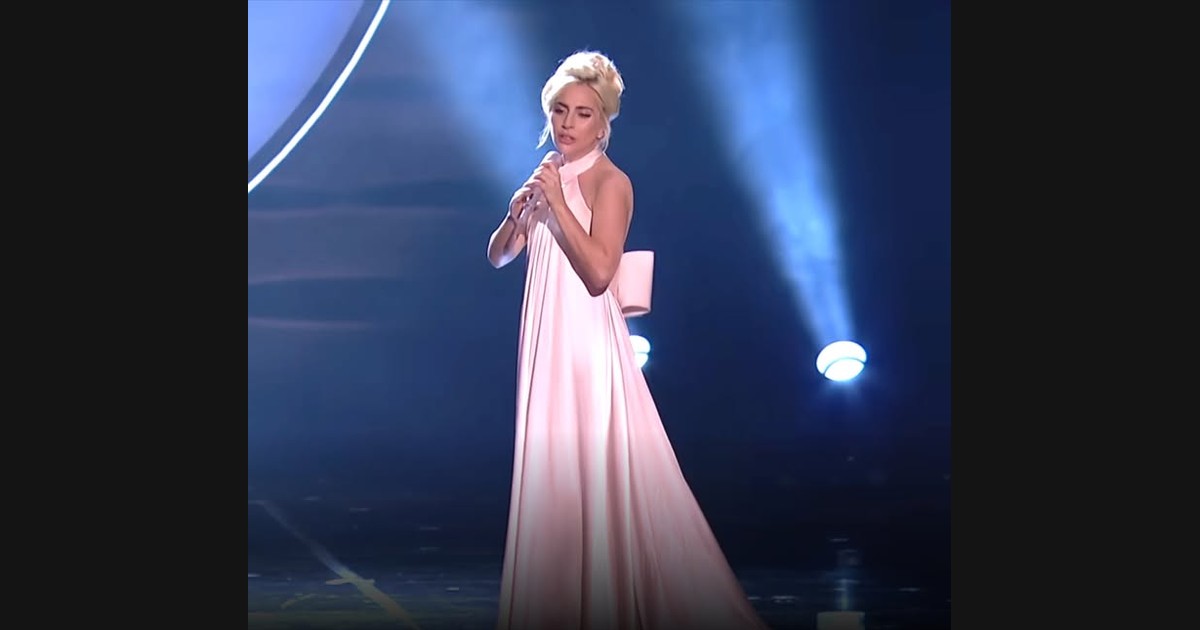
A televised song reaches the audience through two connected channels: the sound and the image. Lady Gaga’s “Million Reasons” at the Royal Variety Performance offers a useful way to separate them for a moment, then bring them back together. The exercise can make a familiar performance feel more specific without requiring another claim about its emotional magnitude.
The Royal Variety archive places Gaga in the 2016 program at London’s Eventim Apollo in Hammersmith. The related recordings move to “Hold My Hand” at the Oscars and “I Wish” in a Stevie Wonder tribute, giving three different pieces through which to compare attention.
Watch on YouTube ↗
First pass: follow the musical thought
Begin with the sound as the principal subject. You can let the picture remain in view without continuously watching it. Choose a complete vocal statement and follow where its emphasis falls, how its direction develops, and what makes the ending feel finished or unsettled.
Make one short observation before returning to the video. For example, identify a pause that seemed to prepare a return, or a phrase whose ending changed your expectation of what would follow. The observation should describe something you can locate again, rather than a general verdict on the singer’s feelings.
Second pass: identify what the image adds
Now watch the same passage. Consider how framing directs attention at the point you already identified by ear. A close view may make an expression prominent; a wider view may emphasize the performer within a stage setting. These are possibilities to examine, rather than assumptions about every shot in the clip.
The useful comparison is between your two impressions. Did the picture clarify a musical boundary, draw attention to something else, or encourage a different interpretation of the same phrase? A screen presentation can shape listening without changing the notes themselves.
This method also keeps description precise. An expression visible in a moment is not a complete account of a performer’s private state. A listener can discuss how a performance communicates without treating the image as unrestricted access to the person behind it.
A second song tests the method
“Hold My Hand,” in Gaga’s official Oscars upload, changes the composition and occasion. Repeat the two-pass approach with a short passage rather than expecting the same visual relationship to recur.
Watch on YouTube ↗
Begin with a musical landmark you can hear, then compare the image around it. This prevents a remembered visual feature from becoming the sole explanation of a performance’s effect. It also leaves room for a different song to organize its emphasis in another way.
A tribute selection changes the material again
The final “I Wish” selection places Gaga within repertoire associated with Stevie Wonder. The change of work provides another test: an observation useful for a sustained vocal statement may be less central when your attention is drawn toward recurring rhythmic motion.
Watch on YouTube ↗
Allow the listening subject to change with the piece. There is no requirement that one viewing method produce the same conclusion across all three videos.
Returning to “Million Reasons” afterward brings the two channels together. The voice, accompaniment, and screen presentation can be appreciated as related contributions, with each description attached to something specific rather than to an assumed universal reaction.