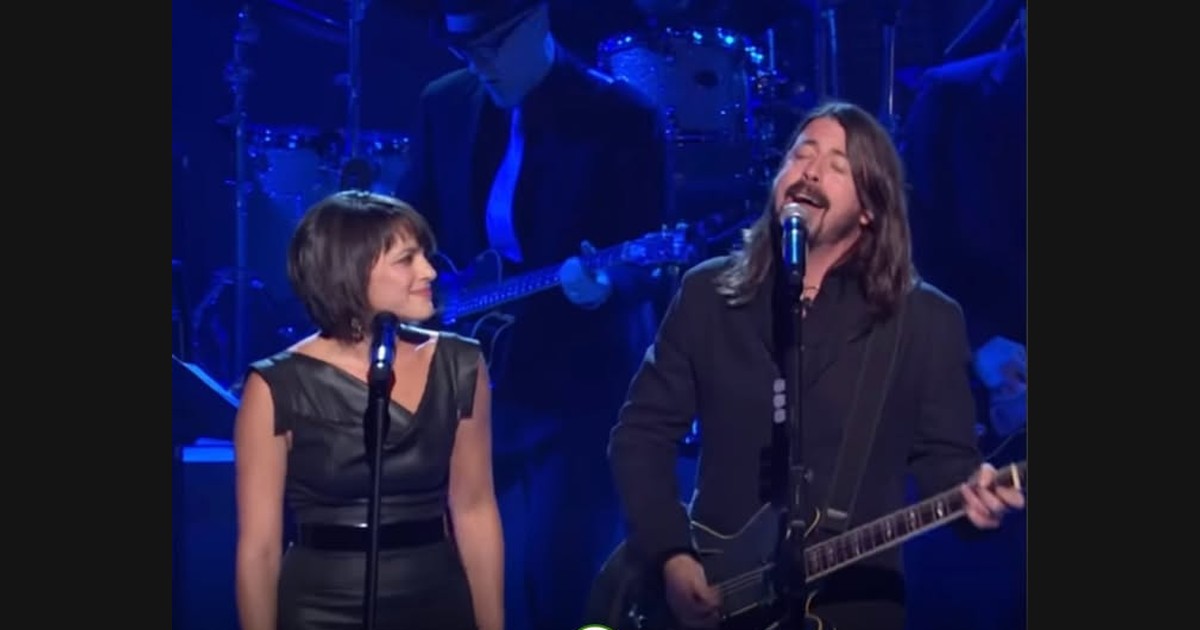
A duet is easy to describe through the people singing. It is harder, and often more useful, to describe what keeps the song continuous underneath them. Dave Grohl and Norah Jones’ Maybe I’m Amazed at the Kennedy Center Honors offers a starting point for that second kind of attention.
The Kennedy Center presents the selection as a duet honoring Paul McCartney. The composition’s original album setting involved another organization of musical work: McCartney’s own account describes him performing the instruments, with harmonies contributed by Linda McCartney. A later shared rendition makes the division of responsibility a different part of the performance.
The duet selection
Watch on YouTube ↗
When one featured voice finishes and another begins, several things can remain active. The pulse can continue, the harmony can preserve a sense of direction and an instrumental line can connect the two statements. The handover then feels like part of one song rather than the boundary between unrelated solos.
Listen through one change of attention without following only the new singer. Notice what remains stable around the transition. The supporting material may explain why the exchange is easy to follow.
A map of the work beneath the voices
| Responsibility | Its structural contribution |
|---|---|
| Pulse | A continuing reference for musical movement. |
| Harmony | A setting that makes melodic direction intelligible. |
| Connection | Material that carries the space between featured statements. |
| Contrast | A change that makes another section or role perceptible. |
The roles need not belong permanently to one instrument or person. A recurring figure can supply pulse and harmony at the same time. An accompanying part can briefly become the main source of direction during a vocal pause.
That is why support should not be confused with unimportant background. A less conspicuous part can make the exposed one possible. The arrangement depends on their relationship, not on every contribution attracting equal attention.
Compare a different featured-vocal setting
Watch on YouTube ↗
Jones’ official Don’t Know Why video changes the composition and presentation. Follow the same kinds of supporting work around the central line. A solo-associated recording still has relationships between foreground and accompaniment, even when the public credit concentrates attention on one artist.
The comparison does not need to identify a fixed personal style. Different songs can give a recognizable performer different musical tasks. The relevant question is how the released version organizes those tasks.
A band recording gives another distribution
Watch on YouTube ↗
The Beatles’ Here Comes the Sun selection changes both the composition and the recording frame. It is a broader reference for how several musical contributors can sustain one recognizable song identity.
Try following the supporting material for a complete phrase before shifting attention back to the main line. The second pass can reveal how repetition, a held foundation or a connecting figure helps the melody remain clear.
Returning to Grohl and Jones then makes the duet easier to hear as an arrangement. The vocal partnership supplies contrast and recognition, while the continuing framework gives that partnership a route through the song. Both levels belong to the performance, even when the camera or a short caption emphasizes only the two featured names.