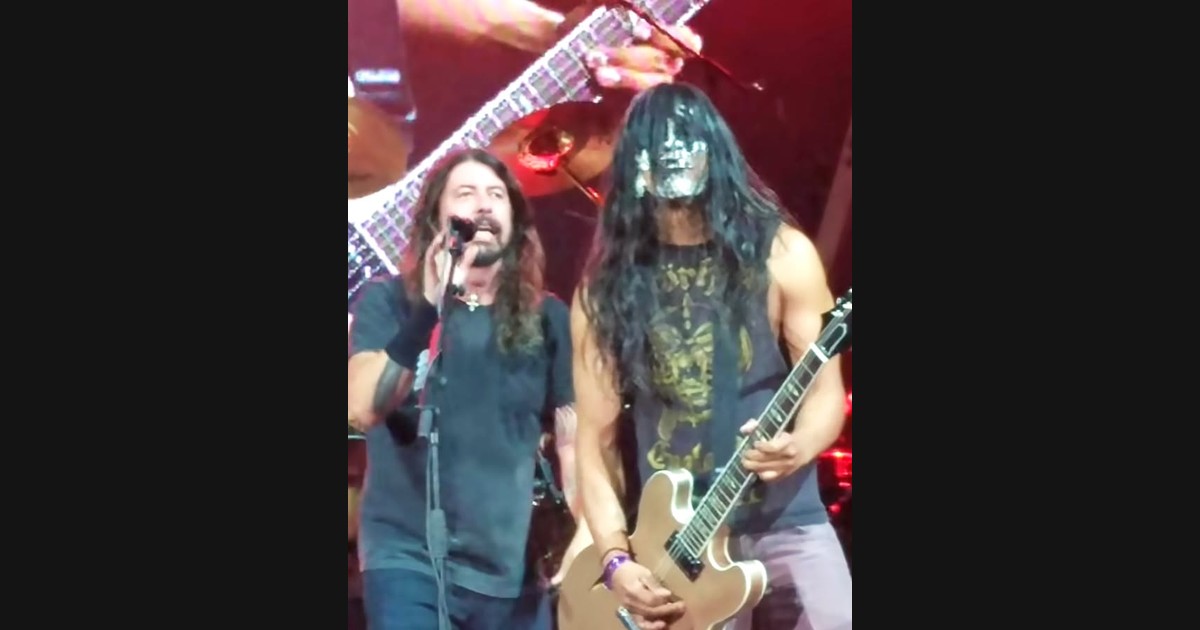
A guest guitarist entering an established concert does not enter an empty musical space. The song already has a framework, and the band supplies the relationships that allow another player to become part of it. Yayo Sanchez’s “Monkey Wrench” appearance with Foo Fighters in Austin is useful to hear on that scale.
Sanchez is recognizable in the recordings as “Kiss Guy,” but the nickname should not replace his identity as a musician. The Recording Conservatory of Austin’s contemporary report identifies him as an alumnus. That documented background is a useful counterweight to a story about an entirely inexperienced stranger discovering an ability onstage.
Watch on YouTube ↗
The song provides shared coordinates
Familiar repertoire can give a guest and a band something in common before a new contribution is heard. A recurring pattern, an expected section, or the return of a vocal passage can supply musical coordinates. The guest’s task is to contribute within that larger account.
Listen beyond the featured guitar. What maintains the sense of pace? Which parts continue when attention shifts toward the guest? How does the performance return from a featured passage into material shared by the ensemble? These relationships explain why a solo can feel connected to a complete song.
They also distinguish a concert appearance from an isolated instrumental demonstration. A phrase has to occupy available space and connect with other musicians. Its role is shaped by what the rest of the band is doing, not solely by the number or speed of its notes.
A multi-camera edit supplies several viewpoints
The main upload identifies itself as multi-camera. That format can make relationships easier to follow by moving between the guest, other players, and the wider stage. It also means the viewer is watching an assembled presentation rather than one camera’s uninterrupted perspective.
Use the changing views to orient yourself, but keep the music as the reference when following a phrase. A cut can direct attention toward a visible gesture without proving that the gesture caused everything prominent in the captured sound.
Watch on YouTube ↗
Another audience position changes the evidence
The separate audience recording provides another view of the same identified Austin appearance. Compare a passage you can recognize in both uploads. Which relationships become clearer from another angle, and which become harder to distinguish?
Differences in captured sound may reflect recording position and equipment as well as musical activity. A fan recording can be valuable without serving as a precise measurement of stage balance or a complete account of what every audience member heard.
Stage remarks add context, not a rehearsal history
Watch on YouTube ↗
The longer companion includes spoken material around the appearance. Those remarks belong to the concert’s presentation and can clarify how the guest is introduced. They should not be expanded into an invented account of every earlier preparation or interaction.
The central musical comparison remains concrete: a guest becomes part of a working ensemble, and several recordings show that relationship from different positions. After watching, describe one moment of connection between the featured guitar and the surrounding song. That observation explains more than a claim that a single player momentarily replaced the entire band.


