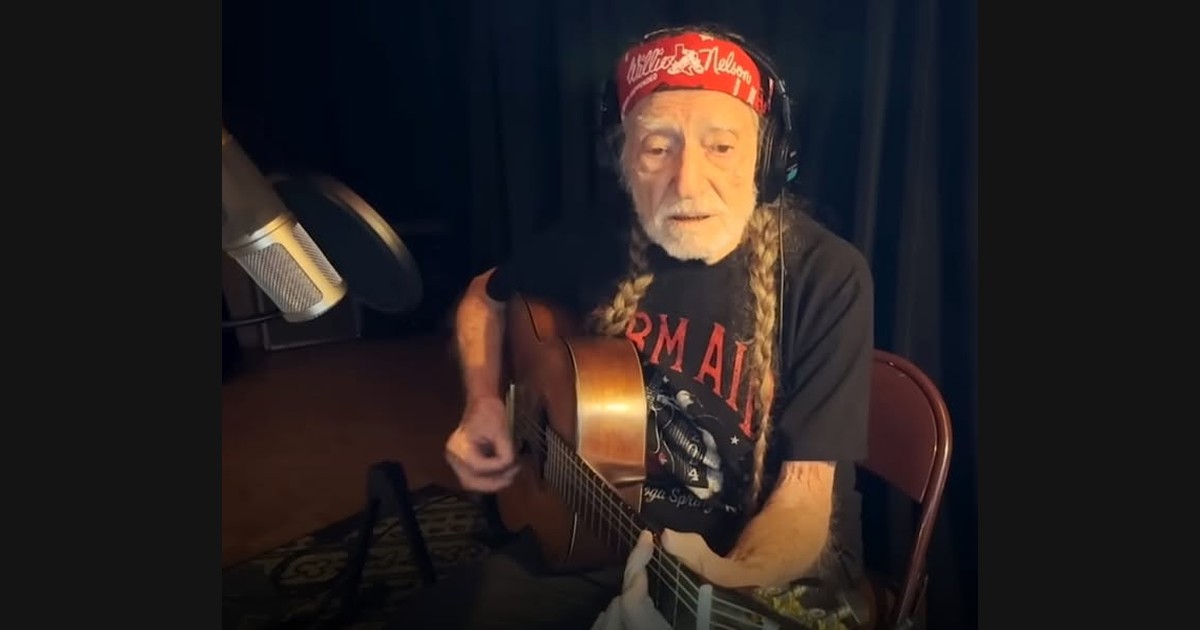
Willie Nelson’s “Heart of America” belongs to a new screen soundtrack, while the recordings beside it lead into an older album selection and a live collaboration with Neil Young. Taken together, they show why a familiar performer can be the connecting thread through several different kinds of musical work.
Nelson’s official February 2026 announcement identifies “Heart of America” with The Gray House, a Civil War-set series, and its original soundtrack. That historical setting does not make the track a nineteenth-century recording. It is a contemporary release serving a screen project.
Watch on YouTube ↗
The performer connects the material
A listener encountering the song through Nelson may begin with his recognizable artistic identity. That identity can make unfamiliar writing approachable, but it does not erase the contribution of the people who composed or produced the work.
“Heart of America” is credited to Erin Enderlin, Jim “Moose” Brown and Jeff Fahey as writers. Nelson’s role as vocalist is a distinct contribution. Keeping the roles visible helps explain how a new song can enter an established performer’s public repertoire.
A catalog recording offers another kind of context
Nelson’s official “Just Breathe” video identifies the track with Heroes. Here the song is part of an artist’s album presentation rather than a track introduced through a television-series soundtrack.
Watch on YouTube ↗
The change of context affects how listeners may approach it. A soundtrack selection arrives with a named screen project; an album track sits beside other choices made for a musical collection. Both can be heard independently, but their release frames give different reasons for encountering them.
For a focused comparison, consider what you expect before pressing play. Does the soundtrack association suggest a public or historical scale? Does the album presentation direct attention toward the performer and the selected song? These are listening expectations, not claims that the recordings have only one possible meaning.
A songwriter stands beside another interpreter
Farm Aid’s official recording places Neil Young and Nelson together on “Heart of Gold” in Louisville, Kentucky, on October 1, 1995. The organization also documents the song’s return across several years of its concert history.
Watch on YouTube ↗
This partnership offers a further arrangement of roles. A song strongly associated with Young becomes shared material in an event whose musical program supports Farm Aid’s work with family farmers. The performance has a public purpose beyond the immediate composition, while the song retains its own identity.
The live occasion should not be confused with the date the work was written or first released. A repertoire piece can remain active through repeated performance, gaining new partners and settings without becoming a new composition each time.
Three release frames, one continuing artist
The recordings form a useful sequence: a contemporary soundtrack contribution, a selected album track and an established song shared at a benefit concert. Nelson’s presence connects them, but it does not make their origins interchangeable.
That is a substantial part of an interpreter’s work. A performer can introduce new writing, choose existing repertoire and collaborate with its established artist. Hearing those roles beside one another gives “Heart of America” a place within an ongoing songbook, rather than reducing it to an isolated statement about a single moment.


