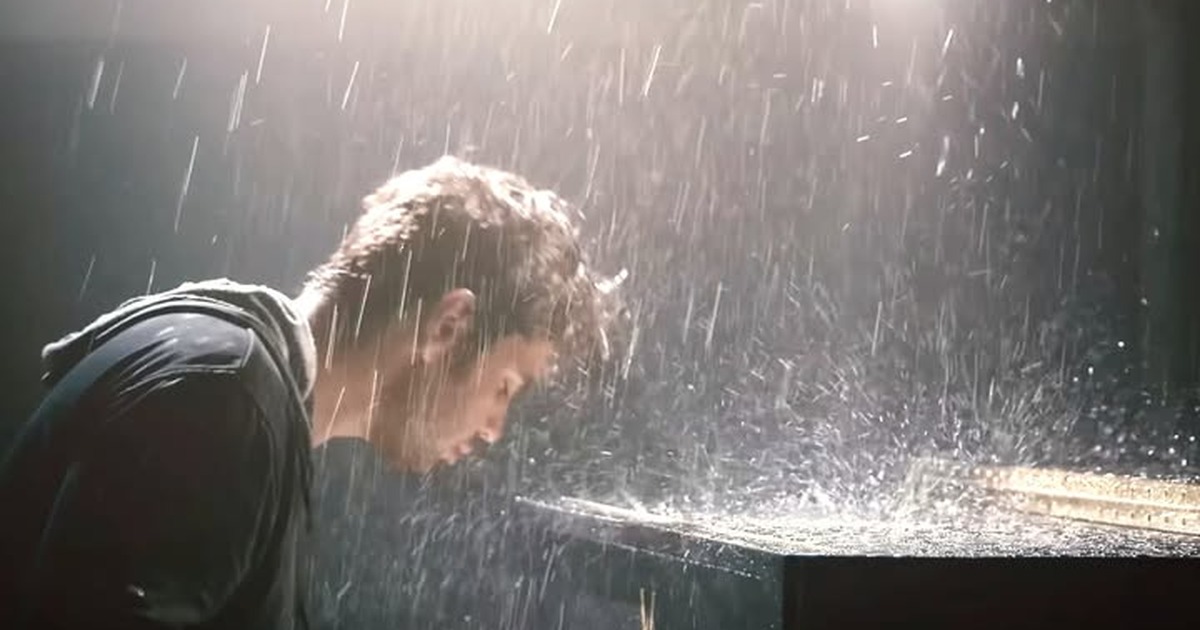
The phrase “piano cover” identifies a useful starting point for William Joseph’s Nothing Else Matters, but it does not describe the whole production. His official publication credits an arrangement, other instrumental performers and a video team. The music and the filmed setting are related layers of a designed presentation.
Joseph names himself as arranger and music producer, Caroline Campbell on violin and Vanessa Freebairn-Smith on cello. He also thanks the production team for making rain indoors. That detail identifies a constructed visual effect, rather than an outdoor weather event that viewers need to imagine happened by chance.
The official presentation
Watch on YouTube ↗
An instrumental arrangement redistributes work
When a song associated with a band and sung language becomes an instrumental presentation, musical responsibilities have to be allocated differently. A melody can carry recognition without its words, while accompaniment preserves direction around it.
The presence of violin and cello broadens those possibilities. Different instruments can carry or support a line, giving a piece resources beyond a single keyboard. The credits establish that these people contribute; exact claims about which instrument enters at each moment should come from the recording itself.
This distinction gives the arrangement proper credit without pretending to supply a transcription. It is more informative to recognize a collaboration than to describe every sound as if one visible performer must have produced it all.
A film effect is another production responsibility
Rain supplies an immediate visual association, but an image cannot tell us everything about how the sound was recorded. A filmed performance scene and a final music recording can be planned together without sharing every production step.
The artist’s explicit account makes the useful fact clear: the rain belongs to a made-for-camera scene. There is no need to invent a story about exposure to natural weather or to use the image as proof of a completely unedited live take.
A visual idea can still contribute meaning. It gives the viewer a frame around the composition, while the music has its own sequence and direction. Keeping those layers distinct allows both kinds of work to be appreciated.
Metallica with the San Francisco Symphony
The second official selection presents Metallica and the San Francisco Symphony performing Nothing Else Matters. The composition remains the reference, while the performers and the kind of ensemble collaboration change.
Watch on YouTube ↗
An orchestral partnership does not automatically explain every musical choice, just as the phrase piano cover does not. Begin with the actual credited participants and consider how a familiar song can distribute work across different resources.
Another instrument-centered interpretation
The final selection is Sina’s Sultans of Swing drum cover. Her own description identifies a drumless backing track and a stylistic tribute to Terry Williams. It changes both the composition and the instrument placed at the center of attention.
Watch on YouTube ↗
The link among these recordings is transformation through a published performance format. Joseph’s contribution is especially clear when its credits remain visible: an arrangement brings musicians together, while a separate team makes the visual scene. The resulting piece is neither an unexplained piano solo nor a documentary record of accidental weather.