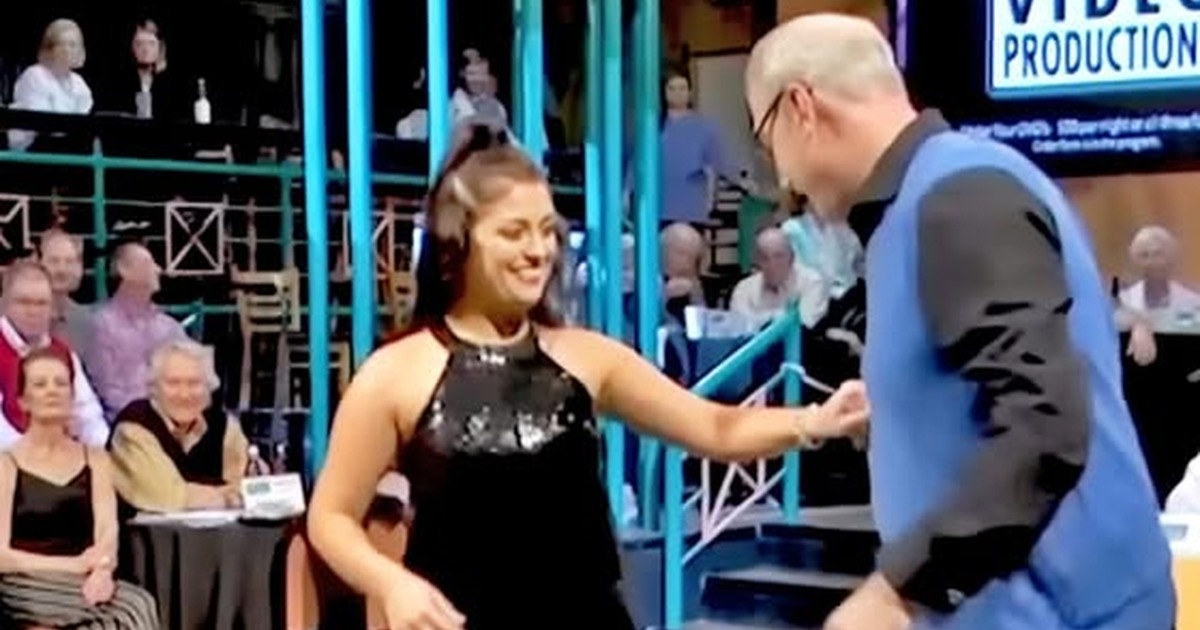
A dance competition video can circulate with a story that has little to do with the event named by its producer. The Stages Video Productions upload here identifies West & West as the 2020 National Shag Dance Championships Pro Division champions. That is a better starting point than attaching an unverified wedding or family anecdote to the footage.
The competition setting gives the clip a clear frame, but a viewer does not have to know its judging rules to follow the dance. One rewarding approach is to watch how a complete performance develops: an opening establishes a relationship, transitions connect different ideas and later passages give earlier material a new context.
First, watch the whole shape
Watch on YouTube ↗
On an initial viewing, resist the temptation to stop at the first complicated-looking detail. Follow the pair through the complete selection. Notice where the presentation seems to introduce something, develop it or settle after a change. These are observations about structure rather than technical scores.
A routine can create contrast in several ways: partners can change distance, exchange positions, alter the size of their movement or place attention on one dancer before reestablishing the pair. The same musical pulse can continue underneath all those changes.
Then choose a transition rather than a trick
A conspicuous figure is only one part of a connected sequence. The approach to it and the movement away from it show how the dancers maintain continuity. If a passage looks especially effortless, include what happened immediately before it in your attention. The preparation may explain why the action fits.
For example, a turn could be framed by a change of spacing before it and a return to a recognizable shared pattern afterward. The turn supplies a visible event; the surrounding decisions make it part of a coherent dance. This kind of description remains useful even if a viewer does not know the formal name of the figure.
Carolina shag is associated with a recurring basic pattern, but a performance is not simply that pattern repeated unchanged. Decoration, contrast and partnership give the larger sequence its identity. The distinction helps explain how a recognizable dance form can support individual interpretation.
A different year’s championship selection
Watch on YouTube ↗
The related production upload identifies Sydney Kemble West and Sam West as the 2019 Pro Division champions. Treat the change of year as a change of performance, not as a second camera angle from the first clip. Compare one structural choice, such as the way an opening becomes a sustained sequence.
Keeping the criterion narrow avoids a vague ranking of two complete routines. You might prefer the way one presentation establishes the pair while noticing a different strength in how the other organizes contrast.
Competition and spotlight are separate frames
Watch on YouTube ↗
The Womble and McGee spotlight selection changes the performers and the stated occasion. It provides a reference for how a partnership can remain readable beyond a particular competitive result. Follow the same transition-based approach and see whether it helps you understand the dance.
The producer’s title tells you what the first recording documents; the connected movement gives you something to explore inside it. Keeping those jobs separate produces a richer account than either a borrowed anecdote or a list of impressive steps. A complete dance is made from relationships between moments, not simply from the moments that are easiest to clip.


