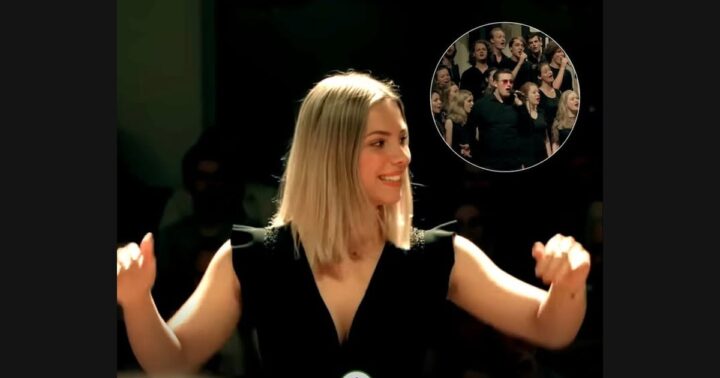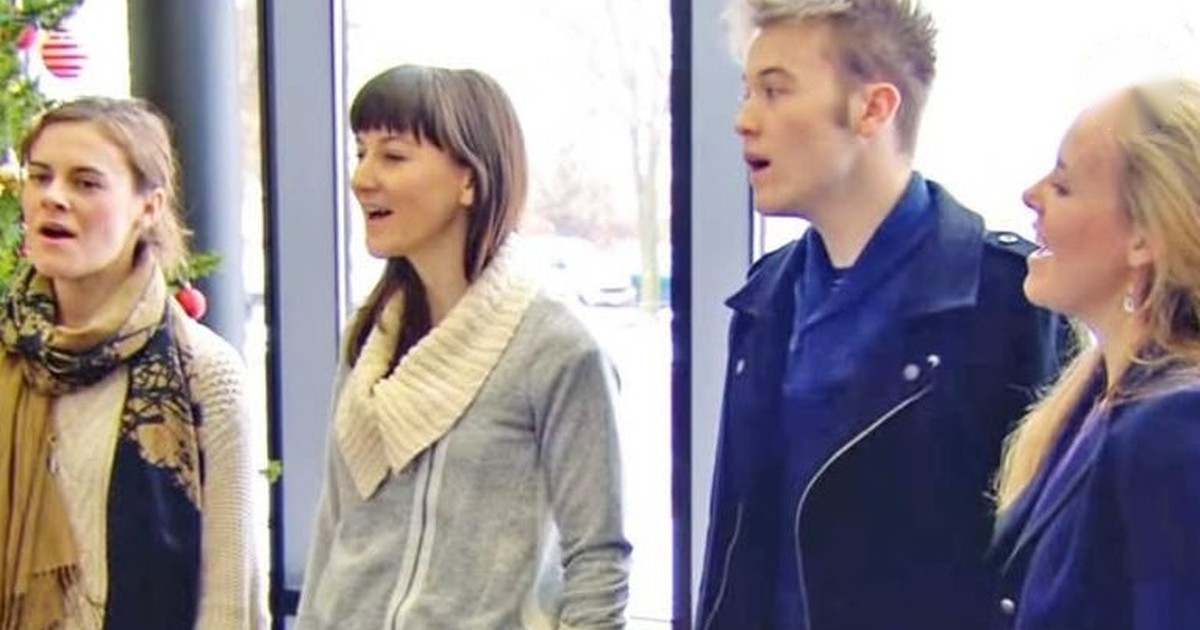
The setting of a performance changes the way a song arrives. In this informal clip of the von Trapps singing Edelweiss, an ordinary room replaces the visual machinery of a concert. There is no need to invent a story about who requested it or what everyone present felt. The useful contrast is already there: a song associated with a large musical can be carried by a small group in a much smaller space.
Edelweiss was written by Richard Rodgers and Oscar Hammerstein II for The Sound of Music. Its folk-like character has sometimes led people to mistake it for an existing Austrian folk song. Knowing the actual authorship adds interest rather than taking anything away: the song’s apparent simplicity is a piece of theatrical craft.
A compact song with more than one life
Watch on YouTube ↗
In the musical, the song is attached to the Captain and his homeland. Outside that dramatic situation, it can function as a family-associated repertoire piece, a concert selection or a melody recognized independently of the story. These uses overlap, but none requires the listener to treat the words as a literal statement by every later performer.
A small-group presentation puts particular emphasis on how people occupy the same musical sentence. A listener can follow the tune while noticing where other voices support it. The important distinction is between a melody that remains identifiable and the different harmonies that may give it a new setting.
Room scale is not the same as recording scale
A casual-looking video can encourage the impression that it gives direct access to exactly what a person standing in the room heard. A recording is still a recording: microphone position, distance and playback equipment affect the result. That does not make the performance less worthwhile. It simply makes claims about the physical sound of the room less certain.
Instead, use details the clip can actually support. Notice how closely the singers coordinate a beginning or ending, how a line is handed over, or how the group presents itself within the available space. Those observations remain meaningful without a claim that the sound is unprocessed or that the event was completely unplanned.
The same family name on a concert stage
Watch on YouTube ↗
Pink Martini’s official selection with the von Trapps, labeled as a 2021 Wolf Trap performance, provides a contrasting frame. The song now sits inside a concert presentation. Compare the role of the voices with the amount of surrounding musical and visual information rather than assuming a larger stage must produce a more important interpretation.
For a concrete comparison, choose the end of one complete phrase. Listen for what allows it to feel finished: the melody’s arrival, the supporting voices or an accompaniment that carries the music onward. A compact song makes these relationships easier to follow because the central tune stays familiar.
A related clip that is not the same family group
Watch on YouTube ↗
The AFI reunion with Julie Andrews features actors from The Sound of Music. They are connected to the story through the film, rather than being the historical family’s descendants. Keeping that distinction clear makes the collection of videos more informative.
Placed together, the clips show three routes by which musical theater continues beyond its original production: through the people who performed it, through a family associated with its story and through a song that listeners carry into new settings. The informal Edelweiss works especially well as an introduction to that portability. Its modest surroundings let the musical relationship among the singers become the main event.