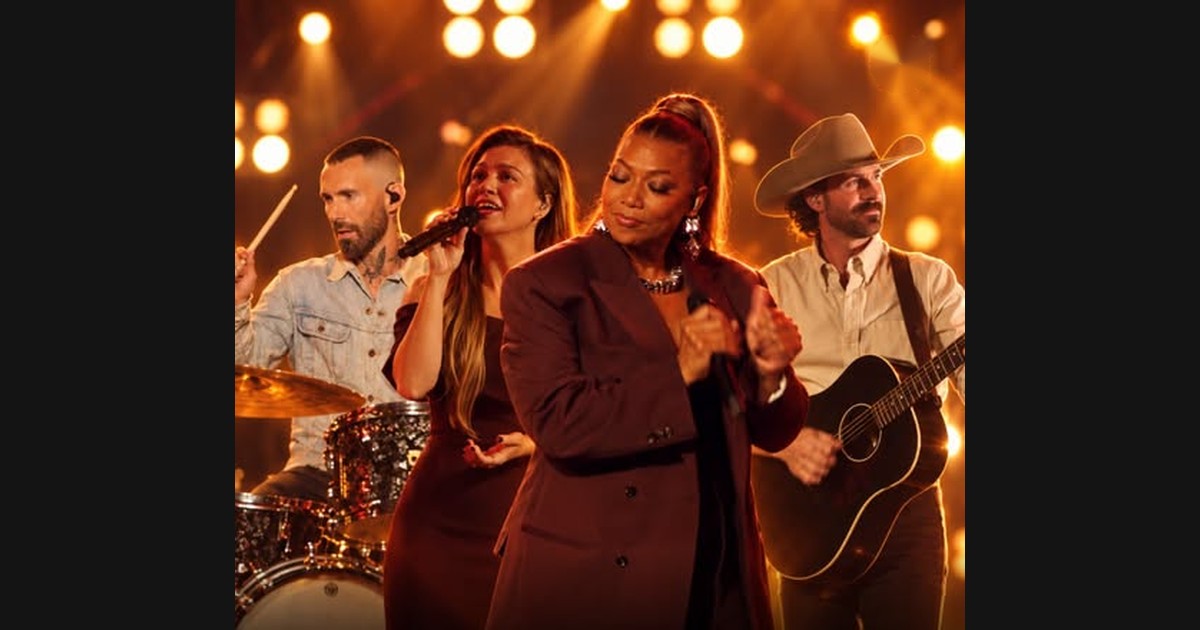
On The Voice, coaches are usually introduced through choices: whom they turn for, what they hear, and which artists they want to work with. A shared performance changes that relationship. They become members of an ensemble, and the useful question becomes how distinct musical identities can contribute to one song.
The official Season 30 presentation of “The Weight” belongs to that setting. NBC’s announcement identifies the coaching panel as Queen Latifah, Riley Green, Kelly Clarkson, and Adam Levine. The song offers a framework for considering shared storytelling rather than predicting how the coaches will judge a contestant.
Watch on YouTube ↗
One narrative can pass through several voices
A song’s narrative position does not have to change every time its singer changes. Several performers can share a story while preserving its continuity. The transition between them can supply contrast in sound without requiring the listener to imagine an entirely new fictional speaker.
Follow the movement of attention. When an individual voice carries a passage, what keeps it connected to the rest of the number? When voices come together, does the shared sound feel like confirmation, expansion, or a return to a familiar point? These are questions about musical function, not the relative fame of the performers.
Distinctive voices can make an exchange easy to follow, but individuality is only one ingredient. The shared pulse, recurring material, and preparation of entrances also help the performance belong together. A collaboration is not simply four solo showcases placed consecutively.
Verses and returns do different work
In a narrative song, a new passage can introduce detail while a recurring section supplies something stable. That relationship gives an ensemble a practical framework: continuity need not depend on every singer sounding alike.
Listen for what changes and what returns. A listener might follow a new piece of the story, then recognize a familiar musical destination. The resulting alternation can make individual contributions feel part of a larger sequence rather than separate interruptions.
A useful note identifies one handover and describes how it is connected to the surrounding music. Avoid guessing whether it was improvised or how rehearsal decisions were made; the performance itself does not reveal the entire preparation process.
Watch on YouTube ↗
Another broadcaster view is not automatically another event
TODAY’s presentation connects the performance with the season premiere. It provides another route into the same identified feature rather than proving that the coaches staged a separate concert. Distinguishing presentation from occasion keeps the comparison grounded.
Notice how introductions and framing affect expectations. A clip presented as a season preview may make the cast of coaches the first thing a viewer notices. Once the music begins, attention can shift toward how those people function together rather than what each name represents individually.
Watch on YouTube ↗
Return to The Band’s repertoire
The accompanying Band recording supplies the song reference outside the television competition. Compare the organization of the story and recurring material before comparing vocal color. The composition gives each performance a framework, while the ensemble determines how that framework is inhabited.
The most revealing result may be a relationship rather than a winner: one voice makes an idea distinct, and the group gives it a place within a shared musical account. That is what a coaches’ collaboration can demonstrate when the listening moves beyond the familiar chairs and competitive format.


