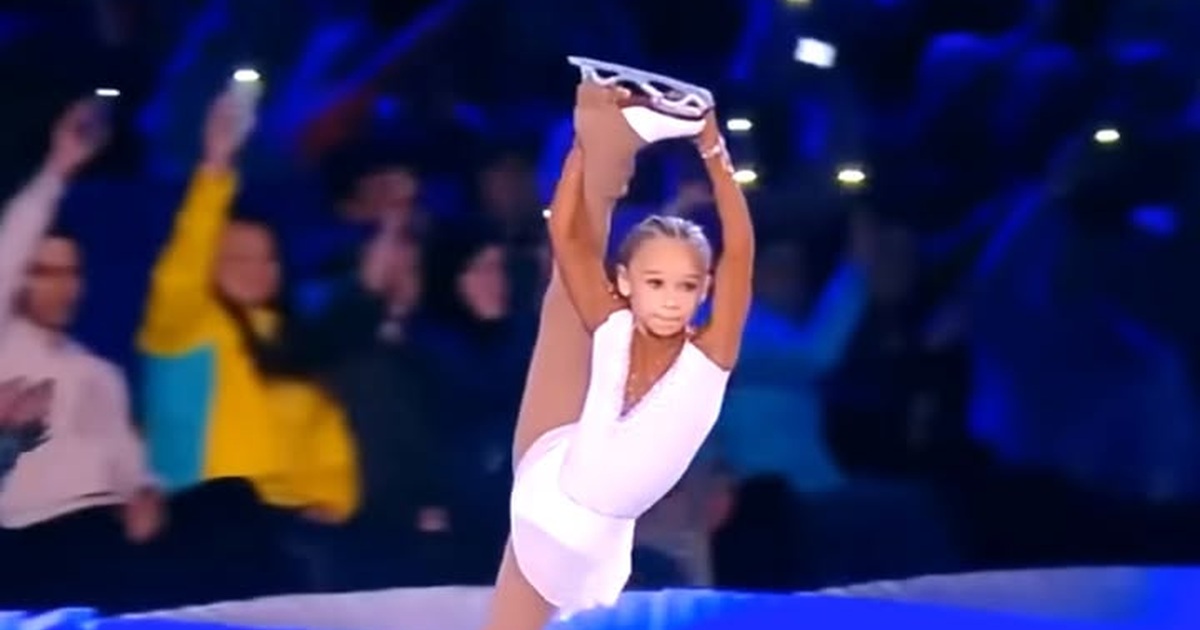
A song used for skating acquires a second visible interpreter. The recorded singer shapes the musical line, while the skater responds through movement across a different kind of space. Veronika Zhilina’s Hallelujah program offers a way to examine that relationship without reducing the performance to a list of difficult elements.
The program’s published description identifies Alexandra Burke’s rendition as its music. That credit separates the voice on the soundtrack from the athlete on the ice. The accompanying Burke television performance is another video to compare, rather than evidence that both uploads use an identical recording or edit.
Watch on YouTube ↗
Choose a phrase rather than a single accent
A musical accent can suggest a brief action, but a phrase has a beginning, an unfolding and an ending. Movement can respond to that larger span through a change of direction, a sustained shape or a shift in the amount of space used. These are possible relationships to identify in the program, not a technical checklist every passage must satisfy.
Begin with a stretch of music whose boundary you can hear. Watch where the movement begins and where it settles. The important event may occur between those points: a continuous path, a change of level or a held position. Describe the relationship before assigning it an emotional meaning.
Speed and intensity are different observations
A faster movement is one kind of change. A broader gesture, a more compact shape or a pause can also redirect attention. Keeping those features separate helps explain why a quieter-looking moment can remain part of the musical development.
Make a short two-column note. In one column, describe an audible change in the selected phrase. In the other, describe the visible action alongside it. Then decide whether the two seem to coincide, contrast or overlap. This is a supported interpretation of a relationship, rather than a claim to know the choreographer’s intention.
The camera is part of your view
A close frame emphasizes a body’s shape and expression; a wider frame can make a path across the ice easier to follow. If the frame changes during your chosen passage, record that change separately from the skating. A movement may appear larger because of the view through which it is presented.
This also sets a practical limit on description. A cropped view may not show enough to identify an element confidently. You can still discuss the relation between visible movement and the music without awarding a score, naming an uncertain jump or describing the program as flawless.
Bring the voice into the foreground
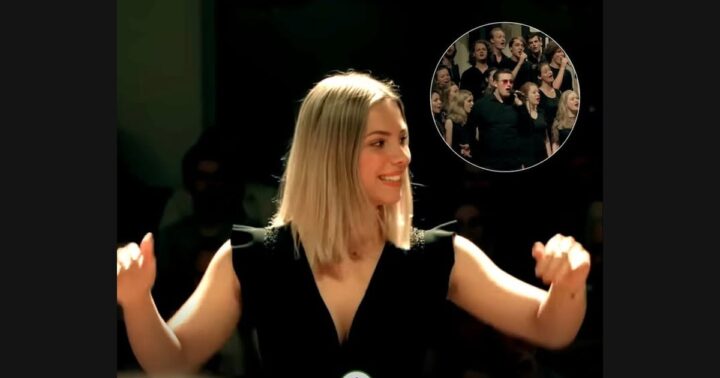
The Alexandra Burke selection shifts attention from movement responding to a voice to the person performing the song. Follow the same kind of phrase boundary: entry, continuation and release. Consider how a singer communicates its shape when the voice itself is the central visible action.
Watch on YouTube ↗
The comparison concerns different ways of encountering the composition. It does not establish that a vocal phrase appears at the same point, with the same duration, in both clips. Keep each performance’s own boundaries intact.
Compare a choral interpretation
The United States Air Force Band identifies the third selection as a performance by its Singing Sergeants. Here, several voices share the musical material. Follow how a phrase remains identifiable as attention moves from an individual singer toward an ensemble sound.
Watch on YouTube ↗
Return to the skating program with one clear relationship in mind: a phrase becoming a path, a change of sound meeting a change of shape, or a musical release accompanying a moment of stillness. The result is a specific account of interpretation across two forms. It respects the work of the soundtrack performers and the skater without claiming that either supplies a single compulsory meaning.