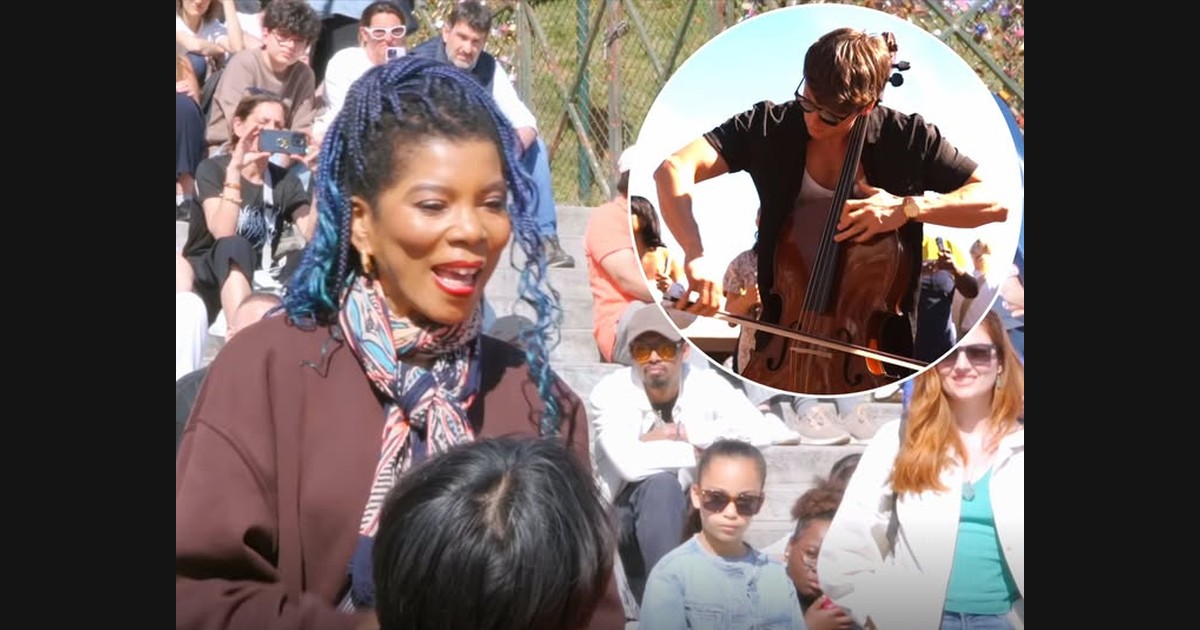
Recognizable music can attract attention in a public space, but recognition alone does not explain how an arrangement holds together. A listener still needs a route from one idea to the next. Van’s Paris presentation offers a useful starting point for considering that route, with related Julien Cohen videos providing different examples of familiar material organized for a public performance.
The key distinction is between recognizing the ingredients and following the construction. A performance can include several musical ideas while giving them different relationships: succession, overlap, return, or contrast.
Watch on YouTube ↗
Mashup and medley describe different possibilities
A medley generally places selections in sequence, moving from one recognizable piece or excerpt to another. A mashup emphasizes bringing material from separate sources into a combined relationship, which may include overlap or a newly shared framework. Actual arrangements can blur those labels, so listening to the relationships is more useful than applying a title mechanically.
For Van’s presentation, follow the point where your attention changes from one musical idea to another. What keeps the transition connected: a continuing accompaniment, a shared pulse, a held sound, or an entrance that prepares the next idea? Choose only what you can identify confidently in the recording.
A helpful map uses arrows rather than timestamps. Write “idea introduced,” “texture changes,” and “familiar material returns” in the order you hear them. The result records the performance’s logic without pretending that every return is a newly introduced song.
A public setting adds a visual sequence
In public-performance videos, the audience also discovers how the event is organized. A camera can reveal participants or widen the view of the ensemble. Those visual changes can make a musical expansion feel larger, but they are a separate layer from the arrangement itself.
Watch once for the screen’s reveals and listen once for the musical transitions. Where the two coincide, describe the relationship. Where they differ, notice which one first made you feel that the performance had entered another phase.
Watch on YouTube ↗
One composition can contain strong internal contrasts
Cohen’s “Bohemian Rhapsody” presentation offers a useful contrast with the idea of combining separate songs. A recognizable composition can contain sharply different sections of its own. Hearing a new texture or style is therefore not sufficient evidence that an arrangement has switched to another work.
Follow the distinction between a section change and a source change. It keeps the analysis grounded in musical form rather than assuming that every dramatic contrast must be a mashup.
Watch on YouTube ↗
Repetition can create development too
The “Carol of the Bells” presentation supplies another route through familiar material. Listen for how a recurring idea relates to changes around it. Development does not always require introducing another melody; a stable reference can make additions, withdrawals, and changes of emphasis more noticeable.
The three selections are separate creator presentations, so they should not be combined into one event or a verified participant total. Their useful connection is structural: each offers a way to consider how recognizable material acquires a larger shape.
After watching, name the mechanism that made one transition work for you. That answer explains more than a general claim that familiar music brought a square to a standstill. It identifies how an arrangement guides attention through time.


