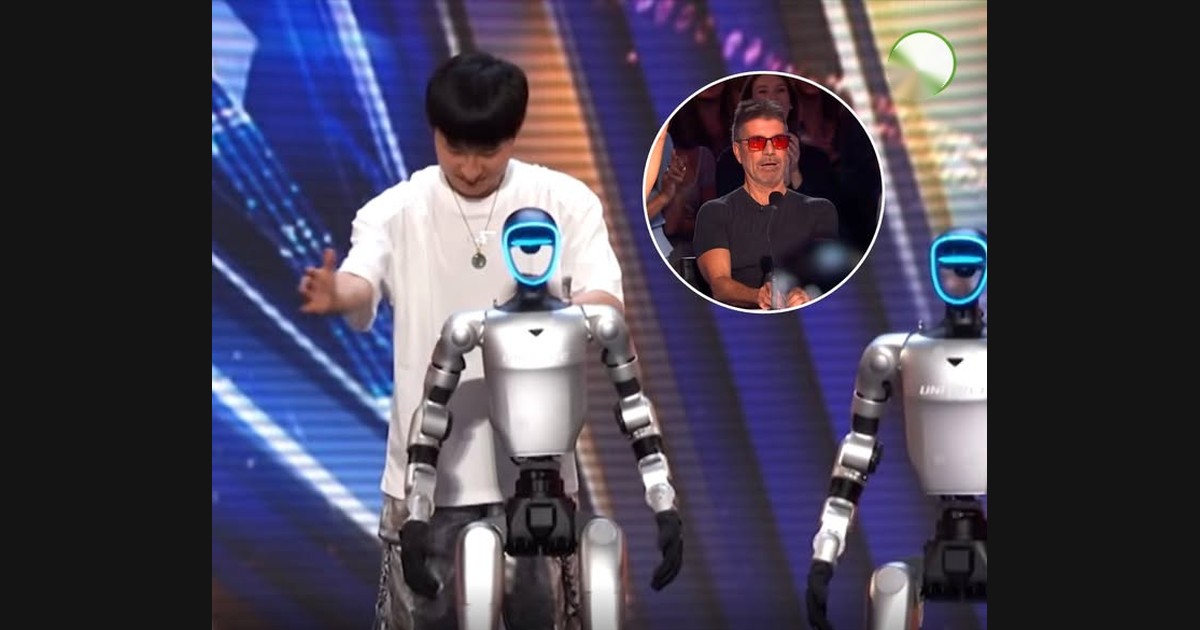
A robot dance can invite two different questions: how the routine works as a stage presentation, and how the machines are controlled. Unitree’s official America’s Got Talent clips provide evidence for the first more readily than a complete answer to the second. Keeping those questions separate makes the performances easier to assess.
AGT identifies the selections as a 2026 audition, quarterfinal, and final. Unitree’s own company account identifies its work in legged and humanoid robotics. Those references establish participants and program stages without supplying the exact control setup behind every visible movement.
Watch on YouTube ↗
A stage routine organizes relationships
Begin with the composition of the scene. Where does attention move between a single figure and the group? Does a repeated motion establish a reference, or does a change of formation make another relationship visible?
These are choreographic questions. A human performer and a machine can occupy related positions in a routine without sharing the same physical capabilities or internal process. The visual relationship is still available to discussion.
Timing also has more than one level. An action may align with a musical event, a group change, or another performer’s movement. Notice the alignment where it is clear rather than assuming that every apparent response documents independent recognition of what is happening around the machine.
For example, a routine can establish one group pattern and give another figure a contrasting action. The interest then lies in how that contrast is prepared and resolved, a question shared with other kinds of choreography.
Three observations, three different claims
| What is observed | What it does not establish by itself |
|---|---|
| Coordinated movement | The exact method used to coordinate or initiate it. |
| A humanlike shape | Human feelings, intentions, or understanding. |
| A successful stage sequence | Performance in every uncontrolled real-world setting. |
The distinction leaves room to appreciate the engineering and entertainment without turning the program into a technical certification. Specific claims about autonomy, sensing, or preparation need documentation beyond a finished broadcast.
Watch on YouTube ↗
The quarterfinal is another program task
The official quarterfinal label identifies a separate stage of the competition. Compare the routine’s organization rather than assuming that advancement proves a particular technology claim. A competition evaluates an entertainment entry within its own format.
Choose one feature to follow across the first two selections: the relationship between individuals and a group, the use of musical accents, or the preparation of a transition. A defined comparison is more useful than treating every change as an increase in intelligence.
Watch on YouTube ↗
The final expands the viewing sequence
The final-stage upload completes this set of official program references. Its presence establishes a final appearance, not a result or a measured ranking in robot capability.
Consider how the presentation guides the viewer through a beginning, development, and conclusion. The same basic resources can serve another dramatic shape through changes in timing and relationships.
After watching, write one sentence about the choreography and a separate question about the technology. Keeping them apart is a practical way to enjoy a human–robot stage routine while remaining precise about what the recordings actually demonstrate and what would require a different kind of evidence.


