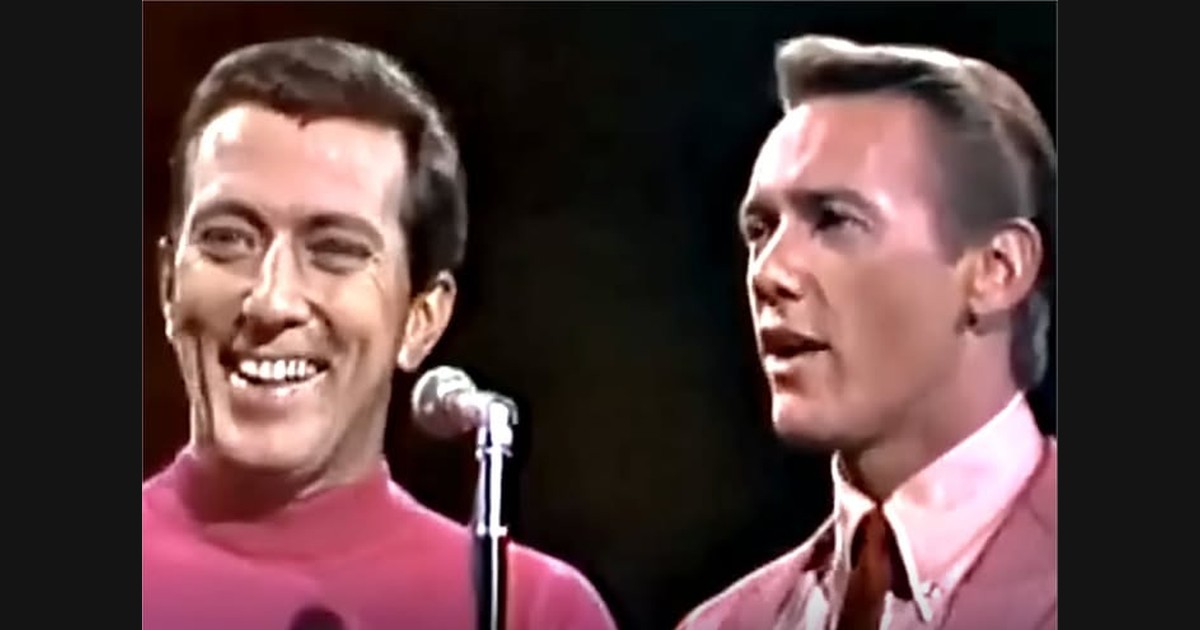
Bobby Hatfield’s “Unchained Melody” is closely associated with the Righteous Brothers, but the composition did not begin with their recording. Its earlier history helps explain an important distinction: a performer can create a signature interpretation of a song without being its original writer or first interpreter.
The Songwriters Hall of Fame credits composer Alex North and lyricist Hy Zaret and identifies the song’s origin in the 1955 film Unchained. Its account also names successful early versions by Les Baxter, Al Hibbler, and Roy Hamilton. By the time of the Righteous Brothers’ familiar treatment, the composition already had a performing life.
Three histories occupy the same title
The first video is labeled as a restored 1965 Righteous Brothers television performance. Hatfield is the featured singer. That identifies a particular interpretation and its later online presentation; it does not turn the upload date or restoration label into the date when the song was written.
Watch on YouTube ↗
| Layer | Useful identification |
|---|---|
| Composition | North’s music and Zaret’s words, associated with the 1955 film. |
| Interpretation | The performer’s treatment of that existing material. |
| Presentation | The television footage, restoration, or album upload through which it reaches a viewer. |
Keeping these layers separate is particularly useful with songs that become inseparable from one voice in public memory. Familiarity can make that version feel like the song’s beginning, although a composition may have circulated through other arrangements and performers first.
A signature recording can become a reference point
An influential interpretation gives later listeners a specific expectation: a way of approaching the melody, pacing the phrase, or building the song’s larger shape. That expectation belongs to a performance tradition. It is not identical to the composition’s existence on the page.
For a practical comparison, retain the melody’s broad direction rather than concentrating only on its most conspicuous note. A ballad unfolds through the relationship between phrases: an entry establishes an idea, a continuation develops it, and a return can make earlier material sound newly significant. A single isolated high point cannot supply that complete trajectory.
The album upload changes the document
The second selection is a Righteous Brothers Topic-channel recording of “Unchained Melody.” It provides another route to the group’s catalog, but an album-oriented audio upload and a television image answer different questions. The audio item foregrounds the recorded track; the footage also presents a singer within a broadcast frame.
Watch on YouTube ↗
Do not assume that two items with the same artist and song title must use the identical take or master. If an edition is not clearly identified, discuss what the label establishes and leave the detailed recording relationship open. That is more accurate than attaching a studio history to an unspecified upload.
A related ballad need not share the same history
Willie Nelson’s “Always on My Mind,” the final selection, changes the song as well as the performer. Its value here is as a ballad comparison, not another link in the recording history of “Unchained Melody.”
Watch on YouTube ↗
Compare how each melody allows a phrase to feel complete and how accompaniment carries the interval before the next vocal entry. Keep their different compositions in view. A resemblance in reflective mood does not mean identical writing, arrangement, or personal circumstances.
Hatfield’s association with “Unchained Melody” remains powerful when its earlier history is acknowledged. The distinction gives credit to the writers while leaving the performance free to be heard as a distinctive interpretation.


