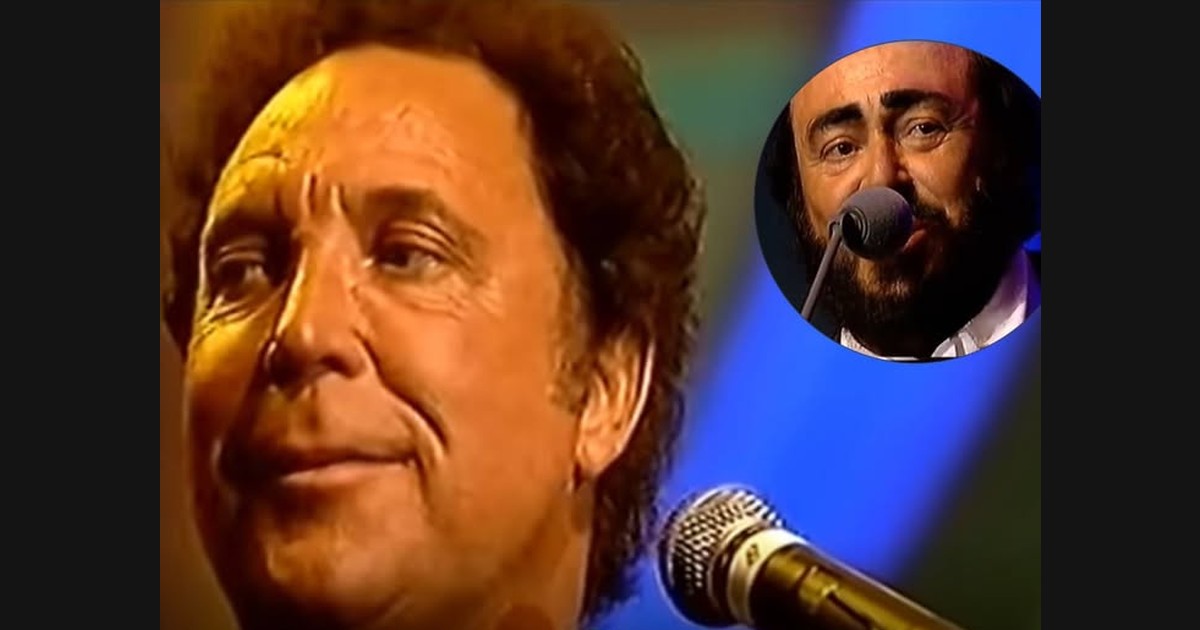
Tom Jones and Luciano Pavarotti’s Delilah belongs to a concert with a purpose beyond its celebrity pairings. In 2001, the Modena Pavarotti & Friends event brought artists together in support of UNHCR’s work with Afghan refugees, including children in Pakistan.
UNHCR’s own contemporary announcement names Jones among the participants. That gives the collaboration an institutional context, while the song supplies a dramatic narrative with an identity separate from the people performing it.
Watch on YouTube ↗
A benefit programme can contain different musical worlds
A cross-genre concert does not require every guest to become the same kind of singer. Its organizing idea can be a common occasion and a willingness to share repertoire, with different voices retained as part of the presentation.
That is useful when approaching Jones and Pavarotti together. The partnership is not an examination in which one must prove mastery of the other’s entire musical world. They are meeting within one song, supported by a concert arrangement.
A familiar refrain can provide a common reference for that meeting. Its return lets listeners follow the composition even when the featured voices give it different weight or articulation.
The narrator is a character, not the performer
Delilah tells a disturbing first-person story of jealousy and lethal violence. Its memorable chorus should not erase the narrative around it. The song’s dramatic perspective belongs to a fictional speaker whose account is being performed.
The distinction matters for interpretation. Presenting a character’s words does not require approving the character’s actions, and the emotional scale of a rendition does not turn the story into a celebration of its violence.
The work’s credits name Barry Mason for the lyrics and Les Reed for the music. Those writing roles also distinguish the composition from Jones’s strong public association with it and from Pavarotti’s participation in a later rendition.
Watch on YouTube ↗
The second upload returns to the Modena meeting
The companion Pavarotti & Friends 2001 upload offers another presentation of the collaboration. It belongs to the same benefit context rather than establishing a second event with the two singers.
The concert’s charitable aim and the song’s internal subject do different work. The event provides a public reason for the artists to gather; the composition provides the material they interpret. Neither should be mistaken for a complete explanation of the other.
Watch on YouTube ↗
The shared title also keeps authorship visible across the change of setting. Pavarotti’s participation adds an interpreter to the work’s history; it does not make the song an aria written for the benefit or change the identity of its writers.
Jones’s earlier television version supplies another frame
The official Ed Sullivan archive dates Jones’s Delilah appearance to 21 April 1968. That performance gives the song a much earlier television setting, with Jones carrying it outside the later Pavarotti partnership.
The comparison can focus on continuity of dramatic material rather than a ranking of vocal power. A song can retain its story while its company and occasion change. The Modena recording’s particular value is the meeting it preserves inside a documented benefit programme, while the earlier archive restores another stage in the work’s public life.


