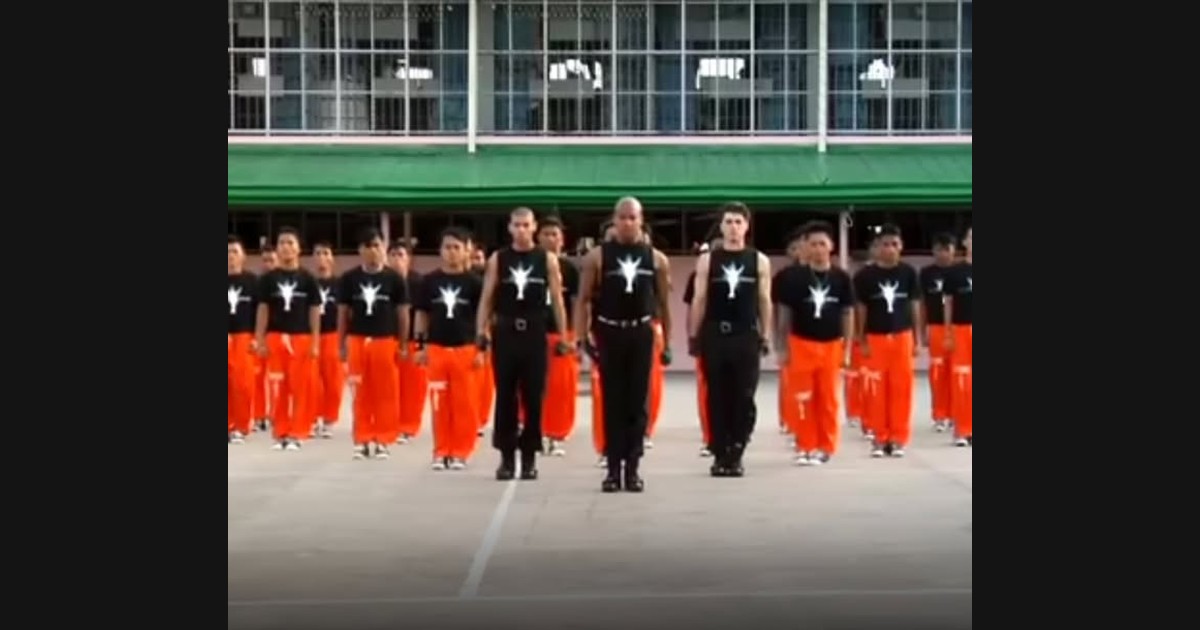
One song can supply the soundtrack for different kinds of screen work. The Sony Pictures presentation of an inmate dance ensemble and Michael Jackson’s official Brazil and prison versions of “They Don’t Care About Us” should be kept distinct. The shared composition does not make the recordings one event or one continuous production.
Jackson’s official catalog identifies the song with HIStory and separately publishes the two music-video versions. The Sony selection brings another group of visible performers into relation with that established work.
Watch on YouTube ↗
A dance recording makes performers the subject
In an ensemble dance film, the recorded song can remain a continuing reference while the principal visible activity belongs to the dancers. The relationship between the music and coordinated movement becomes the subject.
Follow one audible boundary and watch how the visible sequence passes through it. An action can emphasize a musical event or continue across it. The connection gives the performance a shape beyond the number of people involved.
The institutional setting should also remain proportional to the evidence. A filmed performance does not independently establish the effects of an entire prison program, the circumstances of every participant, or an account of rehabilitation. Those are different questions requiring information beyond choreography.
The Brazil version is an artist’s presentation
The second selection is the official Brazil version of Jackson’s music video. It changes the screen work while keeping the composition in place.
Watch on YouTube ↗
A music video can use location, performance, and editing to construct a relationship with a song. Those images are not merely interchangeable documentation of people responding to a recording; they form a particular released presentation.
Compare what first directs your attention. In one selection, a large dance ensemble may be the principal reference; in another, an artist-centered presentation can organize the image around a different focal point. Keep the observation tied to what the supplied frame actually makes visible.
The prison version is another official work
The final selection is Jackson’s official prison version. Its title identifies a separate screen presentation, rather than proving that it shares the location or participants of the Sony dance film.
Watch on YouTube ↗
The distinction matters because a setting can become strongly associated with a song in memory. Encountering prison imagery in more than one recording does not make those recordings the same historical occasion.
Follow how the music and image establish a point of emphasis. A repeated phrase can remain constant while the surrounding visual reference changes the way it is read.
Compare one relationship at a time
The set offers a useful sequence: first a dance ensemble performing to the work, then two official artist videos. The common song makes comparison possible, while the changing screen format supplies the differences.
A listener can enjoy the musical reference and a viewer can examine the visible construction without inventing a shared production history. The dance film keeps its identity as a particular ensemble presentation; the Brazil and prison versions retain their separate places in Jackson’s official video catalog. That clarity leaves each selection more substantial than a generic label of people moving to the same song.


