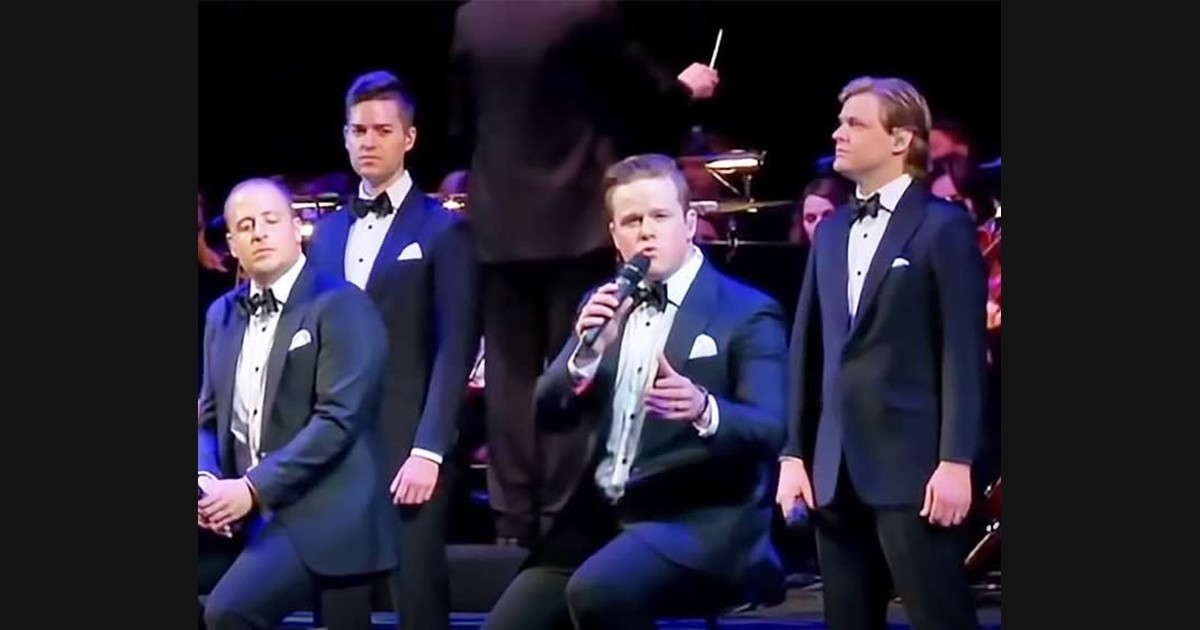
The Ten Tenors’ “Hallelujah” is not simply a familiar song made larger by adding singers. It belongs to a repertoire that moves among popular songs, theatrical material and operatic selections. That context gives the performance a useful question: what allows one vocal ensemble to connect music from different traditions without treating every work identically?
The group’s official upload identifies the song as a Leonard Cohen cover. A second official “Hallelujah” publication connects it with the 2011 album Double Platinum, whose track listing makes the breadth of the project concrete.
Watch on YouTube ↗
A familiar song can be a meeting point
“Hallelujah” supplies an immediately recognizable recurring word and melodic return. Those landmarks can help listeners enter an arrangement even if the ensemble’s wider repertoire is unfamiliar. The group has shared material through which different musical backgrounds can meet.
The number of singers does not dictate a single texture. A vocal ensemble can alternate featured lines, reinforce a melody or build harmony around it. The useful question is how responsibility is distributed, rather than whether every member must remain equally prominent throughout.
The album context is unusually revealing
The official Double Platinum listing places “Hallelujah” among songs including “Bohemian Rhapsody,” “Angel” and “Hey Jude.” Another part of the release includes “Anvil Chorus,” “Nessun dorma” and other concert or theatrical selections. The project therefore presents range through repertoire, not only through a claim about vocal technique.
A listener can use that context without assuming that every selection becomes opera. A familiar vocal style, an ensemble arrangement and a composition’s original genre describe different things. A Cohen song does not acquire a new composer or original purpose because tenors perform it.
Queen introduces a contrasting form
The group’s official live “Bohemian Rhapsody” recording provides another test of its repertoire choices. Queen’s multi-section composition asks an arranger to navigate conspicuous changes of musical character, rather than relying on the same kind of repeated return as “Hallelujah.”
Watch on YouTube ↗
Compare what gives each work coherence. A song with recurring verse-and-refrain relationships creates expectation through return. A sequence of contrasting episodes can create direction through the order of its changes. Both can be interpreted by the same performers, but they pose different organizational questions.
This is a practical way to hear versatility without reducing it to the highest note or the largest sound. The ensemble’s task includes understanding how a work holds together. Adapting that structure matters as much as supplying a recognizable vocal identity.
Return to the other Hallelujah recording
The final official publication brings the listening route back to the Cohen song and its Double Platinum context. It is another artist release, not evidence that the opening video and this recording came from the same session.
Watch on YouTube ↗
The comparison makes the songbook itself a subject. These performers bring a consistent ensemble identity to different material, while each composition supplies its own form and dramatic possibilities. “Hallelujah” works as an accessible entry because it allows listeners to recognize the song first, then consider how the surrounding repertoire changes their understanding of the group interpreting it.


