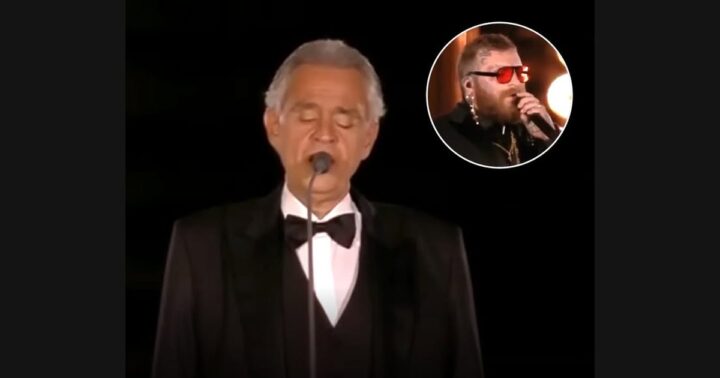
Knowing a melody is not the same as knowing how a singer will direct each phrase. Teddy Swims’s BBC Radio 1 Live Lounge cover of Cruel Summer provides a useful setting for considering that distinction. The broadcaster identifies the Taylor Swift repertoire connection; the interpretation gives another voice a complete statement to organize.
Phrase emphasis can be approached through ordinary language before specialist terminology becomes necessary. The point is to recognize how a line acquires direction, rather than to diagnose a singer’s technique from a short clip.
The Live Lounge interpretation
Watch on YouTube ↗
Start with a sentence that is not a lyric
Consider this invented prose example: “I thought we were leaving today.” Stressing “I” can contrast the speaker with someone else. Stressing “leaving” can contrast departure with another action. Stressing “today” can shift attention toward a disagreement about time.
The words remain the same while their relationship changes. Emphasis identifies which distinction matters at that moment. A vocal phrase has musical resources as well as spoken ones, but this small example explains why recognizing the text alone cannot explain every interpretation.
The exercise is not a quotation from Cruel Summer. It supplies a plain-language model that can be carried into listening without replacing the song’s own situation or pretending to provide a transcription of Swims’s performance.
Volume is only one possible cue
A word may attract attention through its duration, its position after a pause or its relationship with a melodic arrival. Simply being louder is not the only way to become significant within a phrase.
That is why a description such as “the singer puts feeling into it” remains incomplete. The listener can identify what draws attention and consider what that emphasis does within the line. The observation becomes something another person can revisit, rather than a general compliment.
For a focused pass through the recording, choose one short phrase. Follow where its principal emphasis seems to fall, then listen to the continuation. A line’s ending can qualify or complete what its most prominent moment appears to establish.
A phrase belongs within a larger sequence
Local emphasis does not explain an entire song on its own. Several phrases need relationships: one may prepare, another may continue and another may settle an idea. A performer organizes those connections over time.
This keeps attention from becoming a search for isolated expressive gestures. The interesting question is how a choice contributes to the statement around it. A striking moment gains a clearer function when its preparation and continuation remain audible.
Carry the method into another song
The Warner Music Ireland recording of The Door in a Dublin pub changes the composition and setting. Keep the same narrow attention to emphasis, while allowing the new material to ask different questions.
Watch on YouTube ↗
Return to an official live selection
Swims’s artist-published Lose Control supplies another repertoire reference. It can be followed through the same vocabulary without requiring every song to have the same emotional direction.
Watch on YouTube ↗
The purpose is a more precise account of listening. A recognizable voice connects the clips, while phrase emphasis gives attention something concrete to follow. The method requires no invented claims about acoustic instruments, slower tempo or unprocessed audio. It begins with how a statement is directed and ends by returning that local choice to the whole piece.