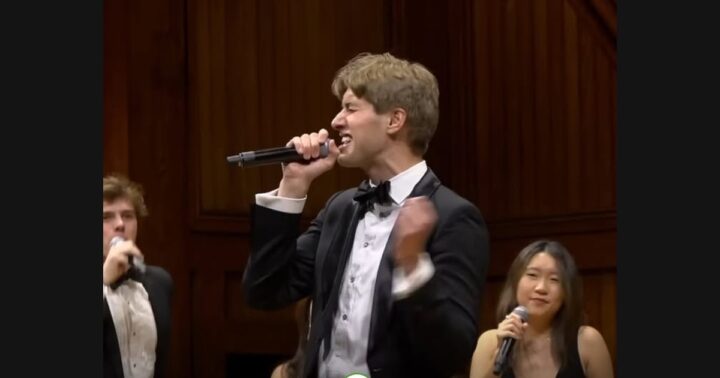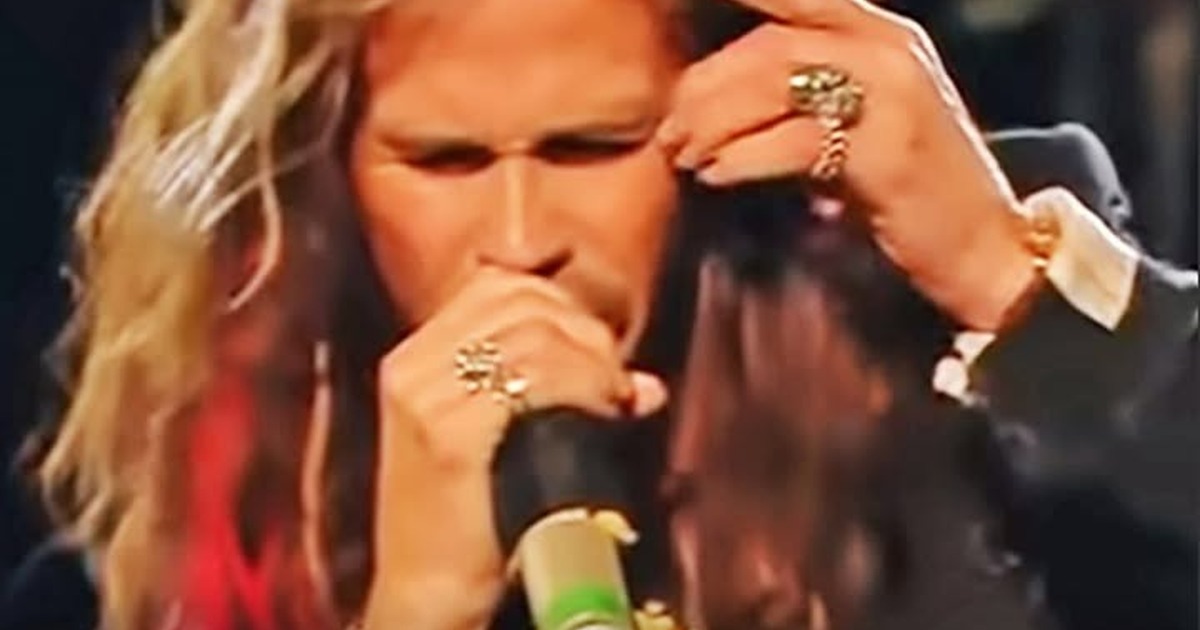
The title of Steven Tyler’s 2CELLOS collaboration contains an important detail: the video includes “Dream On” and “Walk This Way.” Watching for both songs creates a better route into the partnership than treating the cello as a surprising visitor to rock music. The same collaborating musicians have more than one musical task to address.
2CELLOS are Luka Sulic and Stjepan Hauser. Their label’s artist information describes a repertoire spanning classical, film, pop, and rock material, and documents their collaboration with Tyler. Crossing those boundaries is part of the duo’s established work, rather than evidence that these musicians wandered into an unfamiliar genre without preparation.
Watch on YouTube ↗
Begin with function, not instrument labels
An instrument’s name does not tell us everything about its role in an arrangement. A cello can contribute a sustained line, an accompaniment pattern, a lower foundation, or an answering figure. A rock arrangement also contains these kinds of functions, even when its familiar sound comes from a different combination of instruments.
The useful comparison is therefore between musical jobs. When a vocal phrase is in the foreground, what supports its movement? When the singer leaves space, what carries attention onward? These questions locate the instrumental partnership within the song rather than reducing it to a decorative contrast.
Let each song establish its own demands
Two compositions in one appearance need not use the same proportions. A long vocal phrase and a short, recurring musical figure create different opportunities for instrumental response. An arrangement can acknowledge those differences while allowing the collaborating performers to retain a consistent identity.
Follow the point at which the program changes songs. Recognition may arrive through a title, a vocal line, or an instrumental idea. The transition is part of the performance’s design: it moves listeners from one set of expectations to another without changing the headline partnership.
This is more specific than deciding that the collaboration makes rock sound classical. “Classical” names a broad set of traditions, not every sound made with a bowed instrument. Equally, amplification and energetic presentation do not remove a musician’s existing skills. The interesting work happens in the arrangement between those labels.
Compare a song without holding the partnership fixed
The official Nobel Peace Prize Concert video presents Tyler singing “Dream On” in a different event context, labelled 2014. It provides a way to follow the same composition without assuming the 2CELLOS appearance is the only possible alternative to a standard band setting.
Watch on YouTube ↗
For this comparison, listen to the broad musical arc rather than searching for a single winning note. Consider how much time the performance gives its opening, how it prepares a return, and how the accompaniment relates to the vocal line. Those proportions can matter as much as the identity of a particular instrument.
A collaboration beyond these songs
Heart’s “Stairway to Heaven” at the Kennedy Center offers a final example of established rock material presented within a specially assembled performance. It changes the artist and composition, so it belongs here as a comparison of arrangement possibilities rather than a direct technical match.
Watch on YouTube ↗
Seen across the two-song Tyler clip and its companions, collaboration becomes a matter of musical responsibility. The performers are finding ways to carry melody, movement, support, and contrast. That makes the partnership worth following after the initial surprise of its instrumentation has passed.