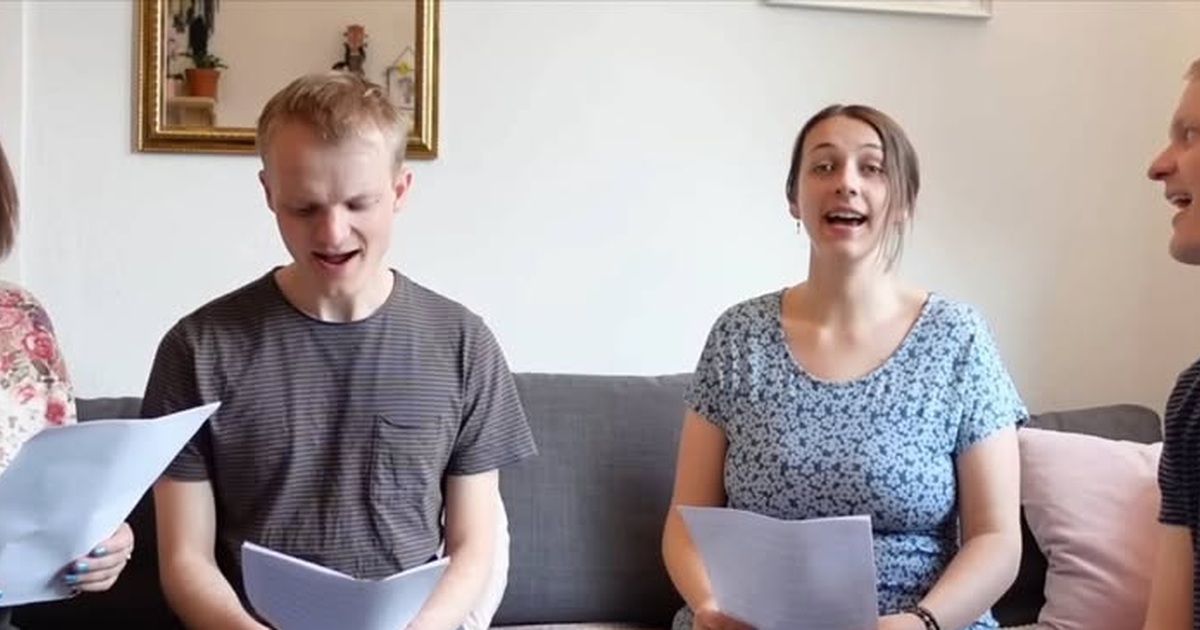
The title If Stayin’ Alive Had Been Written in the 16th Century presents a musical thought experiment, not a claim of historical discovery. Jonasquin’s version takes a familiar modern composition and places it within a deliberately older stylistic frame. The interesting relationship is between what remains recognizable and what the new arrangement changes.
The creator’s published score makes the distinction explicit. It credits Barry, Maurice and Robin Gibb for the underlying 1977 song, while identifying Jonasquin as the arranger of a Renaissance-madrigal-style setting for SATB choir. Composition date and chosen style therefore belong to different layers of the work.
The modern thought experiment
Watch on YouTube ↗
SATB names four vocal parts: soprano, alto, tenor and bass. It describes a scoring framework rather than a guarantee that every part behaves identically. Voices can move together, answer one another or create different relationships around a recognizable idea.
A style experiment becomes more informative when those relationships remain the subject. The setting is not explained completely by clothing, scenery or the word old. A new arrangement has to decide how melody, verbal rhythm and support can work through the chosen vocal resources.
Two kinds of identity remain active
- The borrowed composition: familiar material that lets a listener recognize the Bee Gees song.
- The new arrangement: a different organization and presentation of that material.
The experiment depends on both. If nothing recognizable remained, the historical what-if would be harder to perceive. If nothing changed, the older-style frame would add little beyond a label. The relationship between continuity and transformation supplies the creative problem.
For a concrete way into it, follow one recurring idea as it passes through a passage. Notice whether attention stays with one featured line or becomes divided among voices. These are different ways to organize the same listener’s recognition.
A listener can describe the resulting texture without claiming that it reproduces every practice of a particular century. A contemporary arrangement can refer to a historical vocabulary while remaining an explicitly modern creation.
The Bee Gees reference changes the frame
Watch on YouTube ↗
The official Stayin’ Alive video supplies the song through the artists associated with its original identity. Compare the job of the recurring musical framework and the relationship of the voice to it. The new arrangement need not imitate the original instrumental colors to preserve recognizable material.
This also distinguishes the song from one famous recording of it. A composition provides resources that later versions can redistribute; a recording gives those resources a particular finished form.
A second modern song enters the same experiment
Watch on YouTube ↗
The Jonasquin Let It Be selection with Anna Petrtylová changes the composition while retaining a Renaissance-style premise. It offers a useful test of whether the listener is following a reusable arranging idea rather than only reacting to one surprising title.
The two experiments need not produce identical results. Different melodies and verbal patterns create different constraints. Keeping the original song, the chosen style and the new scoring separate gives the Stayin’ Alive version a clearer identity: it is a modern act of arranging, using an imagined historical setting to make familiar material available in another way.