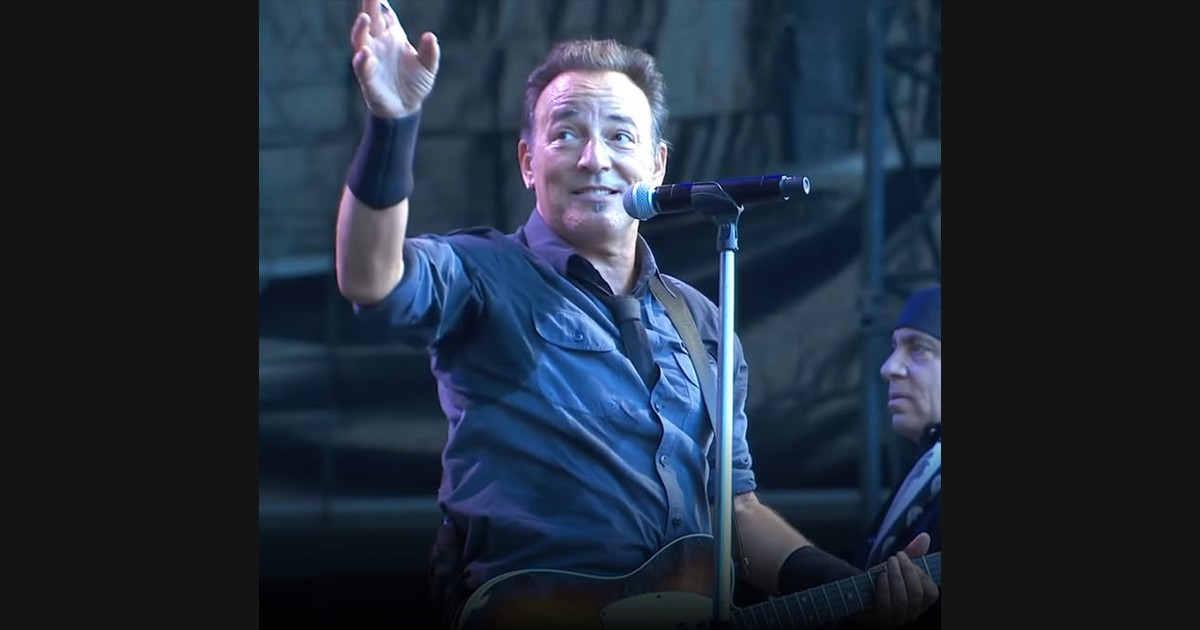
Bruce Springsteen’s “You Never Can Tell” from Leipzig has the shape of a self-contained online story: a requested song becomes a concert performance. Yet the clip also belongs to a larger event, a July 7, 2013 date at Red Bull Arena on the Wrecking Ball tour.
That tour context matters. A cover entering an artist’s own program has a different function from a full concert devoted to the covered songwriter. The song can interrupt familiar expectations while remaining one part of a longer evening.
Watch on YouTube ↗
A clip supplies its own beginning
Springsteen’s official road report identifies the Chuck Berry song as an unexpected request. That is a specific public context; it is not proof that no member of the band had encountered or rehearsed the composition before.
For an online viewer, the request can become the beginning of the whole experience. For someone following a full concert, it would arrive after other material and be followed by something else. The same performance can therefore be understood as a complete miniature or as a change of direction within a program.
This difference is worth keeping in mind when describing momentum. A clip can show how a selection begins and develops locally, but it does not by itself establish what every audience member had been expecting from the entire show.
A cover can change the program’s frame
A concert under one artist’s name carries expectations about repertoire. Introducing another writer’s song can broaden that frame without replacing it. It gives listeners a reference outside the principal artist’s own catalog while allowing the touring band to maintain its identity.
One useful listening subject is the performance’s sense of scale. Follow how much space a repeated idea receives and where an instrumental contribution is allowed to become a feature. A concert cover need not adopt the proportions of a familiar recorded version in order to remain recognizable.
The result belongs simultaneously to the earlier composition and the current occasion. That is why the request story is only the entry point. The performance has to earn its place in the program after the title has been selected.
A concert named for a larger institution
The Rock & Roll Hall of Fame’s official “Johnny B. Goode” selection puts Chuck Berry and Springsteen together. Here the supplied framing is an institutional concert, not a request arriving during a Springsteen tour date.
Watch on YouTube ↗
The difference changes what the excerpt represents. A touring artist’s detour into another catalog and an event bringing musicians together for a broader occasion can share repertoire without doing the same programming work.
A third excerpt has another center
The related “Here Comes the Sun” selection names Paul Simon, David Crosby, and Graham Nash. It broadens the set of performers and changes the song. As with any circulated excerpt, identify the people and work before letting an uploader’s larger account determine the interpretation.
Watch on YouTube ↗
Across the three videos, consider what the title of the surrounding event leads you to expect. A tour, a Rock Hall concert, and a shared tribute selection organize attention in different ways.
Placing the Leipzig clip back inside its documented 2013 tour does not reduce its appeal as a standalone performance. It adds another dimension: a familiar cover becomes a particular choice within a larger program, rather than a complete account of the evening or a claim about everything that happened before the cameras began.


