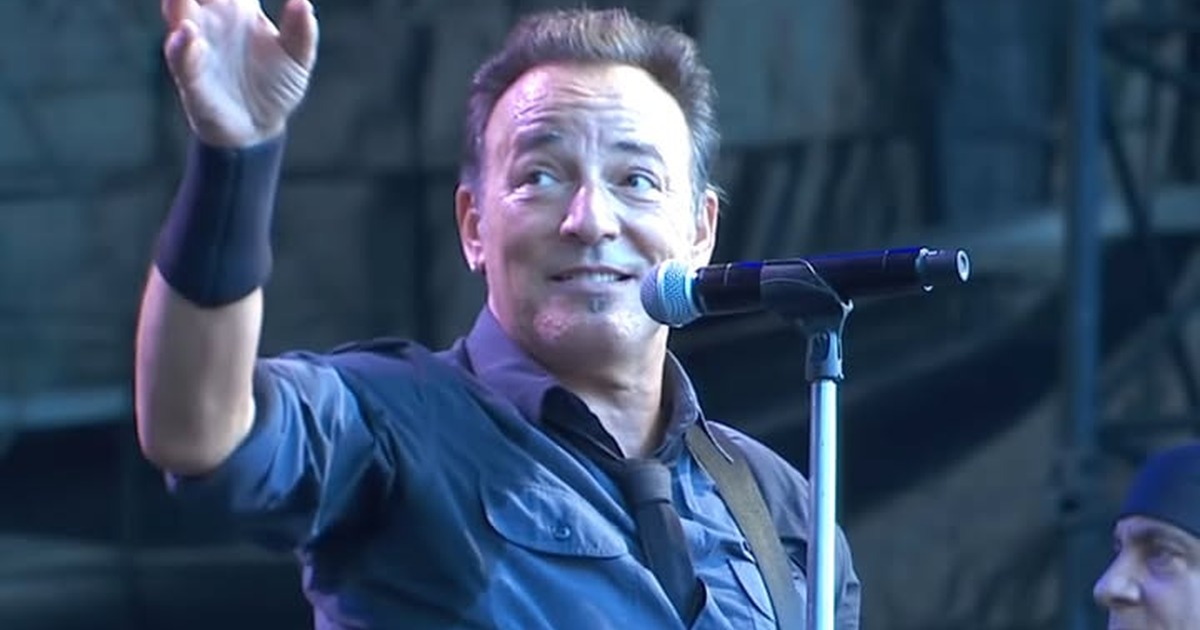
Knowing a song and agreeing on how to play it together are different achievements. Bruce Springsteen’s You Never Can Tell selection from Leipzig offers a useful way to separate them. His official road report describes the Chuck Berry song as an unexpected request during the 2013 show. That establishes the request context without requiring the larger claim that no musician had ever played or rehearsed it before.
A band can draw on shared repertoire, familiar musical patterns and direct cues. The interesting question is how those resources become one performance. A request is not simply a test of an individual’s memory; it is a group problem involving a starting point, a common pulse and a way to move through the song.
Watch on YouTube ↗
Four decisions behind a shared beginning
Musicians need enough agreement to enter the same musical space. That can involve the key, the pace, the feel and who will begin. These decisions are related but distinct. Two players could remember the same melody while imagining it at different speeds or in different pitch areas.
A viewer does not have to identify the exact key to understand the coordination. Watch for communication around a beginning, then listen for the moment when separate contributions establish a common reference. A cue may concern what happens next rather than reveal anything about a musician’s previous knowledge.
A familiar pattern can be a common language
Repeated harmonic or rhythmic patterns help a group maintain continuity. They provide a framework within which a featured voice or instrument can vary its contribution. The pattern does not make the performance automatic: musicians still have to agree on transitions, the length of sections and the approach to an ending.
Imagine a player expecting another cycle while the singer prepares to move onward. A visible or audible signal can resolve that difference before it becomes a break in continuity. That is the practical value of attention between performers, even in a song whose broad design is familiar.
It is therefore more informative to follow one shared transition than to declare the entire event spontaneous from beginning to end. The performance’s live coordination is a subject that can be explored without guessing what happened at soundcheck.
Chuck Berry and Springsteen in another setting
Watch on YouTube ↗
The Rock Hall’s Johnny B. Goode selection brings Berry and Springsteen together. It changes the composition and the performance occasion while retaining a direct connection to Berry’s repertoire. Compare how recurring instrumental material supplies a shared reference for the musicians.
This is not a note-for-note test between the two songs. It is a way to notice how a recognizable musical vocabulary can support different performers and circumstances. A familiar pattern remains open to choices of emphasis, pace and interaction.
A tribute follows another organizing principle
Watch on YouTube ↗
The related Here Comes the Sun performance provides a broader concert contrast. A tribute selection brings musicians together around an acknowledged composition and occasion. The Leipzig request begins from a different public prompt. In either case, a successful performance still needs clear musical relationships.
The request story attracts attention because it makes the coordination visible as part of the entertainment. Following that coordination gives the clip lasting value: it shows why shared musical knowledge is only a starting point, and why listening to one another matters as much as remembering the song.