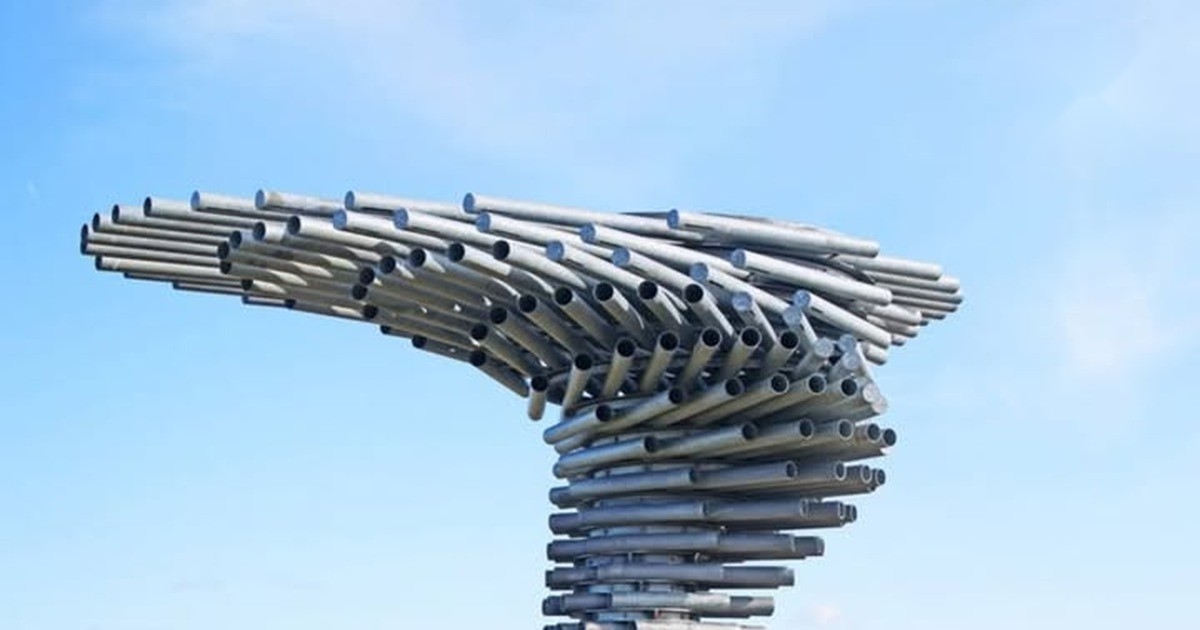
The Singing Ringing Tree changes the usual relationship between a musical instrument and a performer. Designed by Tonkin Liu above Burnley, it uses the wind as an input to a constructed sound sculpture. The work has a fixed physical identity, while the conditions activating it can change.
The architects describe stacked pipes of varying lengths, arranged in layers responding to different wind directions. That is the documented design principle. It gives a more useful explanation than imagining a hidden melody playing identically whenever somebody arrives.
The first recorded encounter
Watch on YouTube ↗
Separate design from the conditions activating it
A conventional performance often begins with a person deciding when to make a sound. Here, the designer has established a structure that responds to environmental energy. The wind and the constructed form therefore contribute different things to the result.
This does not make the sound wholly undesigned. The lengths, orientation and organization of the pipes are material choices. Nor does the fixed structure make every encounter the same. The relationship between an enduring form and variable conditions is the central idea of the work.
Think of three questions: what supplies the energy, what organizes its response and what makes this particular encounter specific? The first two can be informed by the designer’s account. The third depends on the conditions and the recording available to you.
A recording is one encounter, not the whole sculpture
The main upload, from Lively Trek, presents one visit to the Burnley work. A video can preserve an interval of sound and a view of its surroundings. It cannot contain every response the structure might produce under other conditions.
Keep visible form and audible sound connected without assuming that each visible pipe has a separately identifiable note in the recording. A sculpture can have elements contributing to its shape as well as its sound-making function. The available clip may make some relationships easier to perceive than others.
For a useful note, distinguish the outline you can see, an audible change you can identify and something the recording does not establish. This prevents a single recording’s loudness or duration from becoming a universal description of the work.
A second visit holds the object constant
Yorkshire Walker’s selection provides another recording of the same sculpture. The object remains a common reference, while viewpoint, duration and conditions may differ. Compare a sustained sound or a change in activity rather than expecting the two clips to reproduce one fixed performance.
If the results seem different, avoid assigning the difference immediately to weather alone. A recording also involves where and how sound is captured. You can describe the difference without claiming to reconstruct every contributing condition.
Watch on YouTube ↗
The landscape is part of the subject
Northern Introvert’s visit supplies a third view. The architects’ account places the sculpture within a project intended to connect people with the surrounding landscape. The setting is therefore more than a backdrop: it belongs to the work’s reason for existing and its access to wind.
Watch on YouTube ↗
The three selections offer three encounters with one designed response to the environment. Returning to the main clip, the useful distinction is between a fixed object and a variable sounding event. That makes the Singing Ringing Tree a subject for listening as well as looking, with neither a single image nor a single recording exhausting what the work can be.