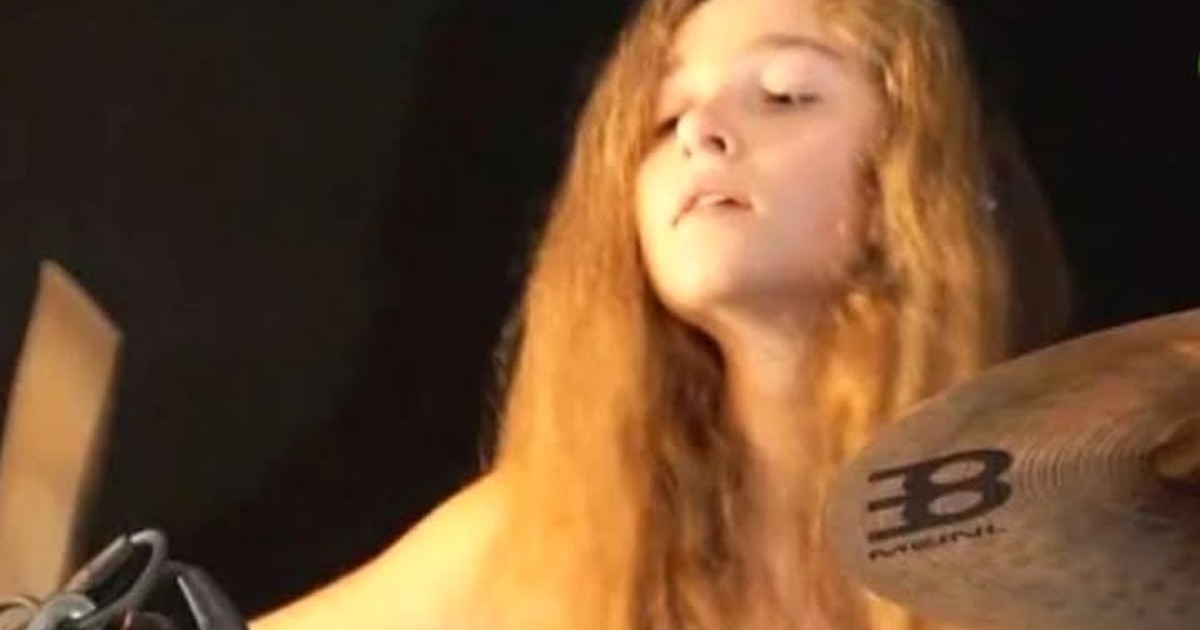
A cover’s backing track and its interpretive model do not have to come from the same performance. Sina makes that distinction explicit in her own description of Sultans of Swing. She says she played along with a drumless version of the studio recording while drawing inspiration from Terry Williams’s playing in the live Alchemy version.
She also makes a useful limit clear: this is a tribute in Williams’s style, not a note-for-note copy of his live part. Those details give the recording a more specific identity than either “the original drums recreated” or an unrelated solo over a famous song.
The drum cover
Watch on YouTube ↗
Two reference points can serve different jobs
The backing recording supplies a framework that is already fixed. Its phrases, transitions and duration create places the new drum part has to inhabit. The live inspiration supplies an approach, rather than replacing that framework with a different concert recording.
This creates a practical distinction between copying events and interpreting a style. Copying would require matching a particular sequence. A stylistic tribute can instead draw on qualities of musical role and character while making decisions appropriate to the recording being used.
The performer’s published explanation matters because the finished image alone cannot establish those production choices. A kit in view does not tell a viewer which recording was used or which earlier performance influenced the part. Here the artist supplies that context directly.
Support is an active responsibility
A drummer playing within a fixed recording cannot ask the other musicians to extend a section while an idea is completed. The new part has to remain connected to a musical sequence that will continue. That constraint gives the performance a different task from leading an open-ended ensemble.
There is still room for interpretation. An accent can clarify an arrival, a continuing pattern can preserve orientation and a transition can connect sections. The question is what a choice contributes to the piece, rather than how much activity can be fitted into the available time.
For a useful viewing, keep one recurring musical reference in mind while attending to the drums. Notice when your attention changes from continuity to an event that marks a boundary. That distinction helps explain the part’s function without pretending to transcribe every stroke.
A collaborative version changes the setting
The second official upload identifies Sultans of Swing with Sina and DS:UK. It retains the composition but introduces another named performance partnership. That makes it a different presentation from simply pressing play on the first recording again.
Watch on YouTube ↗
The comparison begins with the published credits. Keep the song constant and consider how a performer’s responsibilities may change when the surrounding musical presentation changes. Exact differences should come from the recordings, not assumptions based on their titles.
A second Dire Straits song
The final official Sina upload is a drum cover of Walk of Life. Now the song changes as well as the particular performance. A recognizable instrumental identity can be followed across different material without demanding an identical drum solution.
Watch on YouTube ↗
Sina’s explanation provides the strongest starting point for this set. A fixed studio reference, a live stylistic influence and a new part can coexist in one cover. Keeping those layers distinct gives the drummer’s interpretation a clearer credit than treating it as either exact reproduction or unrestricted improvisation.


