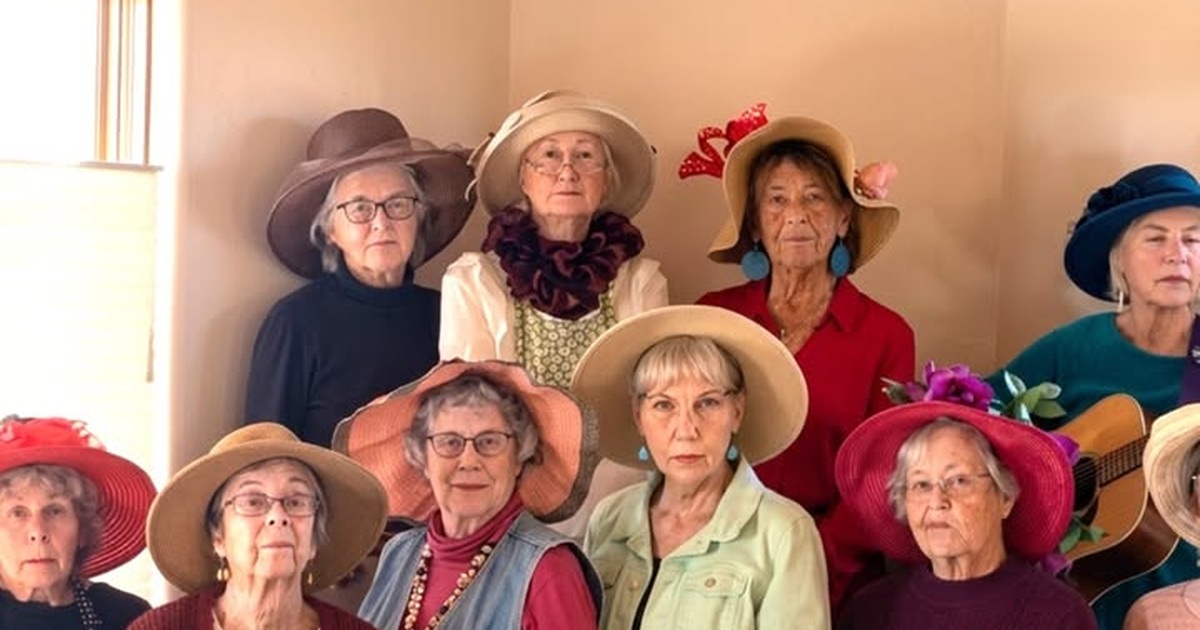
A borrowed melody can bring a history of associations into a new song before the listener has assessed a single assertion. The Santa Fe Raging Grannies’ House of the Epstein Crimes makes that relationship central: the group sets topical words about a New Mexico property formerly owned by Jeffrey Epstein to the tune of House of the Rising Sun. Its viewpoint is the performers’ expression of concern about abuse and accountability.
The useful listening question is what the inherited musical framework contributes. Does it guide attention toward a place, a narrator, an emotional atmosphere, or a demand? Examining that choice helps distinguish the song’s work as cultural commentary from the separate work of establishing facts.
The tune has a history beyond this adaptation
The melody belongs to a song with a long recording history. An archival entry for Georgia Turner’s The Rising Sun Blues, also titled The House of the Rising Sun, documents a September 15, 1937 recording in Middlesboro, Kentucky. That is one recorded version in the song’s history, not a claim to have identified its single original form.
The Santa Fe group’s published songbook explicitly names House of the Rising Sun as the source tune for this rewrite. The musical reference is therefore part of the adaptation’s design, not a resemblance the viewer has to guess.
Watch on YouTube ↗
Listen for three layers, without collapsing them
- The inherited frame
- What do you recognize from versions of the older song you know? Keep that memory separate from what this performance actually presents.
- The new setting
- Where do the rewritten words redirect your attention? Ask how naming a different place changes the narrative you expect.
- The performers’ position
- How do the words move from describing a setting toward expressing concern or demanding accountability?
The published lyric uses landscape and interiors as contrasting images. As a writing device, that places descriptions of a property beside the group’s concern for people harmed. Listen for whether those images feel like separate scenes or parts of one accumulating argument. You can describe the method without adopting the lyric’s accusations as findings.
A second useful question concerns the narrator. Does the group’s delivery make the words register as a lament, a warning, a public accusation, or some combination? Those are possible readings to test against the clip, rather than labels that settle how every listener must respond.
Emotional coherence and factual support do different jobs
A song can connect images through rhythm, rhyme and a returning melodic shape. That continuity can make a viewpoint feel coherent even when it cannot establish the underlying events. Reporting has another task: identifying sources, checking records, distinguishing allegations from findings, and accounting for relevant responses.
For this adaptation, separate two questions: how effectively does the musical form carry the group’s concern, and what independent material would support a particular assertion? Neither answer can substitute for the other. Recognizing the melody supplies context for the art; it does not corroborate a claim about a person or an institution.
This distinction also allows a more precise response than calling the piece merely comic or merely serious. Adapting an existing song is a technique. Its effect can include sorrow, accusation or irony as well as humor. Listen for which effect the relationship between words and tune produces for you.
Compare the title’s borrowed authority
In Battle Hymn of the Donald, the title points toward a hymn tradition while naming a contemporary political subject. Compare that framing with the house-and-place framework of the main selection. What expectations does each title establish before any verse develops its argument?
Watch on YouTube ↗
Compare a direct address
Hit the Road, ICE! offers another approach from the same group: its title addresses an agency directly. Compare a phrase that makes a demand with one that establishes a scene. Does the different wording change how you anticipate a return or an ending? A place-setting phrase invites you to picture a scene; a direct address makes you identify its recipient. Listen for how those different starting points affect what successive verses need to explain.
Watch on YouTube ↗
The main adaptation is most usefully assessed through that specific combination: an inherited ballad framework, a changed location and the Grannies’ own topical argument. Describing those choices gives a clearer account of the music than treating recognition or emotional force as proof of the story it presents.