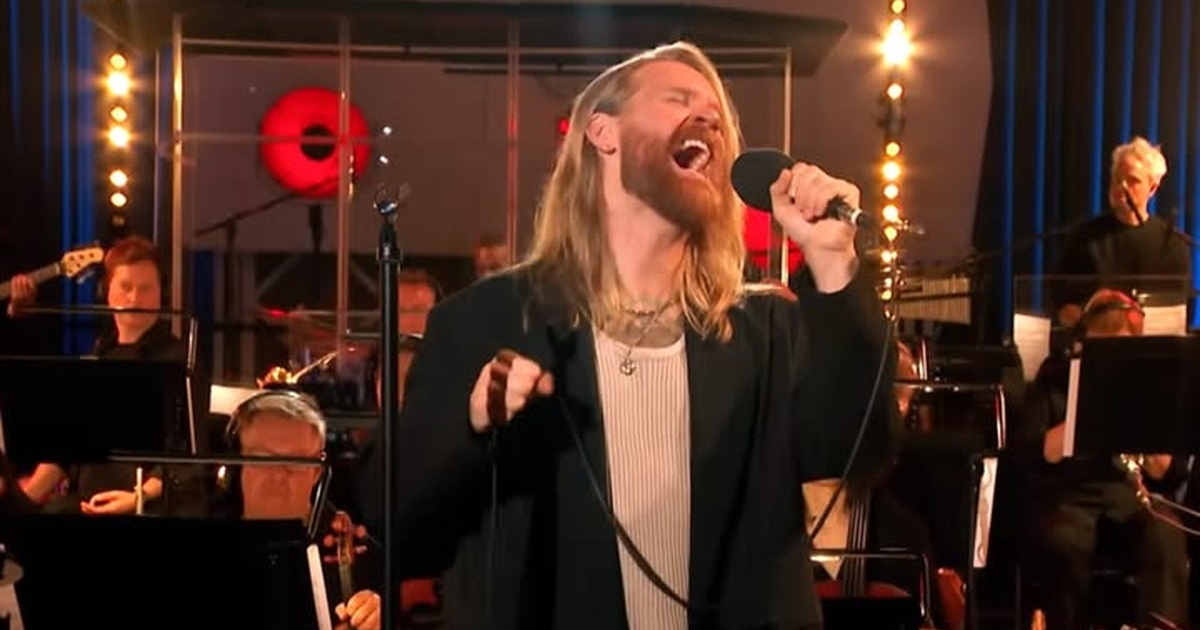
A cover with an orchestra needs more than a singer and a familiar title. Someone must decide how the composition can be undertaken by the available ensemble. The BBC gives that work a name in Sam Ryder’s Bohemian Rhapsody: the music is arranged by Richard Sidwell.
The Radio 2 Piano Room presentation pairs Ryder with the BBC Concert Orchestra. Its official description also places the selection beside Space Man and Better Man within the broader program. The Queen cover is one item in a repertoire presentation, rather than an isolated test detached from the artist’s other work.
The Piano Room collaboration
Watch on YouTube ↗
An arranging credit explains a real job
A composition and a recording are different things. A composition supplies musical material and relationships; a particular recording realizes them through specific resources. An orchestral cover can preserve the material while redistributing the work.
This is especially relevant to a piece with strongly contrasting sections. A listener needs to recognize a change without losing the sense that the next passage belongs to the same larger statement. Arranging concerns the connections as well as the individual sounds.
The credited arranger therefore contributes more than extra size. Parts need functions, transitions need preparation and the featured voice needs a relationship with the instrumental frame. An orchestra’s presence creates possibilities that a coherent presentation has to organize.
The singer remains an interpreter
Ryder’s task is not completed by the arrangement. A lead phrase still has to carry direction and retain a relationship with what surrounds it. The orchestral work and the vocal work are connected contributions.
This gives a more useful comparison than asking whether the singer becomes indistinguishable from Freddie Mercury. A recognizable composition can be undertaken by another performer whose identity remains present. Continuity does not require the disappearance of difference.
The same restraint helps with technical descriptions. A program title cannot establish exact key changes, a particular vocal range or every instrumental entrance. The arranging credit provides firm context, while those more detailed observations belong to attentive engagement with the record.
Queen’s official visual reference
The next selection is Queen’s official remastered Bohemian Rhapsody video. It provides a familiar recording identity against which the composition’s continuing features can be followed.
Watch on YouTube ↗
The remaster label does not identify another Ryder performance. It belongs to the later presentation of an established Queen recording. That distinction keeps composition, interpretation and publication clear.
Return to Ryder’s own repertoire
The final official artist video is Space Man, identified with the United Kingdom’s Eurovision 2022 entry. It changes the writing and presentation while retaining Ryder as the connecting performer.
Watch on YouTube ↗
The playlist therefore offers a broader introduction than a comparison of famous high points. Sidwell’s arrangement gives the Queen composition a particular orchestral route; Ryder supplies the featured interpretation; Space Man provides another repertoire context. Recognizing those different jobs gives the cover a clear collaborative identity of its own.