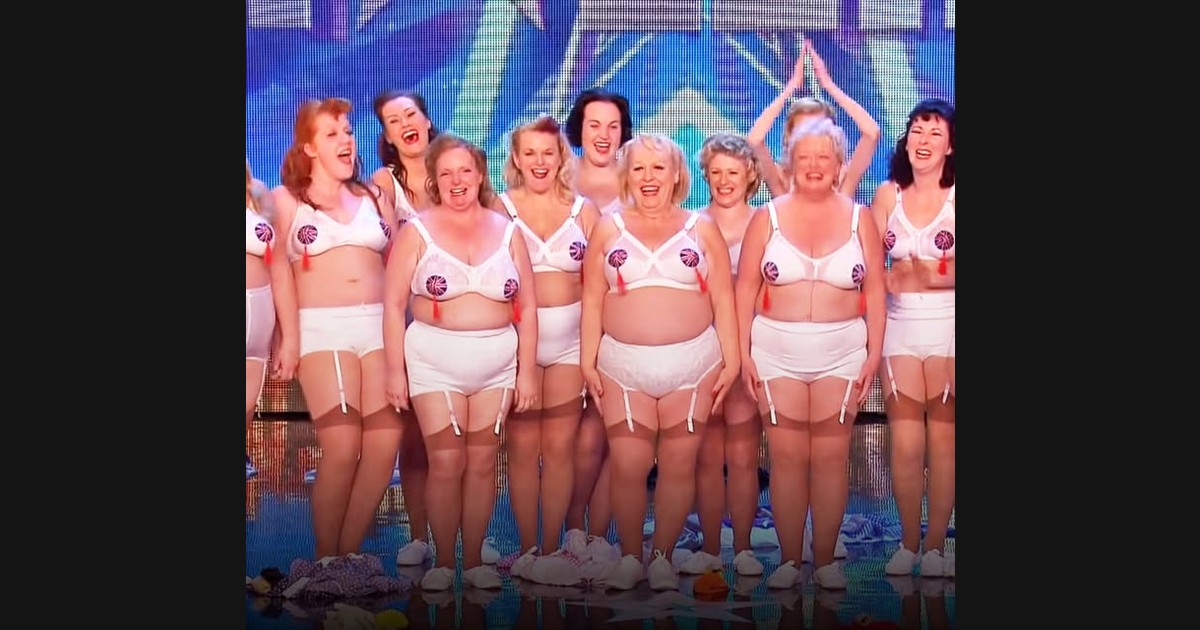
The Ruby Reds’ first Britain’s Got Talent appearance introduces their act, while the official semi-final release presents them after that introduction has already circulated. That change of position creates a useful performance question: how does a returning act work with an identity its audience may now recognize?
ITV’s 2015 audition report describes the cleaner-costume opening and burlesque reveal, then records four positive votes. Those details establish why there is a later round to compare. They do not mean a semi-final can rely on exactly the same element of initial recognition.
Watch on YouTube ↗
An introduction establishes the rules of attention
An audience meeting an act needs enough information to understand its premise. Costume, movement, music, and a change of presentation can supply that information. Once a device becomes familiar, it carries a different relationship with returning viewers.
That does not make repetition a mistake. A recurring identity can be part of what people come back to see. The question is what the new appearance does with that familiarity: restate it clearly, develop it, or use it as a starting point for another idea.
For example, a first appearance may spend time establishing an ordinary-looking role before changing it. A later appearance may begin nearer the identity already known from the earlier show. These are possible programming choices to check against the recordings, not a claim that every returning act must follow that pattern.
The semi-final is another task
Watch on YouTube ↗
The show labels the second clip Semi-Final 1 in 2015. Keep that competition stage attached to it. It is a later appearance, not an extended final section of the first audition.
Follow the opening before judging the entire routine by a remembered highlight. What information is supplied immediately? How does the act signal the kind of performance that follows? Then consider how the ending gives this particular appearance a boundary.
A useful comparison can contain one continuity and one development. The continuity should identify something that makes the act recognizable. The development should describe a specific presentational choice rather than asserting that everything is bigger or better.
Two uploads can preserve one round
Watch on YouTube ↗
The final Spiritman Productions upload is also labeled as the 2015 first semi-final. Before counting it as a third competition appearance, compare its event identification and material with the official second clip.
A different upload may offer another edit, another source, or another presentation of the same underlying routine. Its title alone does not establish a new performance. Keep “number of pages” separate from “number of occasions.”
A practical viewing note
Make three short entries: the stage of the competition, the act’s opening premise, and one feature that develops during the routine. Add the uploader’s identity when more than one page documents the same stage.
This keeps the comparison about performance design rather than age or appearance stereotypes. It also avoids assigning the reaction of one televised spectator to every person in the room.
The Ruby Reds sequence is most useful as an introduction followed by a return. An act’s familiar identity can continue while the occasion changes. Reading those occasions accurately gives the second appearance its own purpose instead of making it only a repetition of the first reveal.


