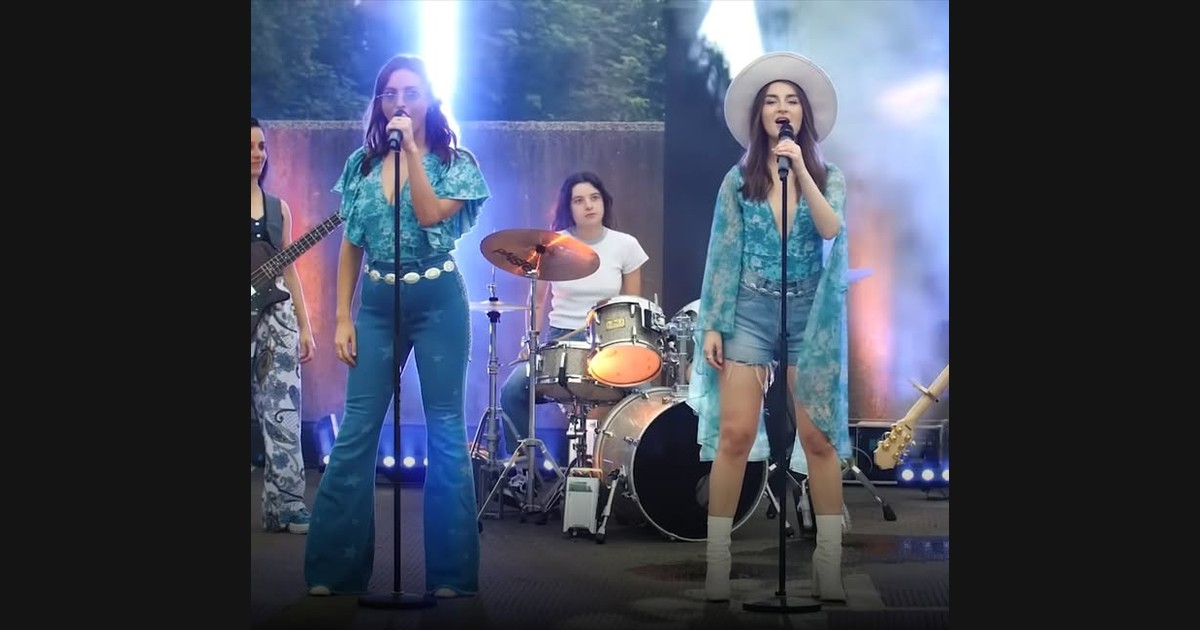
Remember Monday’s “Fat Bottomed Girls” arrives as a finished music video, but the group also published a companion that shows a longer route toward the release. Its description identifies rehearsal and studio footage alongside earlier festival and gig performances of the song.
That direct account is useful because it places a cover inside continuing musical work. The song was not simply an unfamiliar title selected for one camera appearance. The artists connect its released form with material they had rehearsed and performed in other settings.
Watch on YouTube ↗
The vocal group has a band around it
The official video’s credits name Frankie South on guitar, Naomi Morris on drums and Alice Gruden on bass. Alex Ryland Jones is credited for shooting the video. Those names keep the instrumental and visual contributions identifiable beside the group’s featured voices.
A three-voice arrangement still needs a musical foundation. The singers can share melody or harmony while the instruments establish pulse, pitch direction and continuity. The arrangement’s identity comes from the relationship among these roles, not simply the number of people singing.
What the process video actually documents
The behind-the-scenes description makes three kinds of material explicit: rehearsals, studio activity before the single’s release and footage from previous public appearances. These are related stages in a song’s life with a band, rather than three interchangeable versions of one session.
Watch on YouTube ↗
Rehearsal gives performers an opportunity to coordinate decisions. Recording produces material for a released presentation. Public gigs place the song before listeners in another setting. A companion film can connect these activities without proving every step of the production chronology.
This distinction makes the process video useful without inviting unsupported technical claims. It does not automatically reveal the exact number of takes, all changes to the arrangement or the absence of editing. Its value lies in the activities the artists themselves identify.
A cover becomes part of an act’s repertoire
Performing an established song repeatedly can help a group find a version that fits its own resources. A phrase may need another vocal relationship; an instrumental pattern may create a clearer foundation. Those are general possibilities of working on repertoire, not a claim that a particular undocumented change happened here.
For a focused comparison, choose one complete section and follow the balance of roles. Ask what allows the melody to remain clear while another voice or instrument contributes around it. That question can connect the released performance with the practical work of arranging.
Queen supplies the source reference
The official Queen video returns “Fat Bottomed Girls” to the act with which it is associated. It gives listeners a way to distinguish the underlying song from Remember Monday’s own presentation.
Watch on YouTube ↗
The comparison need not become a contest between a band and a vocal group. Their performing resources and release contexts differ. The composition supplies common material through which those differences can be heard.
Remember Monday’s paired publications are particularly helpful because they preserve both a result and an artist-described process. The finished video presents the interpretation; the companion locates it among rehearsals, studio work and earlier performances. The cover becomes a piece of active repertoire, with named people doing the work around it.


