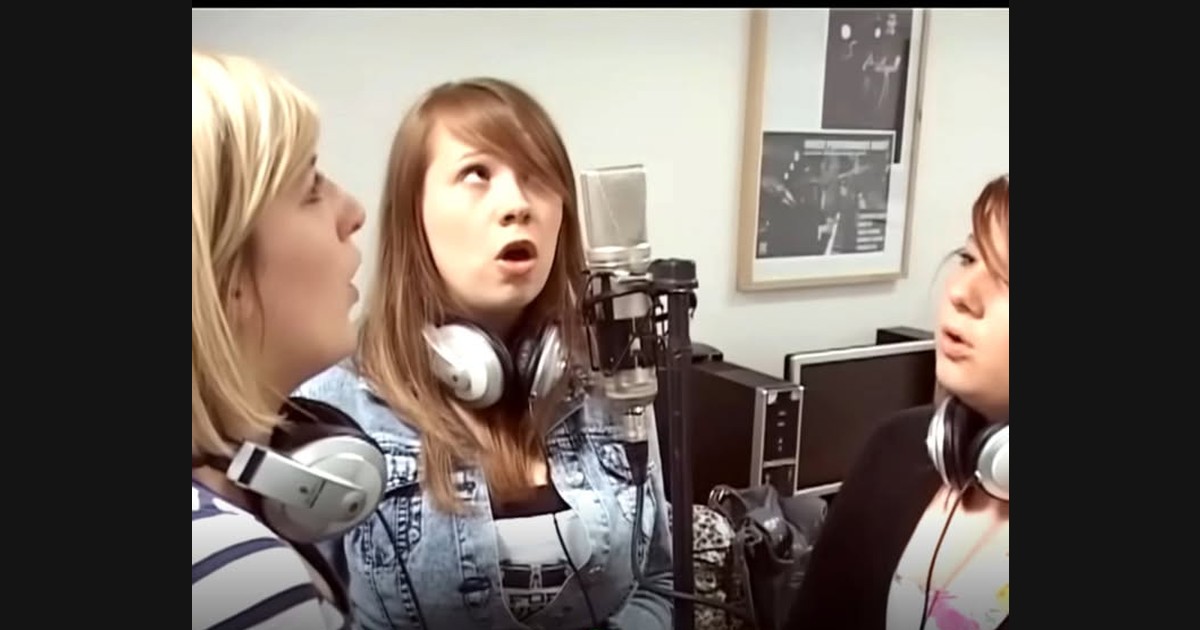
The Reid Kerr College upload of “And Then He Kissed Me” includes a useful account of how the student session was organized. Rather than promising an unexplained spontaneous result, the lecturer identifies a three-hour class, instructions given that day, and several ways of working out parts.
The recording is identified as a June 2010 session in Paisley. The description also discloses an extra percussion overdub. Those details make it possible to discuss the musical exercise accurately without calling the entire soundtrack an untouched live take.
Watch on YouTube ↗
Three hours describes the class
The lecturer says a live take was recorded during the three-hour period. That does not establish that the students first encountered every aspect of their instruments or the song within those same hours. It identifies a shared class and recording window.
That distinction matters because a short production schedule can be impressive without turning into a fictional account of people creating musical ability from nothing. Participants bring prior skills into a task, even when the immediate instructions are new.
Different routes can lead into one arrangement
The upload describes students working from notation, by ear, or through improvising. Those are different ways of developing a part. They still have to produce compatible results when the group records together.
For example, one player might read a written figure while another develops an answering idea by ear. The shared problem is not that both must have learned the part in the same way. They need to agree on where their contributions belong and how they continue through the same sequence.
The description also says that half the performers were using a second instrument. It gives examples of musicians moving between familiar and less usual roles. That supplies a concrete educational constraint without justifying a ranking of individual students from a short public clip.
“Live” and “overdub” can coexist
A live ensemble take describes how a core performance was captured. An overdub describes a part added in another recording pass. The lecturer explicitly identifies additional percussion, so those terms are not contradictory here.
Keep the claim limited to that disclosure. It does not reveal every engineering decision, and it does not mean every sound was assembled separately. The value of the description is that it names a particular addition rather than leaving viewers to infer production from the camera image.
The Crystals provide the repertoire reference
Watch on YouTube ↗
The official audio title uses “Then He Kissed Me,” while the college upload adds “And” at the beginning. Preserve those release labels without treating the small wording difference as proof that the students performed an unrelated composition.
A useful comparison follows a musical job: how the lead is supported, how an entrance is prepared, or how a passage connects to the next. The student session and the established recording have different purposes, so a comparison need not become a competition.
Another recording from a related songwriting world
Watch on YouTube ↗
The Ronettes’ “Be My Baby” broadens the reference. The Library of Congress identifies its writers as Phil Spector, Jeff Barry, and Ellie Greenwich, and discusses Barry and Greenwich’s wider repertoire, including “Then He Kissed Me.”
The college clip’s strongest context remains its documented exercise: a shared class, varied approaches to parts, and a clearly disclosed recording addition. Those specifics explain the work more usefully than a generic claim that nobody rehearsed or that the camera proves every sound happened in one unaltered pass.


