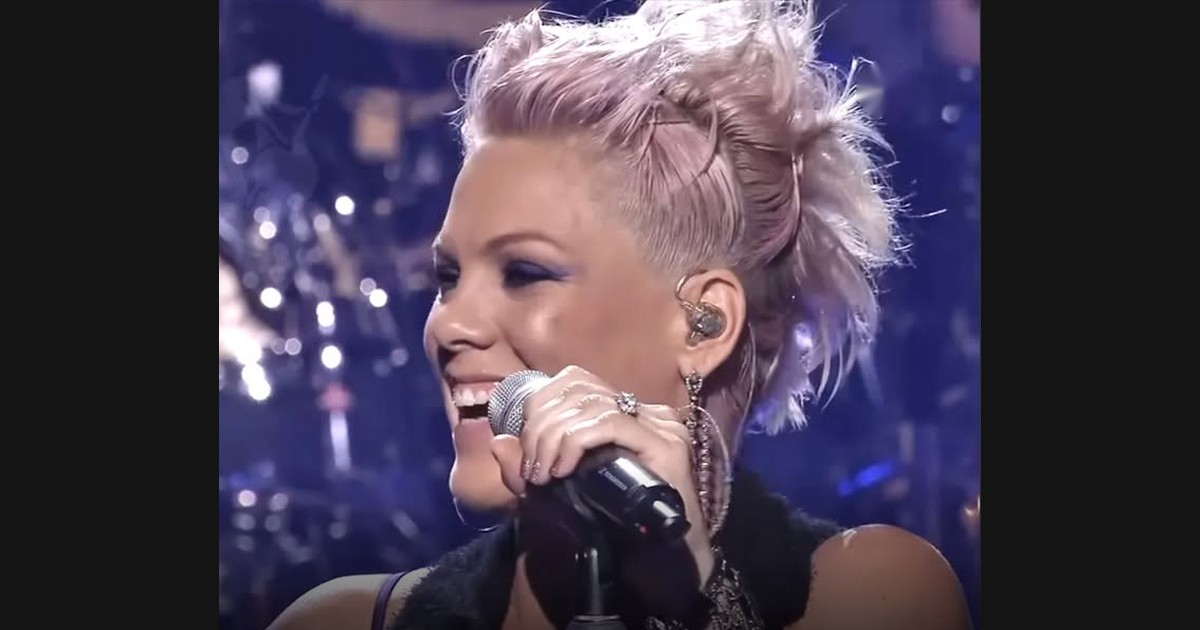
Try is a small word with an unfinished outcome. P!nk’s song asks for an action without being able to promise how it will end. That tension is a useful starting point for the live Los Angeles performance: insistence matters because uncertainty remains.
P!nk’s official artist channel identifies the recording with The Truth About Love: Live from Los Angeles. The song’s official music video and her Stern Show rendition of F*ckin’ Perfect provide two different companion perspectives on how a performer can address another person.
Watch on YouTube ↗
The questions give the instruction a reason
The song’s verses consider desire, disappointment and the difficulty of understanding what happened in a relationship. Its recurring instruction to continue is not delivered into an empty world. It arrives after questions that make continued effort uncertain.
That structure is more interesting than a slogan detached from the song. A listener can recognize the central action immediately, while the surrounding material supplies the reason it has emotional weight.
The important distinction is between encouraging an attempt and guaranteeing a result. A song can express determination without becoming a reliable prediction about another person’s future. Its dramatic truth belongs to the act of addressing uncertainty.
Repetition can carry renewed effort
A repeated idea can seem simple on the page. In music, each return follows material that changes its context. The instruction has to be made again because the difficulty has not disappeared merely through being named.
For a useful listening pass, follow a whole verse into the returning section. Consider how the question prepares the declaration. Isolated from its approach, a familiar hook can sound more settled than the complete argument around it.
The live frame adds another relationship: a singer presents that argument to people sharing a present occasion. The audience’s presence can give an address public scale without making the song a statement about every listener’s circumstances.
Watch on YouTube ↗
The official video makes another interpretation available
The official Try video gives the same composition a separate visual presentation. It can be compared with the concert recording without assuming that each image is a literal event from P!nk’s own life.
Music video and live performance have different ways to direct attention. One can construct a visual narrative around the recorded song; the other places the act of performing within the frame. Both depend on the composition’s continuing relationship between uncertainty and action.
Watch on YouTube ↗
The addressee can also remain open. A performer may make the instruction sound like self-address, an appeal to another person or a statement shared with the room. Those possibilities need not become claims about a private conversation.
F*ckin’ Perfect changes the kind of address
The Stern Show companion is another song, not another live version of Try. It offers a different emphasis: reassurance about a person’s worth rather than an instruction to undertake another attempt.
That contrast gives the pair more depth than treating both as interchangeable empowerment numbers. One asks what to do next; the other addresses how someone sees themselves. P!nk’s recognizable voice connects the performances, while the writing gives each a different responsibility toward the person being addressed.


