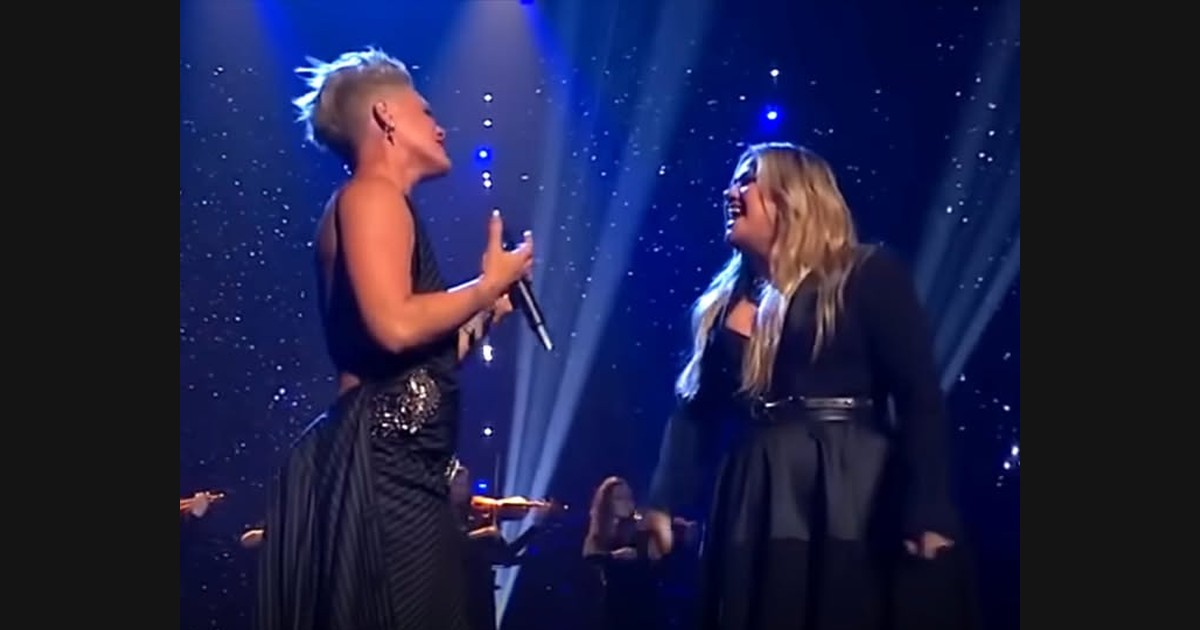
Two people can describe the same relationship and reach different conclusions about its condition. “Just Give Me a Reason” makes that mismatch part of its dramatic design. The duet is therefore more than two voices expressing an identical feeling: it gives a listener contrasting readings that have to occupy the same song.
P!nk and Kelly Clarkson’s performance revisits material originally recorded by P!nk with Nate Ruess. The writing is credited to P!nk, Ruess, and Jeff Bhasker. A new singing partner changes the interpretation’s vocal relationship while leaving that composition history intact.
Watch on YouTube ↗
The speakers do not start in the same place
One useful way into the song is to separate perception from circumstance. A speaker may interpret signs as evidence of distance, while another sees the situation differently. The resulting tension comes from that difference in understanding, not simply from a shared declaration that something is wrong.
Listen for how the second perspective changes your reading of the first. Does it answer a concern, challenge an assumption, or offer another account? A duet can make that contrast audible through the change of voice even before the performers sing together.
The analysis belongs to the song’s dramatic speakers. It should not become an assertion that Clarkson and P!nk are revealing private experiences to each other. Performers can communicate a persuasive exchange without their biographies becoming the literal script.
A shared section does not erase the difference
When the musical material returns in a recognizable shared section, the earlier disagreement can remain active. A common refrain may represent a desire, a question, or an effort toward agreement rather than proof that every uncertainty has been resolved.
That makes the transition worth hearing carefully. What happens to the sense of separate perspectives when the voices occupy related material? Does the performance emphasize unity, retain contrast, or allow both effects to coexist?
A brief listening map can record three stages: concern introduced, another reading supplied, and common material revisited. The purpose is not to force the song into a rigid diagram, but to notice how its musical returns relate to the exchange.
Watch on YouTube ↗
The event feature adds a public frame
Access Hollywood identifies the pairing with the 2023 iHeartRadio Music Awards. That context explains the public collaboration, while its entertainment framing may emphasize the meeting of recognizable performers more than the song’s internal dialogue.
Keep those two kinds of relationship separate: the artists collaborating at an event and the speakers negotiating an understanding inside the composition. Confusing them can turn a musical interpretation into unsupported gossip.
Watch on YouTube ↗
Another presentation, the same dramatic problem
The final upload provides another route into the duet. It does not automatically establish another occasion. Compare a recognizable exchange rather than treating each title as a newly documented performance.
For a final note, explain what the second voice contributes to the song’s argument. Avoid simply writing that the voices sound strong together. Naming the difference in perspective makes the collaboration more specific: two interpreters share a musical space while allowing the writing’s disagreement, uncertainty, and wish for connection to remain audible.


