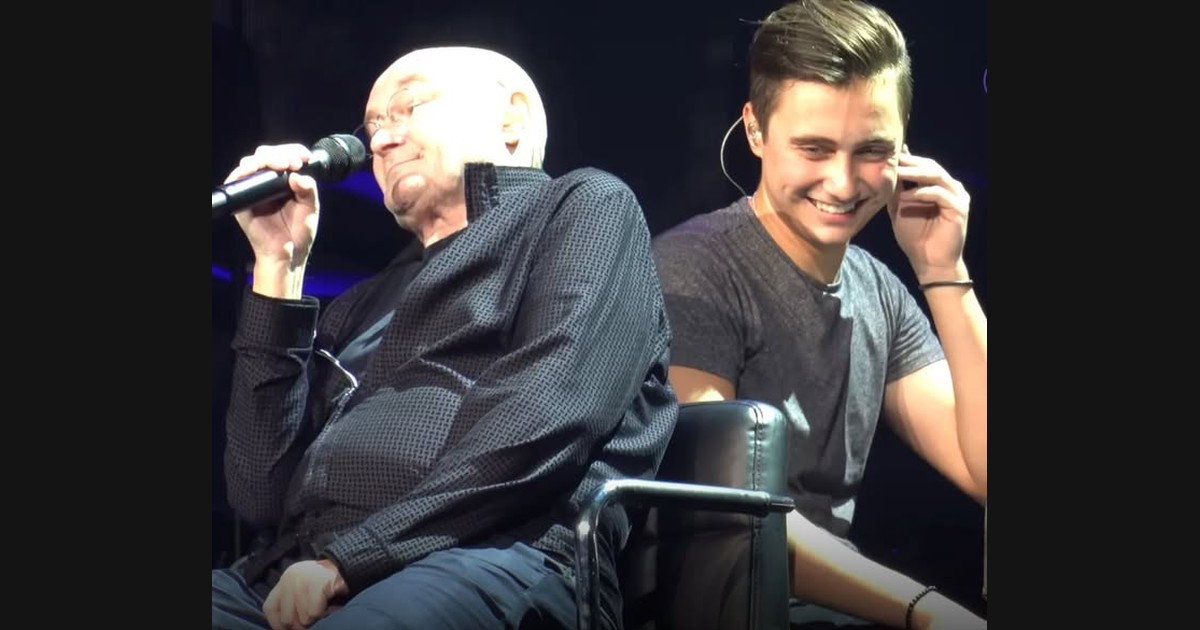
You Know What I Mean sounds like something said midway through a conversation. As a song title, it assumes a history between speaker and listener: some explanation can apparently be left unsaid. Phil Collins’s 2019 performances with Nic Collins give that compact address a public musical setting.
The opening filmmaker identifies Houston on 24 September 2019 and names Nic at the piano. The song itself comes from Face Value, Collins’s 1981 solo debut. Its conversational scale predates the later father-and-son concert partnership.
Watch on YouTube ↗
A title can imply an absent conversation
Everyday speech often relies on shared context. A short phrase can carry an argument that would be much longer if every detail had to be explained to a stranger. A song can use that same compression to suggest a relationship beyond the words being sung.
The dramatic interest is the gap between presumed understanding and the need to keep speaking. If the other person already understood everything, an appeal would be unnecessary. The title can therefore sound both familiar and uncertain, depending on the expressive direction a performer gives it.
That is an interpretive possibility rather than a claim about Collins’s private thoughts during the concert. The song creates a speaker and an addressee; their relationship can be followed without treating every stage performance as a new autobiographical statement.
Piano accompaniment can shape the conversation
A piano’s harmony can continue beneath a vocal thought without duplicating its melody. That gives a singer space to phrase an address while the accompaniment maintains the musical connection from one moment to the next.
The relationship is especially useful to follow around the end of a line. A completed sentence and a completed harmonic movement do not have to arrive simultaneously. Music can prolong uncertainty after the words have stopped or create a point of arrival for a thought still unfolding.
This is one reason a measured ballad has more happening than its apparent pace suggests. Its activity may lie in harmonic direction and phrase length rather than in a dense sequence of attacks.
Watch on YouTube ↗
Another date gives the same work another occasion
Jim Powers’s companion recording identifies Madison Square Garden on 6 October 2019. It documents the song in another concert, with Phil and Nic again named in the upload. Houston and New York remain separate events rather than interchangeable labels for a single clip.
A returning title provides the comparison’s constant. The practical question is how a familiar musical conversation is sustained within a new evening, not whether a repost has revealed a previously unknown composition.
Watch on YouTube ↗
The relationship is carried through a complete phrase
The final 2019 upload offers another presentation of the shared performance. It can be heard alongside the other recordings without assigning it an unverified date or location.
For this song, the complete line matters more than a reaction excerpt or the family introduction alone. The voice asks to be understood; the piano gives that request a continuing musical world. Their coordination lets an intimate-seeming address remain clear within the larger space of a concert.


