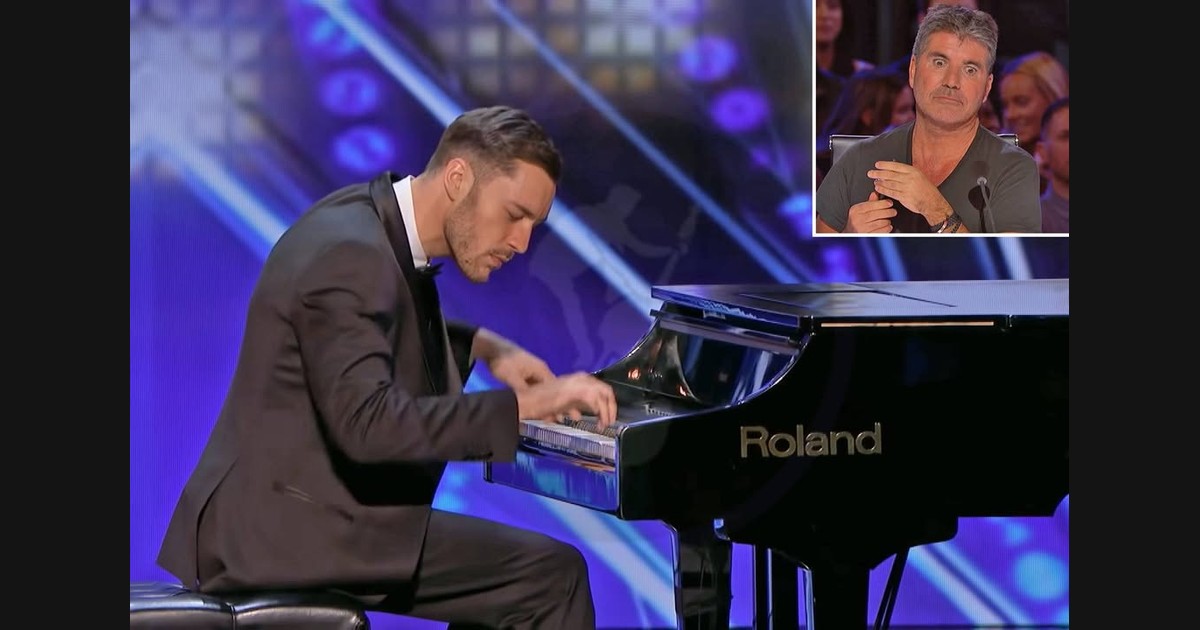
An audition starts before its most conspicuous movement. The introduction, the first musical reference, and the time given to an apparently familiar activity all shape what the audience expects to follow. Patrizio Ratto’s 2019 America’s Got Talent audition makes that construction a substantial part of the act.
The program’s official upload explicitly frames the performance as a change from piano playing into dance. That identifies the reveal without requiring a claim about what every judge privately believed before it happened.
Watch on YouTube ↗
A frame creates a prediction
A piano at the beginning of an audition suggests one kind of musical presentation. An audience may prepare to follow the playing as the principal subject. When the act changes direction, that earlier preparation becomes part of the experience rather than an irrelevant prelude.
The contrast has to remain legible. If a presentation announces every later development immediately, the audience has less expectation to revise. Giving an initial activity a recognizable shape creates something the subsequent movement can transform.
Watch the transition as a complete unit. Identify where the earlier frame stops explaining what is happening and where another kind of performance becomes the center. The interest lies in that transfer of attention, not simply in placing the piano and dance portions into unrelated categories.
Movement can make musical changes visible
A dance performance can mark a musical event through an action, a pause, or a change in the apparent quality of movement. A clear stop can become as legible as continuous activity when the surrounding music gives it a reference.
For one short passage, follow the relationship between movement and an audible boundary. Consider whether the movement confirms the musical event or carries across it. This is an observation task, rather than an instruction to reproduce an unfamiliar physical technique.
The act’s theatrical presentation should also remain distinct from a complete account of the performer. A stage introduction supplies a public role for a few minutes. It does not establish that every apparent hesitation, surprise, or change of manner is an unplanned revelation of private personality.
The performer can discuss the frame
The second selection is the program’s own interview with Ratto about auditioning. It offers a different kind of evidence: the performer speaking about the appearance, rather than the act alone inviting an interpretation.
Watch on YouTube ↗
Keep those levels separate. A retrospective explanation can add context, while the public performance still has to communicate to viewers who have not heard that explanation. The construction of a reveal is something the act makes available in its own time.
A separate television appearance
The final selection identifies Ratto on Česko Slovensko má talent in 2019. It is another program context, not an additional segment of the same AGT audition.
Watch on YouTube ↗
Compare how the introduction prepares attention before the principal action develops. The same performer’s presence does not guarantee that every audience receives the same preliminary information.
Ratto’s AGT audition is therefore most useful to watch as a whole design. Its opening gives the audience a prediction, its transition revises that prediction, and its movement supplies a new subject to follow. The reveal belongs to the performance, with its value grounded in construction rather than an invented account of universal astonishment.