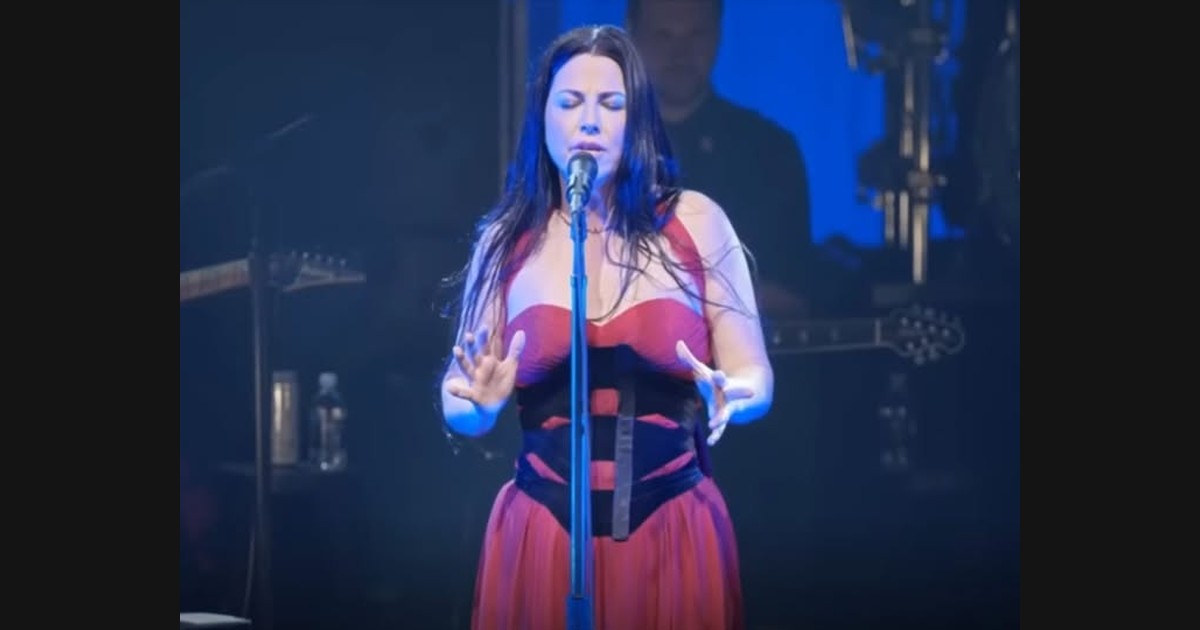
A familiar melody can make the rest of a recording almost invisible. Once a listener recognizes “My Immortal,” it is easy to follow only Amy Lee’s vocal line and treat everything around it as atmosphere. The Synthesis Live presentation offers a useful reason to reverse that habit: listen to the surroundings first, then notice what they allow the melody to become.
This does not require naming every instrument or claiming that a camera close-up explains the entire sound. It requires distinguishing musical functions: the line in the foreground, the material that supports it, and the gestures that connect one phrase to another.
Watch on YouTube ↗
Three kinds of background
A sustained sound can make a passage feel continuous without repeating the vocal melody. A pattern of separate attacks can make time more noticeable. An answering line can briefly attract attention between sung phrases. These are different jobs, even when they overlap within one arrangement.
On a first pass, choose one of those jobs and follow it as far as you can. If the sound becomes difficult to separate, stop assigning it a specific instrument and describe its effect instead. “A sustained layer remains behind the vocal” is more useful than confidently identifying an instrument that the mix does not clearly reveal.
Then return attention to the singer. Does the surrounding material make a phrase feel exposed, supported, suspended, or driven forward? Those words describe a relationship. They avoid the assumption that an orchestral setting must always mean a larger or louder emotional effect.
Silence belongs in the comparison
Space around a vocal entrance can be as significant as an added part. Notice when the texture gives an idea room and when another sound continues through a pause in the singing. A vocal rest does not necessarily mean the musical thought has stopped.
This is a practical way to listen without reducing an arrangement to a list of instruments. The issue is not how many players are present, but what changes when particular sounds enter, continue, or withdraw. A large ensemble can create a sparse moment; a small ensemble can produce a dense one.
Watch on YouTube ↗
Keep the song constant, change the reference
The official London 2022 recording provides another encounter with “My Immortal.” Its visualizer format should remain separate from the musical comparison: the uploaded images do not need to be treated as a continuous record of every sound being made.
Choose one recognizable phrase in each version and describe its surroundings. Avoid comparing overall loudness across devices or uploads as if it were a precise measurement of the musicians’ intensity. Instead, identify the audible relationship between the central line and what supports it.
Watch on YouTube ↗
“My Heart Is Broken” changes the composition while retaining the wider Synthesis Live context. It lets the same listening method travel to different material. Can you still distinguish a sustained background, a recurring pattern, and an answering gesture, or does another category become more useful?
The aim is not to prove that every passage follows one formula. It is to hear how an arrangement organizes attention. Returning to “My Immortal” afterward may make the familiar tune feel less isolated: its identity remains clear, but the sounds around it become active participants rather than a decorative frame.


