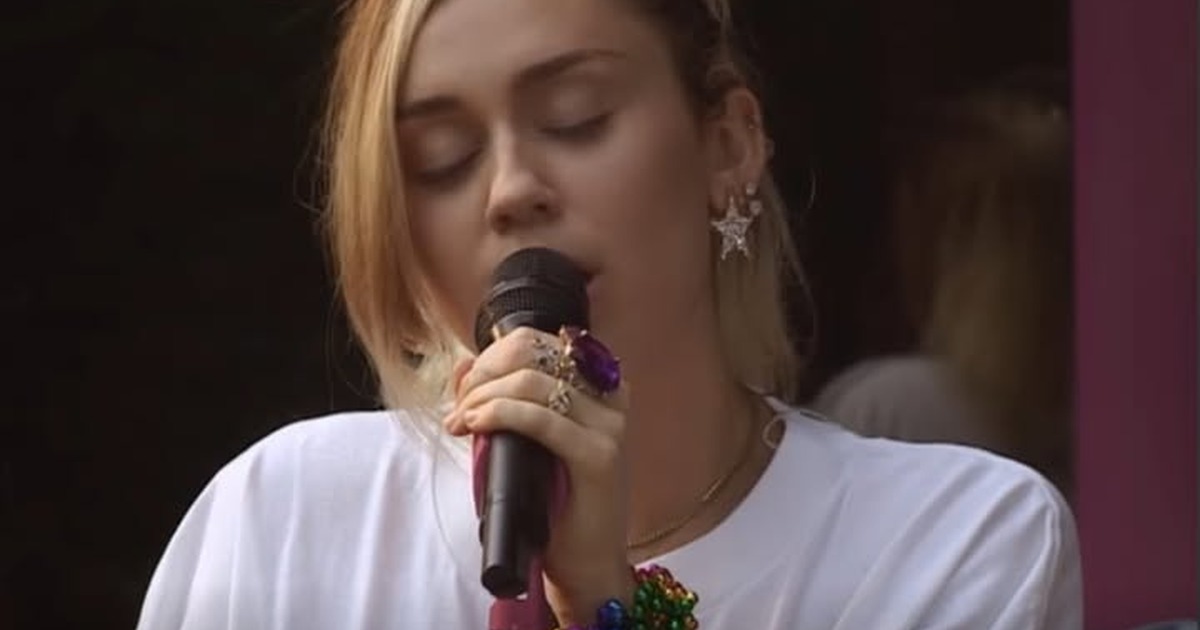
A familiar ballad can make a new singer’s choices easier to hear because the listener already has a strong reference. Miley Cyrus’s Live Lounge selection of The First Time Ever I Saw Your Face is useful on those terms. The interest need not lie in how closely she resembles another performer; it can lie in how she gives a known melody a continuous shape.
The song was written by Ewan MacColl. Roberta Flack’s recording appeared on First Take in 1969 and later won the Record of the Year GRAMMY. Separating the writer from the recording artist clarifies the cover’s lineage: a song can pass through several musical identities without losing its own authorship.
Watch on YouTube ↗
A long phrase is a sequence of decisions
A sustained melody is not simply a collection of long notes. A singer has to make the listener feel how one sound leads toward another. The beginning of a phrase establishes its direction; emphasis can create an interior point of arrival; the ending can settle or leave a thought open.
Listen through a whole phrase before deciding which part seems most important. A note that attracts attention on its own may function differently when heard as an approach to something later. This is one reason isolated high-note clips provide a limited account of a ballad performance.
Vocal identity and musical shape are separate
A recognizable voice carries a particular color, but color is not the entire interpretation. Two singers can follow similar melodic shapes while sounding very different, or use comparable vocal colors while organizing the line differently.
For a concrete comparison, imagine the same sentence spoken with emphasis on its beginning and then on its final word. The words remain constant while the direction changes. A singer can create an analogous shift through musical emphasis without rewriting the composition.
This makes a cover more than a choice between imitation and complete reinvention. Much of its work can occur within the familiar melody, through proportion and placement rather than through conspicuous alteration.
Another Cyrus cover has a different dramatic setting
Watch on YouTube ↗
The Man of Constant Sorrow selection from the George Clooney tribute places Cyrus in another song and occasion. Compare the job of recurring material with the more sustained melodic attention a ballad can invite. The point is not that one approach defines her voice permanently; the repertoire gives that voice different work to do.
A tribute also points toward a public subject beyond the singer. That outward frame differs from a radio session organized around the featured artist and the selected song.
A duet changes the ownership of the line
Watch on YouTube ↗
The official Happy Hippie Don’t Dream It’s Over selection with Ariana Grande adds a second lead identity. Listen for how a phrase becomes an exchange or a shared passage. Compare that relationship with the concentration of attention around a single featured singer in the Live Lounge cover.
The three clips form a small repertoire study rather than a contest between songs. A ballad, a tribute selection and a duet create different needs for continuity, emphasis and partnership. Returning to The First Time Ever I Saw Your Face with those differences in mind makes its apparent simplicity more informative: a familiar melody gives interpretation room to happen inside the line.