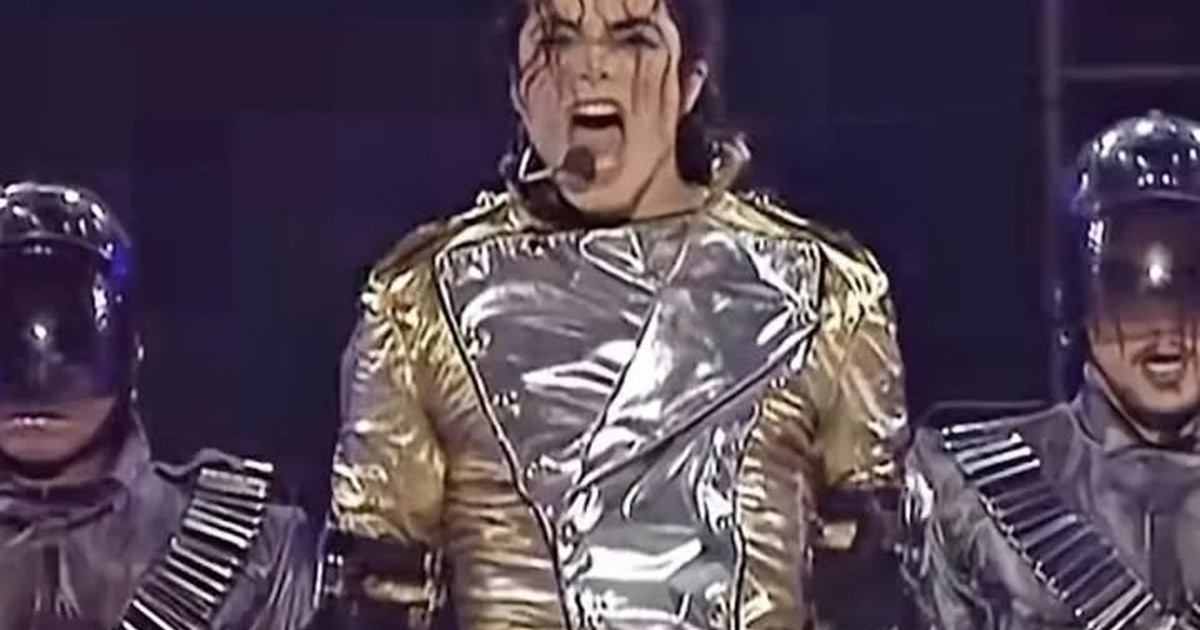
A song on a concert stage and the same song in a music video do not use images in quite the same way. Michael Jackson’s They Don’t Care About Us selections offer a useful comparison. The first upload is labeled as a Munich performance from the HIStory tour; the second is an official music video.
Jackson’s official tour archive confirms a Munich Olympic Stadium appearance in July 1997. That establishes the broader tour context without independently matching every circulating upload to an exact concert date. The composition belongs to the HIStory catalogue, while each visual presentation gives it another public form.
The concert selection
Watch on YouTube ↗
A concert presentation has to organize attention within a performance space. The featured artist, other participants, the stage and the arrangement can all contribute. A recording then adds camera positions and editing to the audience’s possible views.
That means a filmed concert has two related designs: the event presented on stage and the route through it supplied by the video. A close-up can emphasize an individual while a wider shot emphasizes the relationship among performers. The music may continue through that visual change without a corresponding change of texture.
Sound and image provide different evidence
Try following one short musical passage while paying attention to the cuts. Then consider the same passage through its sound alone. The exercise can reveal whether the image is introducing a new event or simply directing attention within a continuing one.
This distinction is more useful than assuming a camera proves every element of a recording’s sound production. A visible movement and an audible line can be related without the picture establishing the complete technical process behind the released clip.
It also keeps a song’s public subject separate from imagined private reactions. A stage presentation can make an idea forceful through collective action and repetition without giving a viewer access to what every performer or audience member felt.
The official video is another interpretation
Watch on YouTube ↗
The official They Don’t Care About Us video retains the song while changing the audiovisual frame. A music video can arrange images around a recording rather than document one continuous concert event. Its visual choices can develop a theme independently of a stage’s physical boundaries.
Compare the role of repetition across the two forms. A repeated musical idea can be supported by recurring visual material, while a change of image can make a familiar passage seem newly emphasized. Neither requires the viewer to treat the video as unmediated documentary evidence.
‘Thriller’ broadens the media comparison
Watch on YouTube ↗
The official Thriller selection changes the composition and visual world. It is useful as a reminder that the same artist can use a music video for a different kind of narrative presentation. The performer remains recognizable while the audiovisual task changes.
The three selections are most informative when the song, the staged event and the finished video remain distinguishable. The Munich-labeled clip presents a concert view; the official videos construct other relationships between sound and image. Comparing those purposes gives the viewer something more precise than a general claim that all footage of a familiar performer documents the same kind of event.


