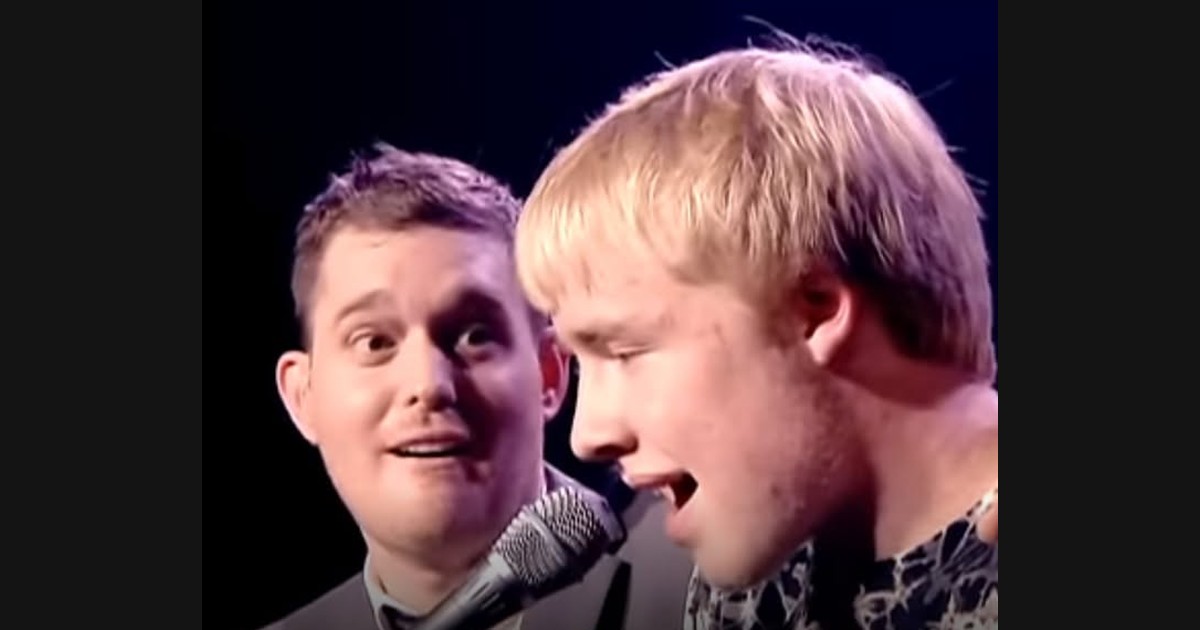
Michael Bublé’s official “Singing with a Fan Live” release presents a guest sharing “Feeling Good.” The familiar song provides a musical meeting point, but it did not begin as a Bublé composition. Its earlier theatre and recording history makes the encounter more interesting to place.
“Feeling Good” was written by Leslie Bricusse and Anthony Newley for The Roar of the Greasepaint – The Smell of the Crowd. Concord Theatricals documents the musical and its 1965 Broadway production. Nina Simone’s official catalog also includes the song on her 1965 album I Put a Spell on You.
Watch on YouTube ↗
A song can move beyond its original dramatic setting
Inside a musical, a song has a place in a larger theatrical sequence. A concert interpretation removes some of that surrounding action and lets a singer present the selection as its own statement. The composition can remain recognizable while the immediate performing purpose changes.
That does not make every concert rendition a literal reenactment of the original scene. Nor does a strong association with one recording turn its interpreter into the songwriter. Theatre origin, recording identity, and later concert use are connected layers.
For a practical note, identify the work at each layer: the Bricusse–Newley composition, a particular artist’s recording, and this guest appearance. That prevents the public familiarity of Bublé’s version from obscuring the song’s earlier life.
The guest enters shared repertoire
A known song can supply a recognizable route through a temporary partnership. The performers have material to share, and listeners have a reference for understanding the exchange even without a detailed explanation.
Follow one handover between voices. What makes the next entrance clear, and how does the accompaniment continue around it? An observation about that relationship is more defensible than a claim that a camera has revealed every participant’s private surprise.
The official upload identifies a fan appearance, not a formal audition or an announcement of a record contract. Keep the event’s public role clear without predicting what the guest’s future must have become.
Bublé’s official video changes the format
Watch on YouTube ↗
The official “Feeling Good” music video keeps the artist and composition in view while changing the presentation. Compare the space given to one featured singer with the division of responsibility in the guest clip.
A produced visual presentation and an onstage encounter need not accomplish the same task. The first can establish a complete artist-centered world; the second has to make the participation of another person legible within the performance.
“Home” changes the repertoire
Watch on YouTube ↗
Bublé’s “Home” video adds another song. It gives a broader artist reference, but it should not be treated as another chapter in the writing history of “Feeling Good.” A playlist can connect through a performer without connecting every item through one composer.
The sequence therefore offers a useful map: a theatre song becomes part of several artists’ recording lives, and one interpretation supplies material for a concert guest exchange. The map gives the moment context without requiring an exaggerated discovery story or erasing the writers behind the familiar standard.


