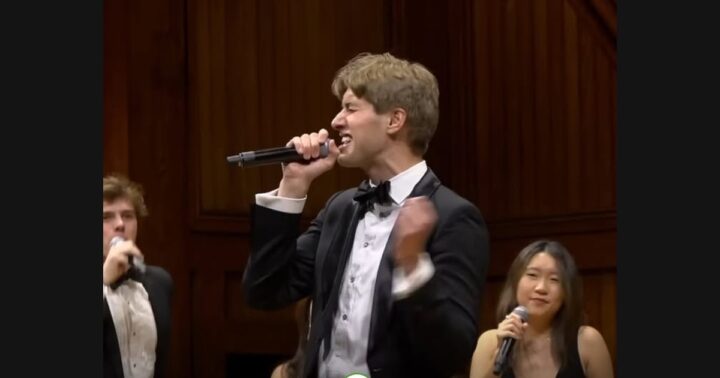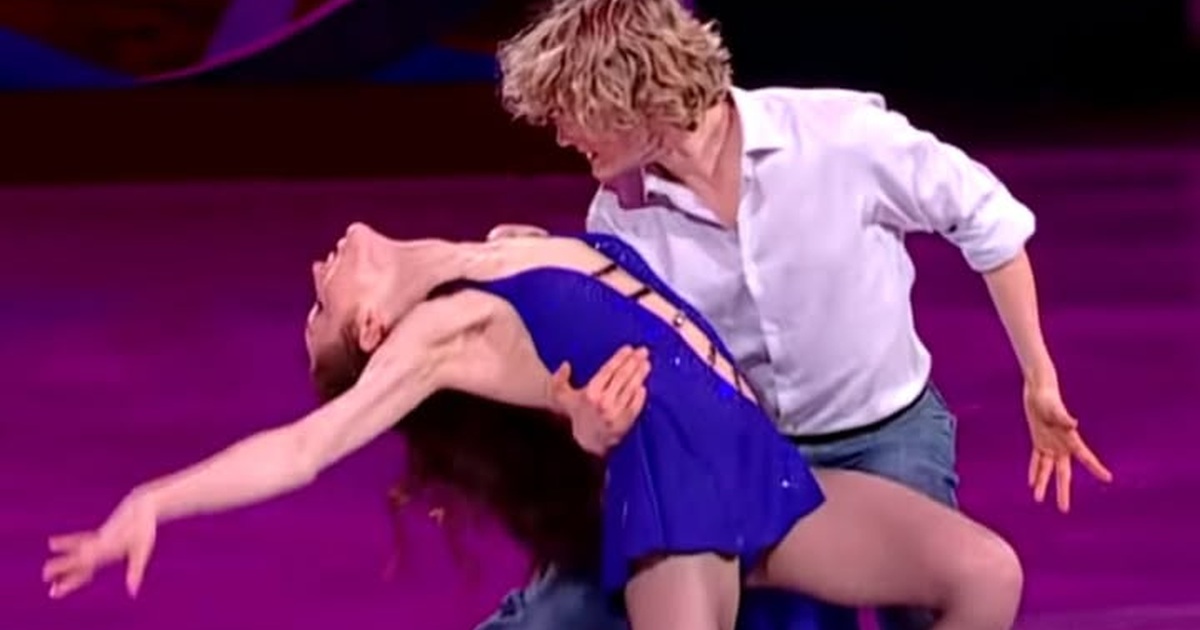
A skating performance does not always meet a song through the recording most familiar to listeners. Meryl Davis and Charlie White’s Billie Jean presentation uses David Cook’s interpretation of material associated with Michael Jackson. The Olympic channel identifies that connection in its own Music Monday publication.
The resulting piece contains more than one transformation. A song passes into another musical interpretation, then that interpretation supplies the timeline for a movement partnership. The skaters work with the particular recording, not an abstract memory of every version of the title.
The Olympic channel’s musical presentation
Watch on YouTube ↗
A phrase gives movement a larger unit
A musical phrase is more than an isolated beat. It supplies a stretch of direction that can begin, continue and arrive. A movement sequence can relate to that span rather than attempting to mark every sound with a separate action.
This makes different kinds of relationship possible. A motion can prepare an arrival, continue across it or give the following space another significance. The music supplies references, while movement interprets how those references become visible.
The relationship is not a literal translation of every sung word. A choreographed presentation can respond to duration, emphasis and structural change without turning the song into an illustrated dictionary.
A partnership has its own continuity
Two performers introduce another level of coordination. Their relationship with each other has to remain understandable while both relate to the musical frame. Attention can move among individual action, shared direction and the space connecting them.
That is different from simply counting how many movements coincide with a strong musical event. Coincidence can be one resource, but continuity gives a whole sequence its shape.
For a closer viewing, follow one complete musical phrase and consider the pair’s direction through it. The point is to recognize a relationship, not to invent a technical score or infer a competitive result from a music-focused video.
The cover is a particular musical choice
The publisher’s David Cook credit matters because the chosen interpretation determines the actual sequence with which the skaters work. A song title alone does not settle tempo, duration or every boundary among sections.
Keeping that distinction visible avoids describing the routine as if it necessarily follows Jackson’s studio recording unchanged. The composition provides identity, while a particular version supplies the current musical material.
Jackson’s official video
The next official selection is Billie Jean in Jackson’s own published video. It gives listeners another way into the composition, with a different performance and visual frame.
Watch on YouTube ↗
The comparison begins with what remains recognizable, then preserves the differences in resources. It should not assume that the two recordings have identical edits or arranging decisions.
Another song and another visual world
The final official Jackson video is Smooth Criminal. The repertoire changes as well as the particular presentation, offering another example of music organized together with a designed visual identity.
Watch on YouTube ↗
Davis and White’s recording remains specific through the layers it connects: an existing song, Cook’s interpretation and a skating partnership. Following those relationships gives viewers something more precise than a broad claim that movement simply matches the music. A particular musical sequence becomes a frame for a particular shared action.