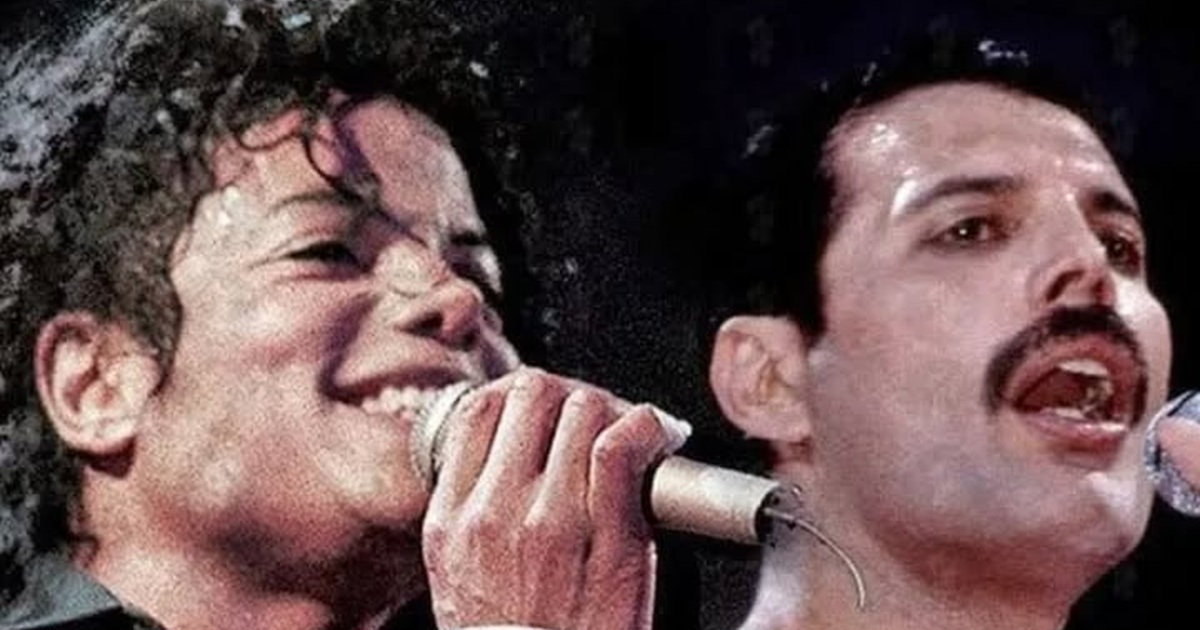
Freddie Mercury and Michael Jackson’s “There Must Be More to Life Than This” should not be described as a duet that remains permanently unreleased. The William Orbit mix appeared on Queen Forever in 2014. Its earlier unfinished history is part of the story, but that history did eventually lead to a published recording.
Brian May’s official release announcement explains the production’s components: a Queen backing track, Mercury and Jackson’s recorded vocals, and a later production and remix by Orbit. This is a record assembled through studio work, not footage of the two singers presenting a complete live duet together.
Watch on YouTube ↗
Three chapters, not one date
The composition began in an earlier period of Mercury’s work with Queen. An unfinished version included Jackson, and the song was revisited without producing the final duet release at that time. Mercury then issued his own version on Mr Bad Guy in 1985.
The 2014 release is another chapter. Its production brought earlier recorded material into a finished version for Queen Forever. The existence of old source recordings and a later release date is not a contradiction. Recording history often involves work that is reconsidered after its first sessions.
| Layer | What it identifies |
|---|---|
| The composition | Mercury’s song, available for different recorded versions. |
| The solo release | A version on the 1985 album Mr Bad Guy. |
| The duet production | The William Orbit mix released on Queen Forever in 2014. |
What a producer’s credit explains
A producer or mixer does not become the songwriter simply by shaping recorded material. The credit identifies a different kind of contribution: how existing performances and accompaniment reach the listener as a particular released record.
That distinction helps avoid a misleading account in which every element seems to have happened simultaneously. A finished recording can create musical continuity between material captured at different stages. The release information tells us enough to understand that process without inventing undocumented details of the sessions.
Compare Mercury’s solo version
The second selection is Mercury’s solo recording. It keeps the composition and one principal voice present while changing the release identity and vocal partnership. This is the most direct comparison for understanding how the song exists in more than one finished form.
Watch on YouTube ↗
Follow a complete recurring section rather than asking which isolated vocal is more impressive. A solo version has to maintain its address through one featured singer; a duet can create relationships between voices. Those are different arrangement possibilities within the same composition.
A different song within Queen’s catalog
“Love of My Life,” supplied as an official Queen video, broadens the comparison toward another reflective song in the band’s repertoire. It is not a further version of the Mercury–Jackson collaboration or evidence from the same sessions.
Watch on YouTube ↗
The selection makes the chronology audible without turning it into a mystery that never resolves. The duet had an unfinished past, Mercury’s song had a solo release, and the Orbit production had a documented public release in 2014. Keeping those identities clear allows attention to return to the music and the distinctive relationship between the voices in the finished record.


