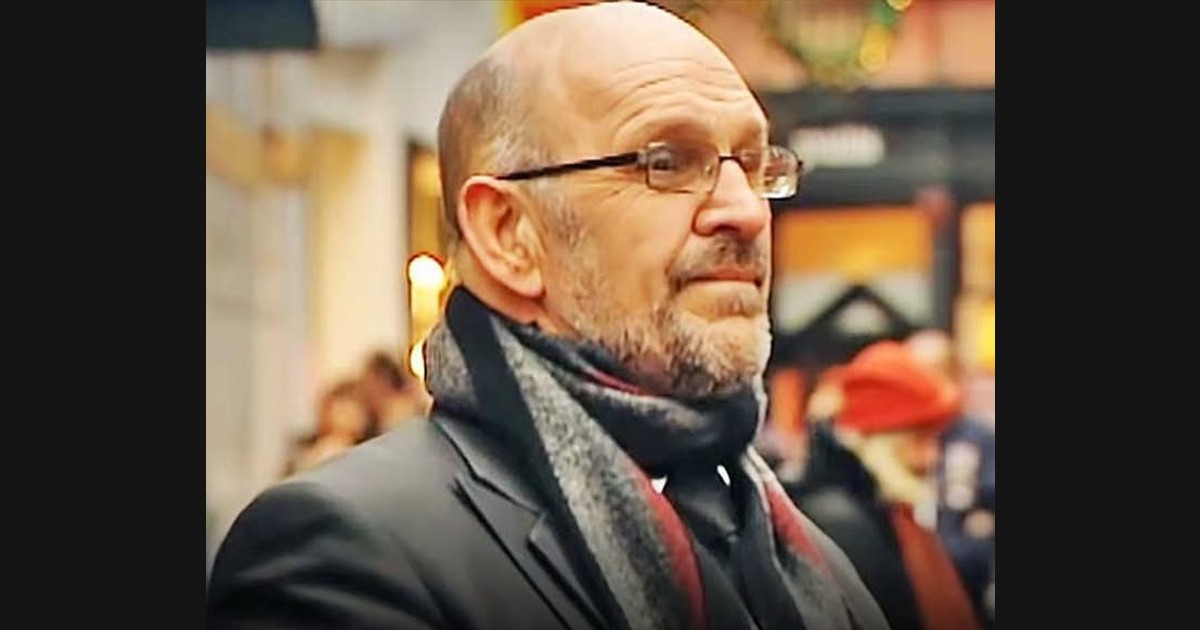
A singer performing in a public place can easily acquire an invented origin story: an unknown person appears, sings, and is suddenly discovered. Martin Hurkens’ own account supplies a more specific chronology for his Maastricht “You Raise Me Up” video. He places the recording after winning Holland’s Got Talent in 2010.
That first-person reference matters because the location alone cannot tell a viewer where a performer stands in a career. A public-space presentation may be a deliberate project by someone whose work is already known, rather than the beginning of all their musical experience.
Watch on YouTube ↗
The image and the biography answer different questions
The recording shows a performance setting. Hurkens’ account explains how he relates that project to earlier events. Neither should silently replace the other.
A listener can appreciate the contrast between a resonant vocal presentation and an everyday location without claiming that the people nearby had no idea who was singing. An uploaded clip does not reveal every participant’s prior knowledge.
Hurkens describes singing as a longstanding hobby that became professional work after the television opportunity. That is a different story from someone trying a song for the first time in front of a chance audience. It also does not require a claim that formal and informal musical experience are interchangeable.
A firsthand career account can establish sequence even when it does not supply the day on which a camera was used.
Four dates that can easily be confused
| Reference | What it tells us |
|---|---|
| Career event | A documented point in the performer’s history. |
| Recording date | When a particular performance was captured, if established. |
| Publication date | When a particular upload or release became available. |
| Discovery by a viewer | When one listener happened to encounter it. |
A video can be old when it becomes new to an audience. A recent upload may also reproduce earlier material. Keeping those categories separate prevents a familiar clip from being repeatedly introduced as a newly occurring event.
Watch on YouTube ↗
The official presentation is another source reference
The NRGY Music video gives the song an explicitly official presentation beside the L1 recording. Hurkens’ own site also embeds the L1 “You Raise Me Up” video, connecting it directly with his catalog of performances.
Compare the musical account rather than deciding which context is inherently more sincere. A public-space video and another official presentation can each make deliberate choices about framing, pace, and the relationship between the voice and its surroundings.
Watch on YouTube ↗
Another Maastricht title needs its own evidence
The fan-published companion returns to the same city and song. Those similarities do not establish that it is the original recording or that every date in its title has been independently checked.
Choose a recognizable phrase if comparing the clips, then separate an audible difference from an assumed chronology. An interpretation can be considered on its musical terms even when its exact recording day remains uncertain.
The resulting account is both clearer and more interesting: a documented television breakthrough, a later public-space video identified by the artist himself, and recordings that continue to reach listeners at different times. The song remains central without needing an anonymous-discovery story the evidence does not support.


