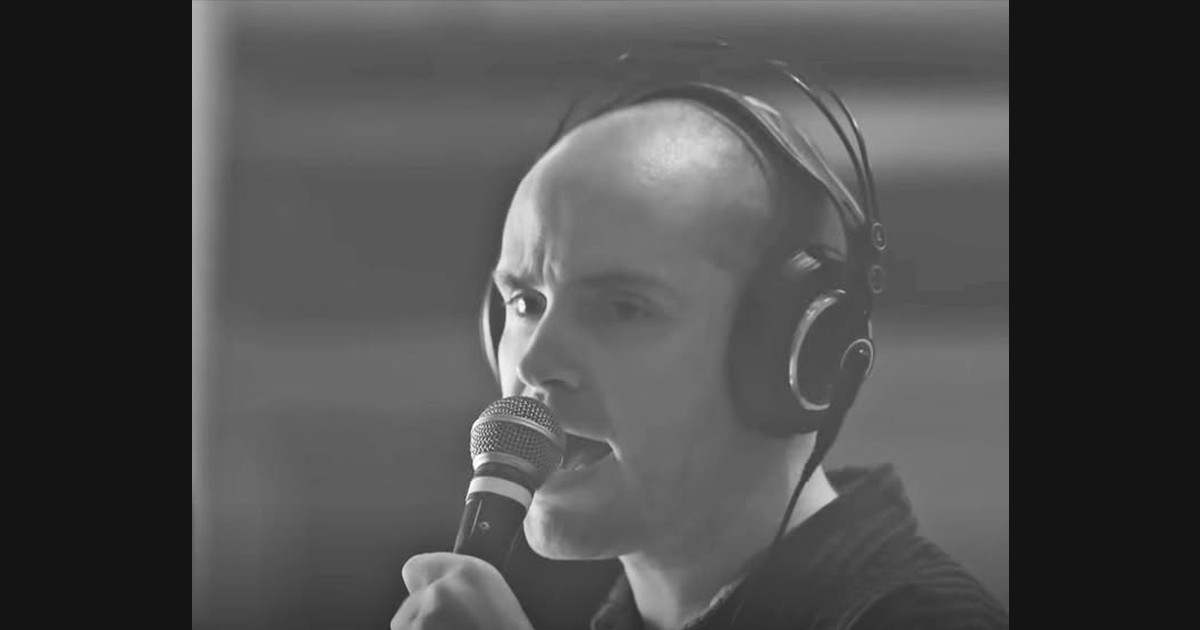
The “Flying Without Wings” collaboration is credited to Foster & Allen featuring Martin Finn. That arrangement of names identifies a partnership, but it does not explain how the musical attention moves among the performers. The recording is useful for following that movement through a complete ballad.
Foster & Allen’s official releases page places the track on their 50 at 50 collection and identifies a studio-filmed video. That supplies the release context. The next task is to hear the performers as musical participants rather than using personal biography to explain every sound.
Watch on YouTube ↗
The lead is a temporary responsibility
A lead line tells the listener what to follow at a particular moment. It does not necessarily mean one singer owns every important event in the performance. Another voice may prepare an entrance, support the same passage, or help complete its ending.
Follow one phrase from its preparation to its conclusion. Identify who carries the main statement, then what happens around it. The end can be especially revealing: a shared arrival may depend on how the parts coordinate, even if one voice remains the obvious focus.
This is different from comparing only the strongest individual note. A note gains its function from a phrase, and a phrase gains direction from the material before and after it. A ballad’s shape can become clearer when those relationships remain intact.
Listen for support without assuming a fixed pattern
Supporting voices can do several jobs. They can reinforce a melody, supply another pitch, answer a line, or create a combined ending. The credited collaboration gives a reason to listen for those possibilities; it does not establish that all of them occur in every section.
For example, a second voice joining near the conclusion of a line can change its weight without taking over the full statement. An answer after the line can create another kind of relationship. Describe the job you hear instead of labeling every overlap simply “a duet.”
Westlife changes the vocal partnership
Watch on YouTube ↗
Westlife’s official video supplies an earlier recording of the same composition. Official Charts documents its UK chart appearance in 1999. It provides a recognizable reference without making its vocal distribution mandatory for later performers.
Compare the same returning passage in both recordings. Ask how the musical responsibility is shared, rather than counting visible singers and assuming that more people must mean more active vocal lines.
The arrangement may direct attention toward one voice at a time or toward a combined sound. Those are different resources, and the useful comparison identifies their role in the passage rather than ranking the groups by size.
A second ballad collaboration
Watch on YouTube ↗
Josh Groban and Andrea Bocelli’s “We Will Meet Once Again” changes the song as well as the partnership. Carry the question about lead and support into that recording, while allowing the composition to create another set of needs.
A short final note can identify three moments: a lead entrance, a supporting contribution, and a clear arrival. That is enough to make the collaboration’s organization discussable. Finn’s featured credit remains visible, while the surrounding musical work receives attention for what it contributes to a complete performance.


