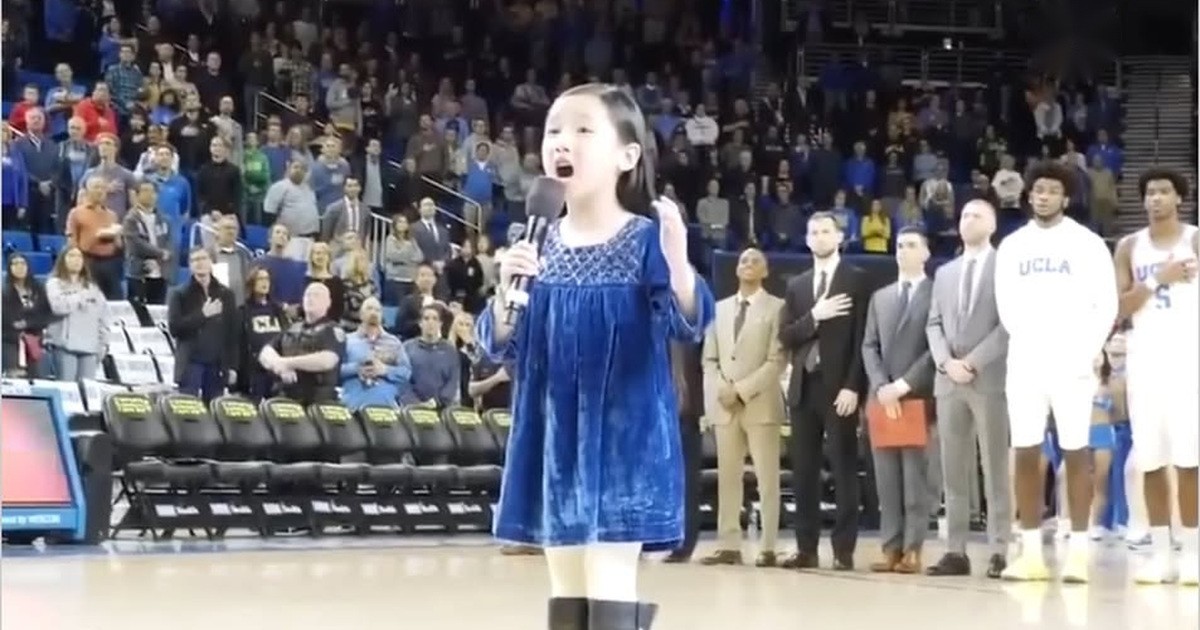
An anthem performance is a musical feature within a larger public occasion. Malea Emma’s selection identified as the national anthem at UCLA men’s basketball is useful to hear in that context. The singer is featured, but the song also marks a shared ceremonial moment before attention returns to another event.
The Star-Spangled Banner combines words written by Francis Scott Key in 1814 with a tune by John Stafford Smith. It became the United States’ official national anthem in 1931. That history is distinct from any one singer’s interpretation, giving the performance a public identity beyond the person at the microphone.
The UCLA selection
Watch on YouTube ↗
A ceremonial song asks a performer to keep its identity clear for listeners with different levels of musical familiarity. Some know the whole melody; others recognize only its most prominent points. A coherent route through the phrases helps connect those listeners without requiring the performance to become a sequence of isolated vocal demonstrations.
Follow a whole musical sentence rather than waiting only for the most familiar high passage. Notice how its beginning creates direction and how the ending prepares what follows. The continuity between prominent moments is part of the singing, even when a short clip or caption emphasizes only one of them.
Familiarity creates both support and expectation
A familiar melody gives the audience a reference. That can make a small interpretive choice especially noticeable: a pause, a changed emphasis or the length of a final sound. Recognition supplies a framework within which differences become audible.
This does not mean every singer must deliver the anthem identically. It means that changes are heard against an established identity. A useful description identifies a musical choice instead of turning a young performer’s appearance into a prediction about an entire future career.
For example, a longer arrival can give a phrase additional weight, but it also changes the proportion of the surrounding passage. Hearing both the arrival and the approach to it makes the choice easier to understand than judging a single note in isolation.
A separately documented sports appearance
Watch on YouTube ↗
The Major League Soccer selection supplies another official public-sports frame. Keep it separate from the UCLA recording. The song stays constant, while the event and recording presentation change.
Compare the same feature in both clips, such as the connection between two phrases. Camera distance and the surrounding sound may direct attention differently. Those differences should not be mistaken for proof that one performance was unamplified or recorded without production choices.
A third setting makes the comparison more precise
Watch on YouTube ↗
The performer’s Clippers upload provides a third reference. With several versions of the same ceremonial song, it becomes possible to distinguish the melody’s stable identity from choices belonging to an individual presentation.
A simple listening note might identify which phrase feels most like the main arrival and what prepares it. That is more useful than assigning an absolute ranking to the complete performances, particularly when the recordings come from different rooms and occasions.
The sequence shows why an anthem can be both familiar and interpretively open. The public function gives it a shared frame; the singer still has to shape its movement in time. Keeping those two responsibilities together offers a more substantial way to hear Malea Emma’s selections than a highlight centered solely on age or surprise.


