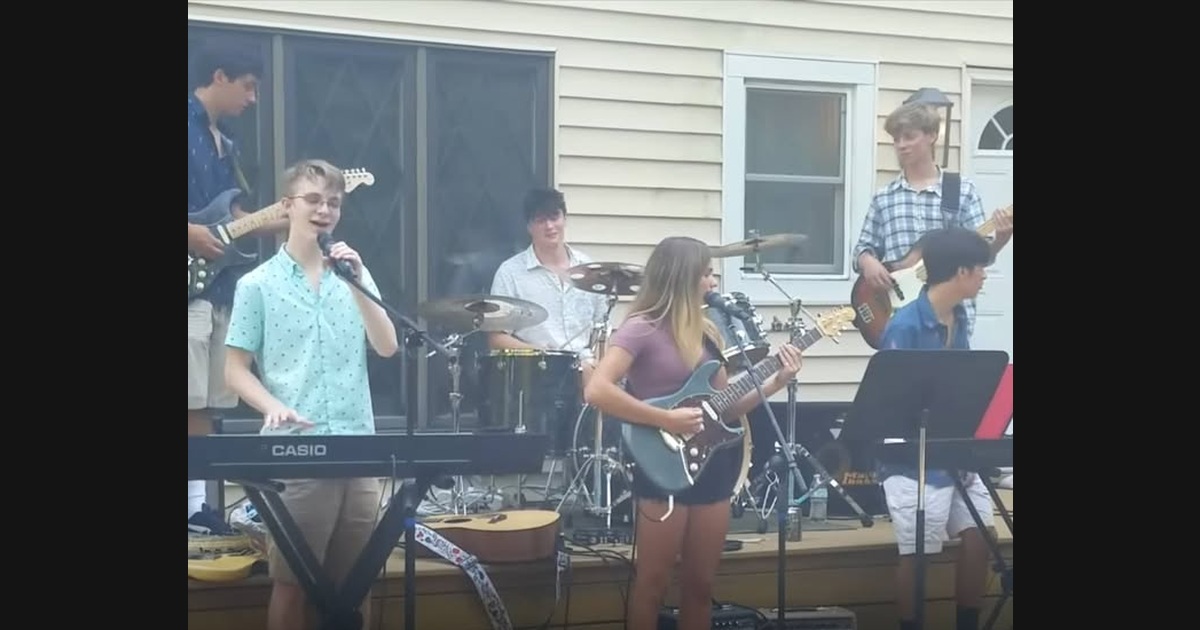
The first upload presents this “Bloody Well Right” cover through a headline about teenage musicians. Low Darts’ own related upload uses a similarly expectation-driven title. Those frames can attract attention, but they are not an explanation of how the band undertakes the song.
A more useful approach begins with the music’s division of labor. In a band arrangement, melody, rhythmic support, harmony, and connecting passages need to work together. “Bloody Well Right” provides a particular piece through which to follow those responsibilities rather than judging the performers mainly against an assumption about their age.
Watch on YouTube ↗
Find the part that gives you orientation
At the beginning of a passage, determine what helps you keep your place. It might be the vocal melody, a repeated instrumental figure, or a clearly maintained pulse. Then listen for the other parts’ relationship with that reference.
One part can remain steady while another becomes more active. That contrast allows several musicians to contribute without all competing for the foreground. A successful band description explains the relationship rather than praising every instrument separately as if it played in isolation.
For example, imagine a passage where a lead phrase finishes and an instrument answers before the next vocal entrance. The answer has a connecting job. Its value comes partly from occupying that available space; the same figure played over every line would create a different balance.
Distinguish a song from its presentation
The composition provides material that can survive a change of performers. The band’s arrangement distributes that material among its available players. The filming supplies another presentation layer, directing the remote viewer toward particular people or actions.
A close shot can make an instrumental contribution easier to notice, but its presence on screen is not a measurement of volume. Listen for what the part does before deciding how prominently it belongs in a written account.
Watch on YouTube ↗
The band’s upload is another useful reference
The second selection comes from Low Darts’ own channel. Use the band’s credited identity when making notes. If the images and musical passages match the first upload, describe them as related presentations rather than automatically counting them as separate performances.
A compact comparison can record three things: which release you are using, which passage you mean, and which relationship between parts you noticed. That is enough detail for another listener to revisit the observation without a fabricated timestamp or a story about what the audience expected.
Bring in Supertramp’s performance
Watch on YouTube ↗
The Midnight Special’s official archive presents Supertramp playing “Bloody Well Right.” This changes the performers while retaining the composition, making it a more direct musical comparison than the age-based framing of the cover uploads.
Choose one function to compare: how a passage begins, how an instrumental contribution sits beside the voice, or how the group marks a transition. Keep the question consistent while allowing the answers to differ. The cover does not need to reproduce every detail of Supertramp’s performance to make its musical reference clear.
The useful result is a description of Low Darts as a working ensemble. It can recognize an effective entrance, a well-placed response, or an intelligible transition without inventing surprise, rehearsal history, or a claim that listeners had never heard young musicians play this repertoire before.


